

Maddy summaryHR 82, the Social Security Fairness Act of 2023, repeals two provisions that reduce Social Security benefits for certain government workers. It eliminates the Government Pension Offset (GPO), which cuts spousal or survivor benefits for people with pensions from jobs not covered by Social Security (like federal or state government roles), and the Windfall Elimination Provision (WEP), which lowers retirement benefits for those with similar pensions. The law takes effect for benefits paid after December 2023, requiring the Social Security Administration to adjust benefit calculations to remove these reductions. This change directly affects public-sector employees who previously had their Social Security benefits reduced due to their government pensions.
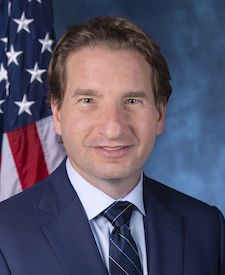
Rep. Dean Phillips
Sponsored bills
Maddy summaryThis bill renames a United States Postal Service facility at 114 Center Street East in Roseau, Minnesota, as the "Floyd B. Olson Post Office." It directly affects the physical post office location and all official references to it in government documents. The key provision updates all federal records, maps, and communications to use the new name, ensuring consistency in official correspondence and signage. This is a ceremonial designation with no changes to postal services, funding, or policy.
Maddy summaryThe FISHES Act (HR 5103) streamlines access to emergency disaster funds for fisheries by setting strict deadlines for federal review. It requires the Secretary of Commerce to review and provide notice on spend plans within 10 days of submission and mandates that funds be made available to grantees no later than 90 days after a complete spend plan is received. This directly affects fisheries that have received a formal "fishery resource disaster" determination, ensuring faster disbursement of funds for recovery efforts. The bill also prohibits the Office of Management and Budget from delaying these timelines during concurrent review. The law aims to reduce bureaucratic delays in post-disaster funding without altering the underlying disaster assistance program.
Maddy summaryThe Think Differently Database Act (HR 670) requires the U.S. Department of Health and Human Services (HHS) to create and maintain a public website within three years. The website will provide clear, accessible information about Medicaid eligibility for people with disabilities - including specific state requirements, contact details for state Medicaid offices, and wait times for home-based services. It directly affects individuals with disabilities, their caregivers, and families seeking support through Medicaid programs. The site will standardize resource access across states, using existing Medicaid rules and modeling after the thinkdifferently.net website.
Maddy summaryThis bill creates a 4-year transitional coverage period for Medicare to automatically cover "breakthrough medical devices" - new FDA-prioritized devices approved after March 2021 - as "reasonable and necessary" for treatment. During this period, these devices qualify for additional payments under Medicare's hospital and outpatient payment systems without requiring separate approval. After the 4-year period, Medicare must develop regular coverage based on additional data, with automatic coverage for all approved uses if no action is taken within two years. The bill requires Medicare to assign unique codes for these devices within three months of FDA approval and to update payment systems regularly. It also includes special provisions for "specified breakthrough devices" that lack existing Medicare benefit categories, requiring reports on their impact and cost to Congress.
Maddy summaryThe Stop Campus Hazing Act requires colleges and universities to publicly report hazing incidents involving student organizations. It defines hazing as intentional acts causing physical or psychological harm during initiation or membership in student groups, including activities like forced substance consumption, sleep deprivation, or sexual acts. Institutions must include hazing statistics in annual security reports and publish a "Campus Hazing Transparency Report" on their websites by July 1, 2025, detailing findings about organizations violating hazing policies. The reports must include organization names, violation descriptions, and key dates while excluding personally identifiable student information. This applies to all colleges participating in federal student aid programs.
Maddy summaryThis bill, HR 1097 (Everett Alvarez, Jr. Congressional Gold Medal Act of 2023), authorizes the award of a Congressional Gold Medal to Everett Alvarez, Jr., in recognition of his service as a U.S. Navy pilot and Vietnam War prisoner of war. It directly honors Alvarez, who was the first U.S. pilot shot down in the Vietnam War, spent over 8.5 years in captivity, and later served in the Peace Corps and Veterans Administration. The bill’s key mechanism is directing the U.S. Mint to strike a gold medal bearing his name and image, with bronze duplicates available for sale to cover costs. It does not create new policies or affect any group beyond the honoree.
Maddy summaryHR 3356, the Motor Carrier Safety Screening Modernization Act, updates existing law to replace the term "preemployment" with "employment" in safety screening requirements for motor carriers under 49 U.S. Code § 31150. This technical change clarifies that safety screenings apply to current employment status, not just initial hiring, aligning the law with current industry practices. The bill directly affects motor carriers (like trucking companies) and their compliance with safety background checks. It makes no substantive changes to screening procedures or requirements, only modernizing the statutory language.
Maddy summaryThis bill allows Medicaid programs to enter into value-based purchasing (VBP) arrangements with drug manufacturers for innovative treatments like gene therapies. It codifies these arrangements by requiring states to report pricing structures based on patient outcomes and best prices for drugs sold under these agreements. The bill enables payments to be tied to treatment effectiveness, potentially reducing long-term healthcare costs by decreasing hospitalizations and other medical expenses. It also creates a requirement for a GAO study to evaluate how these arrangements impact patient access, outcomes, and healthcare system costs. The bill will sunset after 5 years, though existing VBP arrangements will continue beyond that date.
Maddy summaryHR 2367, the Truck Parking Safety Improvement Act, creates a federal grant program to address commercial truck parking shortages on highways. It provides competitive grants (totaling $175M-$320M over three years) for projects like building new rest areas, expanding parking at ports or truck stops, or improving safety at existing facilities. The program requires all funded parking to be free, publicly accessible to all truck drivers, and maintained without user fees. This directly affects commercial truck drivers, motor carriers, and highway safety by aiming to improve parking access, reduce traffic congestion, and enhance safety on federal-aid highways.