Transparency in Cybersecurity Initiatives for Small Contractors Act of 2021 This bill requires the Department of Defense to report on the effects of the Cybersecurity Maturity Model Certification framework on small business concerns.
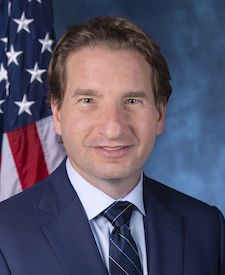
Rep. Dean Phillips
Sponsored bills
Stop Foreign Funds in Elections Act This bill prohibits contributions or donations by foreign nationals in connection with state or local ballot initiatives or referenda.
Small Business Development Center Cyber Training Act of 2021 This bill requires the Small Business Administration to establish a program for certifying at least 5 or 10% of the total number of employees of a small business development center to provide cybersecurity planning assistance to small businesses.
7(a) Loan Agent Oversight Act This bill requires the Small Business Administration (SBA) to submit an annual report containing specified information related to 7(a) loan agents. These agents provide fee-based referral and loan application services related to the SBA's 7(a) Program. Under the 7(a) Program, the SBA guarantees up to 80% of a private lender's loan to a small business borrower who cannot obtain credit elsewhere on reasonable terms and conditions. The required report must include (1) the number and type of agents assisting applicants for 7(a) loans, (2) the number of fraudulent loans made for which an applicant used the services of a 7(a) agent, and (3) the number and aggregate dollar value of referral fees paid to 7(a) agents.
Small Business 7(a) Loan Agent Transparency Act This bill provides oversight of 7(a) loan agents, including by requiring the Small Business Administration (SBA) to establish a registration system for such agents whereby certain data may be collected and by mandating that such agents register with the system and pay an annual registration fee. These agents provide referral and loan application services related to the SBA's 7(a) Program. Under the 7(a) Program, the SBA guarantees up to 80% of a private lender's loan to a small business borrower who cannot obtain credit elsewhere on reasonable terms and conditions.
Help Ensure Lower Patient Copays Act or the HELP Copays Act This bill requires health insurance plans to apply certain payments made by, or on behalf of, a plan enrollee toward a plan's cost-sharing requirements. Specifically, plans must apply third-party payments, financial assistance, discounts, product vouchers, and other reductions in out-of-pocket expenses toward the requirements.
This resolution expresses that the House of Representatives applauds the Biden administration for reaffirming the U.S. commitment to the Paris Agreement on climate change and to our collective responsibility to globally combat climate change; encourages the Biden administration to implement measures to ensure global climate change remains a top priority for this and future administrations and to cement the United States as a global leader in the fight to mitigate its most severe consequences; voices strong commitment as legislators toward achieving the climate goals of the Paris Agreement, fulfilling the forthcoming pledges from the COP26 in Glasgow, Scotland, and advancing other international efforts to keep global warming to no more than 1.5 degrees Celsius and realize global net-zero carbon emissions by 2050 using a whole-of-government approach; and recognizes the critical responsibility of the United States and other developed nations to ensure all societies have the capabilities to transition to a clean energy economy, the resources to protect against climate-induced disasters, and the necessary assistance to endure climate-related challenges to food security, regional migration, and public health.
Brycen Gray and Ben Price COVID-19 Neurological Impact Act This bill authorizes grants and requires other activities to address neurological and psychiatric illnesses associated with COVID-19 infection. Specifically, the National Science Foundation may award competitive grants for multidisciplinary research on such illnesses. In addition, the White House Office of Science and Technology Policy must establish a temporary interagency working group to coordinate relevant federal programs, data collection, and other activities focused on neurological and psychiatric illnesses associated with COVID-19 infection. The working group must also engage with researchers and nonfederal stakeholders to ensure the sharing and dissemination of relevant research, information, and best practices pertaining to those illnesses. The working group terminates after five years.
Young African Leaders Initiative Act of 2021 or the YALI Act of 2021 This bill provides statutory authority for the Young African Leaders Initiative (YALI), which seeks to build the capacity of young African leaders in sub-Saharan Africa in the areas of business, civic engagement, or public administration. The YALI program must support the participation of fellows from Africa in the Mandela Washington Fellowships for Young African Leaders and offer training through regional leadership centers in sub-Saharan Africa to individuals who have demonstrated strong capabilities in entrepreneurship, innovation, public service and leadership, and peace building and conflict resolution. The Department of State must oversee all U.S.-based activities carried out under the program, and the United States should continue to support program initiatives in sub-Saharan Africa. The State Department must also submit a plan for implementing the program and annual reports on program progress and recommendations for improvements or changes to the program.

China Watcher Act This bill establishes the China Watcher Program within the Department of State. The program must (1) monitor and combat China's malign influence in foreign countries, (2) monitor China's military trends abroad and counter its activities and advancements in foreign nations that pose a threat to U.S. interests and the rules-based order, and (3) strengthen U.S. government capacity to engage with foreign countries and international organizations to counter China's malign influence. Under this program, the State Department must place officers in select U.S. diplomatic and consular posts to engage with Chinese and third-party nationals, as well as host governments and nongovernment entities, on the above-referenced matters.