

Maddy summaryThe Disability Access to Transportation Act (HR 3845) establishes a pilot program to improve paratransit services for people with disabilities by requiring a single 15-minute stop during rides (e.g., at pharmacies or grocery stores) to reduce wait times and improve access to essential destinations. It also creates an accessibility data pilot to measure transportation access to jobs, healthcare, and other key locations for diverse populations, including those with disabilities, low-income communities, and rural areas. The bill mandates new complaint reporting procedures for transportation discrimination and requires transit agencies to share data on service quality and rider satisfaction. Funded with $75 million annually through 2027, the programs aim to make transportation more accessible and data-driven for over 25 million Americans with disabilities.
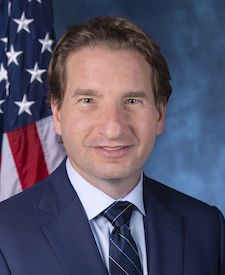
Rep. Dean Phillips
Sponsored bills
Maddy summaryThis bill amends the Workforce Innovation and Opportunity Act to require state and local workforce development programs to create partnerships between schools (including career technical schools and colleges) and employers. These partnerships must address regional workforce skill gaps and employer hiring needs, based on the latest regional analysis. The requirement applies specifically to programs serving youth and adults in high-demand occupations. It modifies existing sections of the WIOA to mandate this partnership approach as a new program requirement.
Maddy summaryHR 3808 extends the visa cap for Afghan allies from 38,500 to 58,500, covering Afghan nationals who worked with U.S. forces or international missions in Afghanistan (e.g., interpreters, translators) under the 2009 Afghan Allies Protection Act. It requires the State Department to create a strategy within 180 days to improve processing efficiency, including reviewing staffing, data collection, and appeal procedures for pending applications. The bill also adds provisions for reimbursing applicants' medical exam costs, allowing virtual interviews for visa applications, and ensuring denials include appeal options. These changes directly affect Afghan allies awaiting visas and aim to accelerate their resettlement in the U.S.
Maddy summaryThis bill requires the Small Business Administration (SBA) to submit an annual report to Congress detailing oversight of 7(a) loan agents. The report must break down data on agent types (like attorneys or consultants), fraudulent loans involving agents, referral fees paid by applicants or lenders, and risk analyses for top agents handling significant loan volumes. It aims to increase transparency around how these agents assist borrowers and influence loan terms, without changing loan eligibility or interest rates. The SBA Director must provide this report annually, directly affecting SBA's reporting obligations and congressional oversight of the 7(a) loan program.
Maddy summaryThis bill requires small business loan application assistance providers ("7(a) agents") to register with the Small Business Administration (SBA) and pay an annual fee. It creates an SBA database tracking which agents offer specific services, such as helping applicants complete loan forms or providing referrals. The law directly affects small business owners seeking 7(a) loans (who gain transparency about agent services) and the agents themselves (who must register before assisting). Key provisions include mandatory pre-service registration, annual fees after one year, and SBA-maintained service databases, all to improve oversight of loan application support.
Maddy summaryHR 698, the Assault Weapons Ban of 2023, prohibits the sale, manufacture, transfer, and possession of specific firearms and ammunition devices commonly referred to as "assault weapons" and "large capacity magazines" in interstate commerce. The bill defines "semiautomatic assault weapons" to include rifles like AR-15s and AK-47s, as well as firearms with specific features such as folding stocks, pistol grips, threaded barrels, and detachable magazines holding more than 15 rounds. It exempts law enforcement, military, antique firearms, and weapons already lawfully owned before the law's enactment (known as "grandfathered" weapons). The bill also requires new identification markings on these weapons and large capacity magazines, and adds background check requirements for transfers of grandfathered weapons.
Short Line Railroad Relief Act This bill authorizes the Department of Transportation to provide emergency grants or enter into contracts and other agreements for capital projects for short line railroads. A project must protect, repair, reconstruct, or replace short line railroad equipment and facilities in danger of suffering catastrophic damage, or that have suffered catastrophic damage, as a result of an emergency. An emergency includes a natural disaster affecting a wide area or a catastrophic failure from any external cause that results in the declaration of an emergency or a major disaster.
Maddy summaryThis House resolution symbolically recognizes May as Jewish American Heritage Month, celebrating Jewish Americans' historical contributions to U.S. society and culture. It references rising antisemitism in 2022 (including ADL data showing a 36% increase in incidents) and includes a non-binding call for leaders to combat antisemitism. As a purely symbolic resolution, it does not create new policies or legal requirements.
Maddy summaryHR 3792 extends U.S. security funding for Israel through 2028 (Section 3) and expands energy cooperation to include advanced nuclear technologies and carbon capture (Section 5). It requires annual reports on regional security partnerships involving Israel (Section 6) and ensures countries in the Abraham Accords can access U.S. development programs (Section 8). The bill also mandates reports on diplomatic efforts against ICC investigations targeting the U.S. and Israel (Section 10) and encourages people-to-people programs to strengthen the Abraham Accords (Sections 7, 9). These provisions directly affect Israel’s diplomatic engagement, security partnerships, and economic cooperation in the Middle East.
Maddy summaryThe Barriers to Suicide Act of 2023 establishes a federal grant program to fund evidence-based suicide deterrents on bridges. The Transportation Secretary will award competitive grants to states or local governments for installing proven safety measures like nets or barriers, prioritizing areas with high suicide rates, with federal funding covering up to 80% of project costs. The bill also mandates a study by the Comptroller General to assess effective deterrents for non-bridge structures (e.g., buildings) and report findings within one year. It authorizes $10 million annually for 2024-2028 to support these initiatives. The law directly affects bridge safety planning for state and local agencies seeking federal assistance.