

Maddy summaryThe GROWTH Act of 2023 expands funding for nursing workforce training by making community colleges and their healthcare partnerships eligible for grants under the Nurse Education, Practice, Quality, and Retention program. It directly affects community colleges with existing nursing programs and partnerships between these colleges and healthcare facilities like Federally Qualified Health Centers. The bill requires the Secretary of Health and Human Services to prioritize up to 50% of annual funding for these community colleges or their partnerships. This changes how funds are distributed, ensuring a significant portion supports workforce development at the community college level.
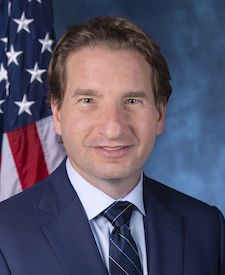
Rep. Dean Phillips
Sponsored bills
Maddy summaryThis resolution (HRES 839) condemns antisemitism at U.S. colleges and universities and urges campus leaders to publicly oppose hate speech targeting Jewish students, faculty, and staff. It encourages university presidents, administrators, and faculty to speak out against speech that promotes violence or discrimination based on religion, national origin, or ancestry. The resolution specifically calls on institutions to support Jewish student organizations and ensure Jewish members can study and work without fear. As a non-binding resolution, it does not create new laws but expresses congressional support for addressing antisemitism on campuses.
Maddy summaryHRES 599 is a non-binding resolution urging the European Union to fully designate Hizballah (Hezbollah) as a terrorist organization, rather than just its military wing as the EU did in 2013. It recommends the EU implement sanctions, freeze assets, issue arrest warrants, and prohibit fundraising for Hizballah, aligning with actions taken by the U.S. and other nations. The resolution cites Hizballah’s history of attacks, its criminal activities in Europe (including drug trafficking and money laundering), and its ties to Iran as justification. It directly addresses EU decision-makers, calling for coordinated action to disrupt Hizballah’s operations across the continent. The resolution follows prior House efforts, including H.Res. 359 (2017) and H.Res. 558 (2022), which made similar requests.
This resolution expresses the House of Representatives' support for the goals and ideals of National Veterans Small Business Week, celebrates the millions of people in the United States—especially veterans and their spouses—who benefit from Small Business Administration programs, and expresses appreciation for the continued service to the United States by the nation's veterans through small business ownership and entrepreneurship.
Maddy summaryHR 6124, the Cybersecurity Skills Integration Act, establishes federal grants to help community colleges and critical infrastructure employers develop cybersecurity-focused career training programs. The bill provides up to $500,000 per grant to partnerships between postsecondary institutions and critical infrastructure employers (like energy or transportation sectors) to integrate cybersecurity education into existing workforce programs. These programs must align with national cybersecurity standards, include hands-on learning, lead to recognized credentials, and prioritize diversity, with applicants required to detail how they address specific workforce needs. The legislation authorizes $10 million total over time to support these initiatives, aiming to better prepare workers for in-demand cybersecurity roles in critical infrastructure.
Maddy summaryHRES 801 is a symbolic resolution recognizing the cultural significance of the Hmong New Year. It does not create new laws or policies but formally acknowledges the traditions of Hmong Americans celebrating this holiday. The resolution expresses respect for Hmong Americans observing the New Year and wishes them a happy celebration. It directly affects Hmong American communities by affirming their cultural practices through official congressional recognition. This is a ceremonial gesture with no binding obligations or policy changes.
Maddy summaryHRES 771 is a non-binding resolution expressing the U.S. House of Representatives' support for Israel following Hamas' October 7, 2023, attack. It condemns Hamas' actions, affirms Israel's right to self-defense, and calls for the immediate release of hostages. The resolution also urges enforcement of existing laws restricting aid to terrorists and sanctions against Iran for supporting Hamas. It does not create new policies or allocate funds, as it is a symbolic statement of congressional support.
Maddy summaryHRES 768 is a symbolic House Resolution expressing congressional support for Israel following Hamas' October 7, 2023 attacks. It condemns Hamas' actions, reaffirms Israel's right to self-defense, and calls for the immediate release of hostages. The resolution references the U.S. commitment to Israel's security through existing military aid programs, including the 2016 U.S.-Israel Memorandum of Understanding, and emphasizes enforcement of laws like the Taylor Force Act to prevent U.S. aid from reaching terrorist groups. As a symbolic resolution, it does not create new policy but serves as a statement of congressional support for Israel.
Maddy summaryHR 6054, the Represent America Abroad Act of 2023, creates a 3-year pilot program to increase diversity in the U.S. Foreign Service by recruiting mid-career professionals from historically excluded groups - including racial/ethnic minorities, women, people with disabilities, and others - through a modified lateral entry pathway. The program requires participants to have 5-8 years of relevant experience, pass standard Foreign Service exams, and complete specialized training, with a goal of placing at least 50% of participants into mid-level Foreign Service roles annually. It mandates annual reporting to Congress on applicant demographics, advancement rates, retention, and recruitment efforts, targeting outreach to minority-serving institutions and community organizations. The bill directly affects the Department of State and USAID, aiming to address documented diversity gaps in leadership (currently 13-17% minority representation at executive levels) by expanding recruitment from underrepresented talent pools.
Maddy summaryThis bill authorizes a one-time $40,000 payment to former Air America employees who served at least five years during 1950-1976, or to their survivors (widows/widowers, dependents, or children). Additional $8,000 payments are provided for each full year of service beyond five years. The total funding is capped at $60 million, with claims due within two years of regulations being finalized. It does not create ongoing benefits or change Air America’s legal status, and payments are issued as a single lump sum.