

Maddy summaryThis bill targets U.S. business activities that could help specific countries of concern (North Korea, China, Russia, and Iran) develop critical technologies. It requires the President to identify "covered sectors" (including semiconductors, artificial intelligence, quantum technology, hypersonics, and high-performance computing) and prohibit U.S. persons from engaging in certain activities involving these technologies with entities in countries of concern. The bill also mandates that U.S. persons submit notifications about certain activities involving these technologies, with requirements for public comment and transparency. It establishes reporting requirements for the President to Congress on implementation and impact, and includes provisions for national interest waivers.
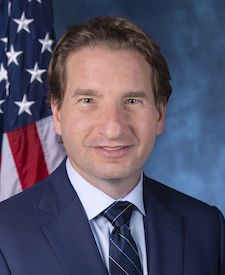
Rep. Dean Phillips
Sponsored bills
Maddy summaryHRES 793 is a resolution passed by the U.S. House of Representatives calling on Hamas to immediately release all 199 hostages taken during Hamas' October 7, 2023 attack on Israel. The resolution condemns Hamas for the attack, the taking of hostages, and threats against hostages, while stating that holding hostages violates international humanitarian law under the Geneva Conventions. It demands the immediate release of all hostages and expresses sympathy for victims and their families. As a symbolic resolution, it does not create legal obligations but formally expresses the House's position.
Maddy summaryHR 6451, the Mental Health Justice Act of 2023, provides $250 million in federal grants to states, tribes, and localities to hire mental health professionals as first responders for specific emergencies. It directs these professionals to replace police in situations involving mental health crises, substance use, or intellectual/developmental disabilities - such as when a 911 caller describes a mental health emergency or a first responder identifies someone needing mental health support. The bill requires grantees to train responders in de-escalation techniques, link individuals to community-based services (not incarceration), and report on outcomes like reduced arrests or use of force. It also mandates data collection on demographics and prevents funneling people into institutional settings, with annual reports to Congress on program effectiveness.
Maddy summaryHRES 886 is a non-binding House resolution supporting Transgender Day of Remembrance (TDoR) by recognizing the epidemic of violence against transgender people and memorializing those lost in the year ending September 30, 2023. It specifically acknowledges the disproportionate impact of violence on transgender women of color, citing 33 documented deaths in the U.S. during that period (with estimates suggesting the actual number is higher due to underreporting). The resolution calls for Congress to prioritize studying and preventing such violence while affirming that all transgender people deserve dignity and respect. As a symbolic resolution, it does not create new laws or allocate funding but serves to raise awareness and honor victims.
Maddy summaryHR 6415, the CARE for First Responders Act, creates targeted mental health support for first responders, including law enforcement, firefighters, EMTs, and 911 operators (previously excluded from many services). It establishes a 24/7 confidential mental health hotline integrated with the 988 Suicide Lifeline, funds mobile crisis teams for disaster response, and mandates specialized training to reduce stigma and improve access to culturally competent care. The bill requires the development of peer support programs and education for responders and their families on mental health coping strategies. It authorizes $5 million annually (2024-2028) for grants to states and organizations to implement these services, specifically addressing the higher rates of mental health challenges and suicide among first responders compared to the general population.
Maddy summaryHR 6433, the PARA-EMT Act of 2023, creates a federal grant program to address critical shortages in emergency medical services (EMS) personnel. It authorizes $50 million annually (2024-2028) for grants to EMS agencies to fund recruitment, training, and retention programs - including initiatives for veterans, rural communities, and youth - while requiring 20% of grants to support rural agencies. The bill also establishes a separate $20 million annual grant program to help veterans with military EMS training meet civilian certification requirements and mandates a federal study on projected EMS workforce needs through 2032. These provisions directly affect EMS agencies, training programs, and veterans seeking civilian EMS careers.
Maddy summaryThis bill establishes a federal grant program to fund state-run telephone check-in services for older adults (60+) and adults with disabilities who are socially isolated and lack support systems, with priority for rural and medically underserved communities. States would use grant funds to provide regular phone calls from volunteers or staff, with voluntary referrals to services like mental health care or nutrition programs - never mandatory interventions. The program requires annual reporting on participation, call frequency, and satisfaction, while excluding personal data, and authorizes $5 million annually for fiscal years 2025-2027, effective October 2024. It directly affects vulnerable seniors and disabled adults facing isolation, particularly in areas with limited community resources.
Maddy summaryThis resolution (HRES 872) reaffirms the U.S. commitment to transatlantic cooperation in combating antisemitism across Europe. It calls on European governments and the European Union to implement national strategies against antisemitism, standardize data collection on incidents, share best practices, and include Holocaust education in school curricula. The resolution specifically urges European countries to address rising antisemitic incidents documented by reports from ADL and Tel Aviv University, which show widespread antisemitic attitudes in multiple European nations. It does not create new laws but emphasizes collaboration to protect Jewish communities and counter online hate. The resolution directly affects European governments and Jewish communities in Europe through its recommendations for policy action.
Maddy summaryHR 6297, the Payer State Transparency Act of 2023, requires the federal government to calculate each state's annual federal tax burden and federal spending. It mandates that individual tax payments be counted as a burden on the state where the person resides, and business taxes be allocated proportionally based on where business activity occurs. Similarly, federal spending (including contracts) must be allocated by state based on where work is performed. The results will be published annually in a public report to Congress and online by the Bureau of Economic Analysis.
Maddy summaryThe Election Day Act (HR 6267) would designate "Election Day" as a federal holiday by adding it to the list of designated holidays in U.S. Code (Title 5, Section 6103). This would require federal offices to close and provide federal employees a day off on Election Day, the established date for federal elections (the first Tuesday after the first Monday in November). The bill amends the existing holiday list to insert "Election Day" after "Columbus Day." It does not change the election date but formalizes it as a federal holiday for government operations.