

Maddy summaryThis bill directs the Health and Human Services Secretary to fund research on early detection and treatment of uterine fibroids, with a focus on reducing health disparities. It authorizes grants to states for screening programs (including advanced imaging), patient navigation services, and public education campaigns - prioritizing areas with socially vulnerable populations at higher risk. States receiving funds must implement evidence-based strategies to improve access to early intervention. The bill also requires regular reports to Congress on grant outcomes and research findings related to fibroid treatment disparities and related conditions like Asherman’s Syndrome.
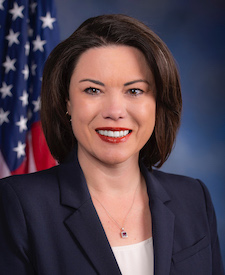
Rep. Angie Craig
Sponsored bills
Maddy summaryThis bill authorizes the placement of a memorial honoring women who contributed to World War II efforts on the National Mall or adjacent federal land in Washington, D.C. It specifically removes a location restriction (under 40 U.S.C. § 8908) to allow the memorial - previously authorized by the 2023 Consolidated Appropriations Act - to be situated within Area I of the National Mall or the National Mall Reserve. The memorial would commemorate over 18 million women who worked as pilots, engineers, mechanics, and codebreakers during the war. The bill directly affects the Women Who Worked on the Home Front Foundation, which is tasked with establishing the memorial.
Maddy summaryThe Small Business Tax Relief Act creates a graduated corporate tax rate for small businesses, lowering the rate to 18% for the first $400,000 of taxable income for corporations with total income under $5 million. It establishes special tax treatment for partners providing investment management services to partnerships, requiring that gains and losses from these services be treated as ordinary income or loss rather than capital gains or losses. The bill also increases the deduction for self-employed individuals with adjusted gross income under $400,000 from one-half to three-quarters of certain taxes. Additionally, it raises the excise tax on corporate stock repurchases from 1% to 1.5% for transactions after December 2024.
Maddy summaryHR 1803, the CURD Act, defines "natural cheese" in federal law to clarify labeling standards for consumers. It specifies that natural cheese must be made by curdling milk (or milk derivatives) through traditional methods without certain processed additives, while explicitly excluding pasteurized process cheeses, cheese spreads, and similar products. The bill requires that products labeled as "natural cheese" meet this new definition, updating FDA labeling rules under the Federal Food, Drug, and Cosmetic Act. This directly affects cheese manufacturers (who must comply with the definition) and consumers (who gain clearer product distinctions on labels). The change replaces vague industry terms with a consistent, science-based standard to improve transparency.
Maddy summaryThe Safe Stay Act requires hotels, motels, restaurants, and other places of public accommodation to install compliant carbon monoxide alarms in every sleeping or dwelling unit. It defines "compliant" alarms as those meeting the latest NFPA 72 or International Fire Code standards, and mandates that owners provide written notice to guests at check-in confirming compliance. Violations would be treated as unfair or deceptive practices under the Federal Trade Commission Act, subjecting businesses to FTC enforcement. The bill does not override stricter state or local safety standards.
Maddy summaryHR 8088, the Applicant Medical Reimbursement Act of 2024, requires the Secretary of Defense to reimburse military applicants up to $100 per person for co-pay costs they pay during medical appointments needed for the Military Entrance Processing Station (MEPS) process. This directly affects individuals applying to join the U.S. uniformed military services who incur out-of-pocket costs for required pre-enlistment medical exams. The key provision authorizes federal reimbursement for these specific co-pays, capping the amount at $100 per applicant. The bill does not change eligibility for military service or alter the MEPS requirements themselves.
Maddy summaryHR 7996, the Improving CARE for Youth Act, changes Medicaid rules to ensure states cannot block payment when a person receives both mental health and primary care services on the same day at the same facility. It directly affects Medicaid recipients, particularly youth, by removing a barrier that previously prevented coverage for integrated care during a single visit. The key provision adds a new rule to Medicaid coverage requirements, explicitly stating that states must pay for both services if provided together at the same location. This simplifies access to coordinated care without requiring separate appointments.
Maddy summaryThis bill requires the Department of Veterans Affairs to provide annual preventative health evaluations to veterans with spinal cord injuries or disorders. The evaluations cover health risk assessments, chronic pain management, dietary needs, prosthetic equipment functionality, and assistive technology options (like mobility devices or speech generators). The VA must also report annually to Congress on how many veterans receive these evaluations and assistive technologies, and consider these evaluations when assessing VA network performance. The law directly affects veterans with spinal cord injuries/disorders by mandating proactive health checks focused on preventing complications and improving mobility.
Maddy summaryHR 5530, the VA Emergency Transportation Access Act, prevents the Department of Veterans Affairs (VA) from lowering payment rates for specialized transportation used by veterans and eligible individuals (like ambulances or wheelchair vans) without strict requirements. It mandates that any rate change that could reduce access to care must first undergo a detailed review analyzing economic impacts on the VA and transportation industry, and ensure the new rate covers actual costs. The VA must also develop a formal process for rate changes and consult with industry experts, veterans' groups, and healthcare agencies before implementing such changes. This bill directly affects veterans relying on specialized transportation for medical care, particularly those in rural or underserved communities, by safeguarding their access to necessary emergency transport services.
Maddy summaryThe Love Lives On Act of 2023 modifies benefits for surviving spouses of military veterans and service members. It removes an expiration date on the Marine Gunnery Sergeant John David Fry Scholarship for surviving spouses, ensures remarriage doesn't automatically end eligibility for veterans' dependency and indemnity compensation, and expands access to commissary and exchange privileges for remarried surviving spouses. The bill also clarifies that remarried widows or widowers whose subsequent marriage ended (due to death, divorce, or annulment) can still be considered dependents under TRICARE. These changes directly affect surviving spouses of veterans and military members who have remarried or are considering remarriage, providing more consistent benefits regardless of marital status.