

Maddy summaryThe Voter Choice Act (HR 8462) creates a federal grant program to help states and local governments transition to ranked choice voting systems for elections. It authorizes $40 million in fiscal year 2025 to fund technical assistance, voting equipment, ballot design, and voter education for jurisdictions adopting this voting method. The program requires grants to cover no more than 50% of transition costs and prioritizes diverse geographic and demographic representation among recipients. This bill directly affects state and local election officials considering ranked choice voting, providing financial support without mandating its adoption. The law amends the Help America Vote Act to establish this new grant program under Title V.
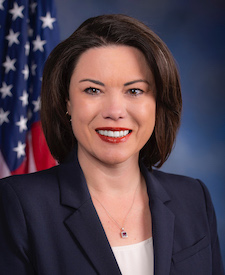
Rep. Angie Craig
Sponsored bills
Maddy summaryHR 8376, the Latino Youth Mental Health Empowerment Act, aims to address mental health disparities affecting Hispanic and Latino youth by requiring a national awareness campaign and two key studies. The bill mandates a $5 million campaign (2025-2029) to combat stigma and increase access to culturally competent mental health resources for youth, parents, and school staff through materials, workshops, and screenings. It also requires a study on mental health barriers and suicide rates (with a report to Congress within one year) and a separate study on the shortage of Hispanic/Latino mental health professionals, both requiring disaggregated data by race, ethnicity, and other factors. The bill directly targets Hispanic and Latino youth - facing higher rates of depression, suicide contemplation, and lower treatment access - by focusing on outreach, service improvements, and workforce development.
Maddy summaryThis bill directs the U.S. Department of Health and Human Services to issue guidance to states within one year on using Medicaid and CHIP programs to boost the pediatric mental health workforce. It requires states to implement strategies focused on recruiting and retaining pediatric mental health providers (including in rural/underserved areas and for racial/ethnic minorities), improving care for limited English proficiency patients, expanding telehealth services, and offering incentives like better reimbursement or student loan repayment. The guidance must cover specific approaches such as integrated care models and training for providers. States must report on implementing these strategies to Congress within two years. The bill directly affects states administering Medicaid/CHIP and pediatric mental health providers serving children.
Maddy summaryThis bill extends federal funding for poison control centers through fiscal years 2024-2028, replacing previous funding periods (2020-2024). It directly affects all 55 poison control centers nationwide by ensuring continued operation of the national toll-free number (1-800-222-1222), ongoing public education efforts, and the grant program that supports center infrastructure. The key change is simply extending the authorization period for these existing programs without altering their structure or requirements. This provides stability for centers that handle millions of annual poison exposures and emergency calls.
Maddy summaryThe Public Service Freedom to Negotiate Act of 2024 establishes federal minimum standards for collective bargaining rights for public employees and supervisory employees. The Federal Labor Relations Authority will determine if each state's laws "substantially provide" for these rights, and if not, federal standards will apply to that state. These standards include the right to self-organization, collective bargaining, recognition of labor organizations, and procedures for resolving disputes. The bill preserves existing collective bargaining agreements and excludes certain employee categories like emergency services workers from some provisions.
Maddy summaryThe Protect Local Law Enforcement Act of 2024 allows state, local, and tribal law enforcement agencies to purchase disaster response, tactical, command and control, and armored vehicles using funds from the federal Byrne JAG Program. It defines these vehicle types (including armored vehicles for ballistic protection and command vehicles for incident control) and invalidates any rules or policies issued since May 15, 2015, that restricted such purchases. This bill directly affects agencies seeking to use Byrne JAG funds for these specific vehicles, which are intended for operations like search and rescue and incident response.
Maddy summaryThis bill requires Medicare to pay separately for certain high-cost diagnostic drugs used in nuclear imaging (like those for cancer detection) starting in 2024. It applies to drugs with a daily cost of $500 or more (adjusted annually), ensuring they are not bundled with other services. Payments will be based on either the drug's average sales price or wholesale cost, with adjustments to keep overall Medicare spending unchanged. This directly affects Medicare Part B providers (hospitals, clinics) and beneficiaries receiving these specific diagnostic treatments.
Maddy summaryHR 5390, the Critical Infrastructure Manufacturing Feasibility Act, directs the Secretary of Commerce to study U.S. manufacturing gaps in critical infrastructure sectors (like energy, water, and transportation). The study must identify imported products due to domestic supply chain constraints, analyze the job and cost impacts of manufacturing them domestically, and assess feasibility in rural areas or industrial parks. The Secretary must submit a public report with findings and recommendations to Congress within 18 months of the bill's enactment. This is a procedural study bill with no funding or mandates; it solely gathers data to inform future policy decisions.
Maddy summaryThis bill updates federal research funding by directing the National Science Foundation (NSF) to prioritize two new areas of study: the impact of harmful childhood experiences (like abuse or neglect) and how toxic stress affects youth mental health. It amends existing law to require NSF-funded suicide prevention research to include these specific topics. The bill directly affects NSF research programs and grants focused on youth mental health, ensuring future studies systematically examine these factors. The change is limited to research priorities - no new funding or direct services are created.
Maddy summaryHRES 1206 is a symbolic House resolution supporting the designation of May 2024 as "Mental Health Awareness Month." It does not create new laws or funding but aims to raise public awareness about mental health challenges, emphasizing the need to reduce stigma and treat mental well-being as equally important as physical health. The resolution cites statistics on rising mental health crises - including increased anxiety, depression, and suicide rates among youth, LGBTQ+ individuals, veterans, and communities of color - to underscore the urgency of the issue. It encourages nationwide efforts to promote mental health awareness and access to care during this designated month.