

Maddy summaryThe Flex Fuel Fairness Act of 2023 requires the Environmental Protection Agency (EPA) to adjust emissions calculations for flexible fuel vehicles (FFVs) that run on E85 (a fuel blend containing 85% ethanol). It mandates that the EPA use a 31% lower CO2 emissions value for FFVs compared to standard gasoline vehicles, based on a study showing E85 reduces emissions by 31% per mile. This change directly helps vehicle manufacturers meet federal fleet emissions standards by making it easier to count FFVs as lower-emission vehicles. The EPA may further adjust this percentage higher if future studies support a larger reduction.
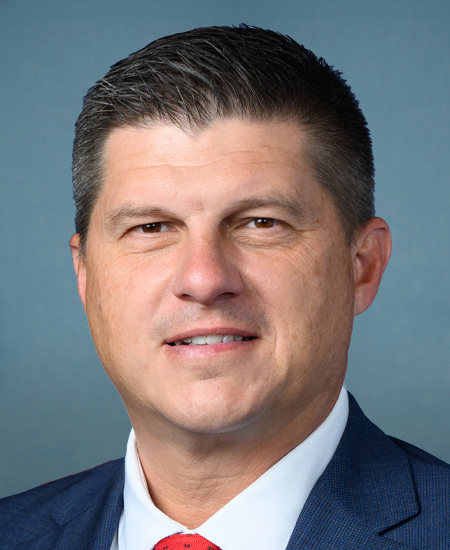
Rep. Brad Finstad
Sponsored bills
Maddy summaryHR 6514, the Holding Agencies Accountable Act, requires federal agencies to publicly disclose the date they submit a final rule to Congress and the Government Accountability Office (GAO). When an agency submits a final rule, its head must notify the Archivist of the submission date, and the Archivist will then include that date in the rule's entry in the Federal Register. This law uses existing agency funding and does not create new spending. The bill directly affects all federal agencies that issue final rules, increasing transparency about when agencies formally submit regulations for review.
Maddy summaryThis bill allows state and local governments to divest public funds (including pensions and endowments) from entities investing in China, specifically targeting those listed on U.S. government sanctions or restrictions. It defines "covered entities" as Chinese companies or their subsidiaries on lists like the OFAC Specially Designated Nationals List, military-industrial complex lists, or entities linked to forced labor. Governments must provide 90 days' notice, allow written comments, and verify an entity’s inclusion on these lists before enforcing divestment. The law explicitly excludes ERISA-covered employee benefit plans from these requirements and ensures state actions don’t conflict with federal law.
Maddy summaryHRES 870 is a symbolic House resolution supporting National Rural Health Day, observed annually on the third Thursday of November. It recognizes rural health care providers and the 60+ million people living in rural communities who face challenges like hospital closures, limited access to care, and health disparities. The resolution expresses commitment to improving rural health care accessibility and affordability but includes no new funding, programs, or policy changes - only a formal acknowledgment of existing efforts. It directly affects rural communities by honoring their health care contributions through a non-binding statement.
Maddy summaryH.J.Res. 66 disapproves a specific rule issued by the Consumer Financial Protection Bureau (CFPB) regarding small business lending under the Equal Credit Opportunity Act (Regulation B). The resolution, if passed, would prevent this CFPB rule from taking effect by declaring it "have no force or effect." The rule in question (88 Fed. Reg. 35150) aimed to clarify how lenders must evaluate small business loan applications under existing equal credit laws. This disapproval directly affects the CFPB's regulatory authority and would block the rule's implementation for small business lenders and financial institutions.
Maddy summaryHRES 683 is a non-binding resolution expressing the House's support for diplomatic efforts to encourage Mexico to fulfill annual water delivery commitments under the 1944 U.S.-Mexico treaty. The treaty requires Mexico to deliver an average of 350,000 acre-feet of water annually (over a 5-year cycle) to the U.S., but Mexico has historically delayed deliveries until the cycle ends. The resolution specifically acknowledges water shortages faced by South Texas farmers and urges Mexico to meet its annual obligations, while supporting negotiations for more reliable water agreements. It does not create new legal requirements but formally encourages diplomatic action to address the delivery delays.
Maddy summaryHR 6315, the VA Billing Accountability Act, requires the Department of Veterans Affairs (VA) to notify veterans of required copayments within 180 days for VA-provided care or 18 months for non-VA care. If the VA fails to meet these deadlines due to its own error, veterans may qualify for a waiver of the payment or a payment plan. The bill directly affects veterans who received care but were delayed in being notified about payment obligations. It also mandates the VA to review and improve its billing procedures within 180 days of enactment.
Maddy summaryHR 6433, the PARA-EMT Act of 2023, creates a federal grant program to address critical shortages in emergency medical services (EMS) personnel. It authorizes $50 million annually (2024-2028) for grants to EMS agencies to fund recruitment, training, and retention programs - including initiatives for veterans, rural communities, and youth - while requiring 20% of grants to support rural agencies. The bill also establishes a separate $20 million annual grant program to help veterans with military EMS training meet civilian certification requirements and mandates a federal study on projected EMS workforce needs through 2032. These provisions directly affect EMS agencies, training programs, and veterans seeking civilian EMS careers.
Maddy summaryThe SHIP Act imposes sanctions on foreign entities that knowingly handle Iranian petroleum, targeting those involved in port operations, transportation, refining, or ship-to-ship transfers of Iranian oil. Starting 90 days after enactment, the President must block assets, deny visas, and impose penalties on individuals or companies engaging in these activities, including family members or owners of sanctioned entities. It requires annual reports tracking Iran's oil exports, revenues, and key players like shipping companies and ports. The sanctions terminate if the President certifies Iran has stopped supporting terrorism and dismantled weapons programs.
Maddy summaryHR 6152, the Adopt GREET Act, requires the Environmental Protection Agency (EPA) to adopt and use the GREET model - a scientific tool developed by Argonne National Laboratory - for calculating lifecycle greenhouse gas emissions of transportation fuels. The bill mandates the EPA update this methodology every five years, starting 90 days after enactment, and specifically requires the first update to use the GREET model. This directly affects the EPA in its regulatory work and fuel pathway developers seeking approval for new fuels under existing EPA rules. The law ensures EPA analyses of fuel emissions align with the most current scientific model, with reporting requirements if updates are delayed.