

Maddy summaryHR 6201, the Iranian Sanctions Enforcement Act of 2023, creates the Iran Sanctions Enforcement Fund to cover costs related to seizing and forfeiting property from Iran or its designated proxies (like Hezbollah or the Revolutionary Guard Corps) that violate U.S. sanctions. The fund, initially $150 million, pays for investigative costs, property management, informant rewards, and equipment for federal, state, and local agencies involved in enforcement. It also establishes an Export Enforcement Coordination Center within Homeland Security to improve interagency cooperation on enforcing export controls targeting Iran. The bill requires annual reports on fund usage and mandates repayment of the initial $150 million by 2034, unless waived for national security reasons.
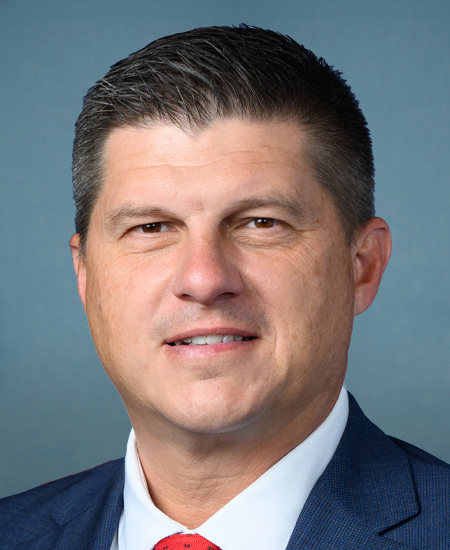
Rep. Brad Finstad
Sponsored bills
Maddy summaryThis bill denies U.S. green energy tax credits to companies connected to specific countries. It targets companies created in, controlled by, or owned by entities linked to China, Russia, Iran, or North Korea. The law amends the tax code to exclude these "disqualified companies" from claiming credits under sections covering solar, wind, and other clean energy investments. This directly affects U.S. businesses with ties to those nations seeking federal tax benefits for green energy projects.
Maddy summaryThe BAD APPS Act requires the Secretary of Defense to create a risk framework assessing foreign mobile applications (like social media or shopping apps) that could threaten Department of Defense personnel or operations. It mandates defining categories of "foreign mobile applications of concern" based on factors like data collection practices, foreign ownership, malicious software, and ties to countries deemed security threats. The framework must be updated annually, and the Secretary must issue guidance to DoD personnel on mitigating risks from these apps on government devices or during official activities. The bill directly affects DoD personnel, operations, and contractors by establishing standardized security assessments for foreign apps.
Maddy summaryHRES 812 is a formal House resolution censuring Representative Jamaal Bowman (D-NY) for pulling a fire alarm during a House vote on September 30, 2023, which disrupted legislative proceedings. The resolution states Bowman violated District of Columbia law (prohibiting false fire alarms) and federal law (prohibiting obstruction of congressional proceedings). As a result, Bowman must publicly appear in the House chamber for the censure reading and is immediately removed from all committee assignments, with no committee service permitted without a majority House vote. This resolution serves as a formal rebuke by the House, not a legal penalty.
This resolution condemns Hamas' October 7, 2023, attacks against Israel and expresses sympathy and solidarity with the families of those held hostage or killed in those attacks. The resolution also adjourns the House of Representatives in honor of those killed and unaccounted for.
Maddy summaryHRES 771 is a non-binding resolution expressing the U.S. House of Representatives' support for Israel following Hamas' October 7, 2023, attack. It condemns Hamas' actions, affirms Israel's right to self-defense, and calls for the immediate release of hostages. The resolution also urges enforcement of existing laws restricting aid to terrorists and sanctions against Iran for supporting Hamas. It does not create new policies or allocate funds, as it is a symbolic statement of congressional support.
Maddy summaryHRES 768 is a symbolic House Resolution expressing congressional support for Israel following Hamas' October 7, 2023 attacks. It condemns Hamas' actions, reaffirms Israel's right to self-defense, and calls for the immediate release of hostages. The resolution references the U.S. commitment to Israel's security through existing military aid programs, including the 2016 U.S.-Israel Memorandum of Understanding, and emphasizes enforcement of laws like the Taylor Force Act to prevent U.S. aid from reaching terrorist groups. As a symbolic resolution, it does not create new policy but serves as a statement of congressional support for Israel.
Maddy summaryHR 5110, the Protecting Hunting Heritage and Education Act, amends the Elementary and Secondary Education Act of 1965 to clarify that federal education funds cannot be used for certain weapons - but this restriction does not apply to archery, hunting, or other shooting sports training programs. The bill directly affects schools and educational programs seeking to use federal funds for these specific activities, such as archery clubs or hunting safety education. It adds an explicit exception to the existing prohibition, allowing funds to support "educational instruction or enrichment activities" in these sports under authorized programs. This change removes ambiguity about funding eligibility for such educational initiatives in K-12 schools.
Drone Research and Innovation for Law Enforcement Act of 2023 This bill directs the Federal Aviation Administration (FAA) to study, and create an approval process for, nonlethal de-escalation unmanned aircraft (i.e., drones). Under the bill, nonlethal de-escalation unmanned aircraft means an unmanned aircraft that is equipped with one or more nonlethal weapons or devices and is used by law enforcement personnel in scenarios (1) that present significant risk to human life, and (2) in which the suspected criminal is in a position to potentially escalate the situation and expose human life to a high level of risk. Specifically, the FAA must initiate a pilot research program to study the potential use of nonlethal de-escalation unmanned aircraft by law enforcement agencies. As part of the study, the FAA must enter into interagency agreements with various federal, state, and local agencies. The FAA must submit a report on the results of the research program to Congress. The report must include a plan outlining a proposed FAA application process for law enforcement to seek permission to operate nonlethal de-escalation unmanned aircraft. Within 90 days of submitting the report, the FAA must initiate rulemaking to create a process through which the FAA may provide approval to operate these unmanned aircraft.
Maddy summaryThe MCM PRV Reauthorization Act extends the deadline for a priority review program that accelerates the approval of medical treatments for threats like bioterrorism agents, from 2023 to 2033. It amends the Federal Food, Drug, and Cosmetic Act to update the expiration date in Section 565A(g), maintaining the existing process for expediting reviews of medical countermeasures. This change directly affects drug manufacturers developing treatments for national security threats and the FDA, which administers the priority review pathway. The bill does not alter the program's criteria or scope but ensures continued support for these critical medical countermeasures through 2033.