

Maddy summaryHR 6934, the Families’ Rights and Responsibilities Act, protects parents' fundamental right to direct their child's upbringing, education, and health care without government interference. It prohibits government actions that substantially burden these parental rights - including withholding benefits, imposing penalties, or excluding families from programs - unless the government proves a "compelling interest" and uses the "least restrictive means." The bill explicitly applies to all federal laws and requires courts to consider parental rights as a fundamental right under the Constitution, with exceptions only for actions causing serious child injury or death. It also adds parental rights to existing legal frameworks for recovering attorney fees in court cases involving these protections.
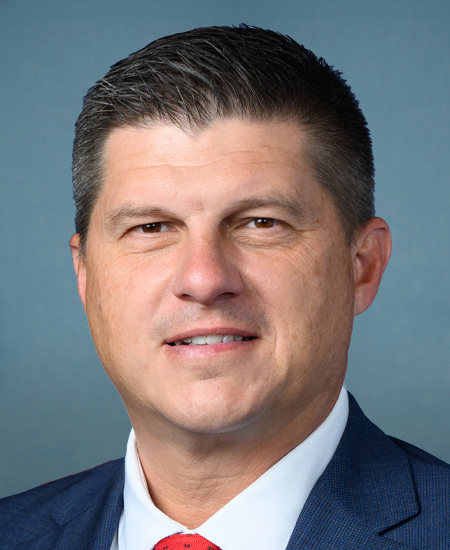
Rep. Brad Finstad
Sponsored bills
Maddy summaryHR 1147, the Whole Milk for Healthy Kids Act of 2023, allows schools participating in the National School Lunch Program to offer whole milk as an option during lunch. It amends the school lunch law to explicitly permit schools to serve flavored and unflavored whole milk alongside reduced-fat, low-fat, and fat-free milk choices for students. The bill also requires the Secretary of Agriculture to adjust meal regulations to account for saturated fat from whole milk, ensuring it doesn't count against meal fat limits. This change directly affects participating schools and the students who receive school lunches, expanding their milk beverage options.
Maddy summaryThe Defense of Property Rights Act (HR 6758) would allow property owners to seek compensation in either U.S. District Court or the U.S. Court of Federal Claims when government actions - such as regulations or physical takings - deprive them of property rights without "just compensation." It repeals a law that previously forced owners to choose between courts, clarifies that "just compensation" includes full market value and business losses (with interest), and shifts the burden of proof to the government to justify regulatory actions. The bill directly affects individuals and businesses owning real estate, water rights, mineral rights, or other property protected under the Fifth Amendment, particularly when government rules significantly restrict property use or value. It sets a 6-year statute of limitations for claims and requires courts to award attorney fees to successful plaintiffs.
Maddy summaryHR 6734 prohibits the use of federal funds to finalize, implement, or enforce the Bureau of Alcohol, Tobacco, Firearms, and Explosives' (ATF) proposed rule (2022R-17) defining "engaged in the business as a dealer in firearms." This bill directly affects the ATF by blocking funding for this specific regulatory rule, which was proposed in August 2023. The legislation does not create new requirements but prevents federal resources from being used to advance this particular ATF regulation.
Maddy summaryThis bill reauthorizes and extends funding for programs addressing substance use disorders and opioid addiction, including residential treatment for pregnant and postpartum women, first responder training, and community recovery initiatives. It increases funding levels for these programs, adds xylazine to Schedule III of controlled substances, and requires a study on remote monitoring for patients prescribed opioids. The bill also expands Medicaid coverage requirements for medication-assisted treatment and mandates reporting on mental health condition data alongside substance use disorder data, directly affecting individuals with substance use disorders, healthcare providers, and state and tribal governments.
Maddy summaryThis bill establishes tax relief for qualified residents of Taiwan earning income in the United States by reducing tax rates on interest, dividends, and royalties to 10% or 15% (instead of the standard 30%). It also exempts certain wages and income from entertainment activities under $30,000 from U.S. taxation. To qualify, individuals must meet specific residency requirements, and entities must demonstrate substantial business activity in Taiwan. The bill modifies withholding tax procedures to implement these new rates and requires reciprocal tax benefits from Taiwan to be in place.
This resolution disapproves of the United Nations' recommendations to reduce meat consumption in their global food systems' road map and opposes the use of federal resources to reduce meat consumption.
Maddy summaryThe Innovative FEED Act of 2023 defines and regulates "zootechnical animal food substances" - substances added to animal feed to affect digestion, reduce foodborne pathogens, or alter gut microbiome without providing nutrition. It requires these substances to be approved as food additives by the FDA under existing rules, with specific data on intended effects and mandatory labeling stating "Not for use in the diagnosis, cure, mitigation, treatment, or prevention of disease in animals." The bill excludes drugs, hormones, ionophores, and other substances from this category. This directly affects animal feed manufacturers, the FDA’s regulatory process, and the labeling requirements for these products.
Maddy summaryHR 6573, the Protecting Military Servicemembers' Data Act of 2023, prohibits data brokers from selling, reselling, or sharing military servicemember lists to "covered nations" (as defined in federal law). It directly affects military members by preventing their personal information - contained in specialized lists created for compiling military service details - from being sold to specific foreign governments. The key mechanism bans the commercial transfer of these lists, with enforcement handled by the Federal Trade Commission and state attorneys general. The law takes effect within one year of enactment or when the FTC issues final rules, whichever comes first. This is a concrete policy change targeting data brokers' practices, not a procedural measure.
Maddy summaryThis resolution censures Representative Jamaal Bowman (NY-16) for pulling a fire alarm during a critical House vote on federal funding in September 2023. It follows Bowman's guilty plea to violating D.C. law (section 22-1319) for falsely reporting a fire, which forced the evacuation of the Cannon Building and disrupted congressional business. The resolution requires Bowman to appear in the House chamber for the public reading of the censure and formally accepts his $1,000 fine and apology letter as part of the disciplinary action. This is a procedural House disciplinary measure, not a policy change affecting constituents or legislation.