

Maddy summaryHR 1793, the Veterans Readiness and Employment Transparency Act of 2025, requires the Department of Veterans Affairs (VA) to improve access to vocational rehabilitation services for veterans with service-connected disabilities. The bill mandates a dedicated VA hotline, updated regional office websites with contact details, and requires VA counselors to hold monthly staff Q&A sessions and provide in-person briefings at local educational institutions (or virtual briefings for institutions over 150 miles away). It also requires the VA to submit an annual report detailing the number of veterans requesting, receiving, and being denied extensions to their rehabilitation program periods. These provisions directly affect veterans using VA vocational rehabilitation programs and VA regional office staff responsible for delivering those services.
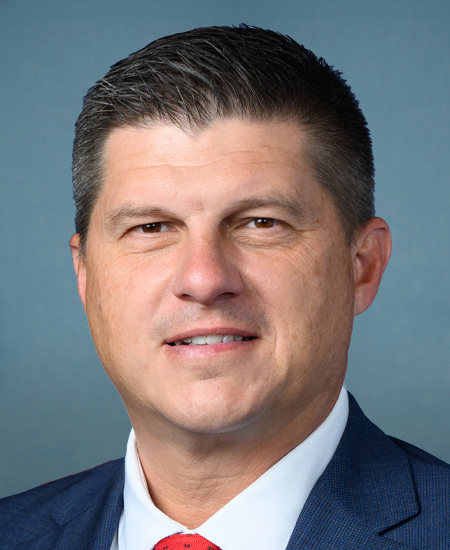
Rep. Brad Finstad
Sponsored bills
Maddy summaryThis bill requires the Secretaries of Health and Human Services and Defense to develop a 10-year strategy within 180 days of enactment to maintain stockpiles of anthrax countermeasures (like treatments and vaccines) in the Strategic National Stockpile and for military personnel and families on U.S. bases. It mandates annual reports to Congress detailing anthrax threats from foreign adversaries and terrorist groups, government programs addressing these threats, and efforts to ensure countermeasures are available for military dependents abroad. The strategy must prioritize sustainable cooperation with manufacturers and address multidrug-resistant strains. The bill directly affects military personnel, their families, and civilians on military installations by strengthening anthrax defense capabilities.
Maddy summaryThe Affordable Housing Credit Improvement Act of 2025 would reform the Low-Income Housing Credit program, which provides tax credits to developers of affordable housing. It would increase state allocations based on population with annual cost-of-living adjustments, modify tenant eligibility rules to allow higher income limits for some residents, and add protections for domestic violence victims in housing. The bill would simplify rules for rural and Native American housing projects, clarify credit eligibility requirements, and require greater transparency in program administration. These changes would directly affect developers, property owners, and low-income tenants in housing projects that receive LIHC tax credits.
Maddy summaryHR 2729, the "Carnivals are Real Entertainment Act," creates a new temporary work visa category for carnival and circus workers. It directly affects mobile entertainment providers (like traveling carnivals, circuses, and affiliated food/game concession services) and their workers who perform essential tasks such as transporting, assembling, operating, and maintaining rides and equipment at seasonal fairs and festivals. The bill amends immigration law to define "mobile entertainment workers" as those entering temporarily for functions integral to these operations, subject to labor program requirements similar to other temporary work visas. It requires the Departments of Homeland Security and Labor to issue implementing rules within one year of enactment.
Maddy summaryThis bill amends immigration law to expand mandatory detention for non-citizen immigrants convicted of specific property crimes. It adds trespassing, vandalism, and arson to the list of offenses that trigger detention under Section 236(c) of the Immigration and Nationality Act, alongside burglary and serious bodily injury. Non-citizen immigrants convicted of these crimes would now face automatic detention without bond, rather than potentially being released pending removal proceedings. The key change modifies existing detention criteria to include these three property crimes as grounds for mandatory immigration detention.
Maddy summaryHR 2666, the CBO Scoring Accountability Act, requires the Congressional Budget Office (CBO) to annually analyze and publicly report on the actual costs and revenue impacts of major federal legislation for the first 10 years after it becomes law. It mandates that the CBO compare actual spending/revenue results against prior estimates, and if discrepancies exceed 10% for costs or revenue, the CBO must explain the causes in a report to Congress. This applies to bills projected to affect at least 0.25% of U.S. GDP in spending or revenue (defined as "major legislation"), and federal agencies must provide data to support these analyses. The bill aims to improve transparency around budget estimates without altering legislative processes.
Maddy summaryHR 2672, the Religious Workforce Protection Act, extends temporary nonimmigrant status for religious workers whose applications for permanent residency (green cards) are delayed due to visa backlogs. It directly affects religious workers (such as pastors or missionaries) who are principal or derivative beneficiaries of pending immigrant petitions under specific visa categories, allowing them to maintain their work status beyond the usual 5-year limit while their green card applications are processed. Key provisions include granting extensions until a final decision is made on their adjustment of status application, modifying rules to allow limited job flexibility for these workers, and exempting them from a 1-year foreign residence requirement if they left the U.S. due to the prior 5-year cap. The bill aims to prevent religious workers from losing their legal status during lengthy immigration processing.
Maddy summaryHR 2117, the "Crop Insurance for Future Farmers Act," extends enhanced crop insurance support to beginning farmers and veteran farmers. It increases the definition of "beginning farmer" from 5 to 10 crop years and updates veteran farmer definitions similarly. The bill adds tiered premium reductions: for the first two years of participation, insurance costs are reduced by 15 percentage points each year, decreasing to 10 percentage points for years five through ten. This directly affects new and veteran farmers by lowering their insurance costs during early years of operation.
Maddy summaryThis bill, HR 2102 (Major Richard Star Act), allows veterans with combat-related disabilities to receive both full military retired pay and veterans' disability compensation simultaneously, without the previous offset that reduced retired pay. It directly affects veterans already eligible for both benefits due to combat-related injuries, removing the requirement that their retired pay be reduced by the disability compensation amount. The key provision amends Title 10 and Title 38 to eliminate the offset rule (sections 5304 and 5305 of Title 38) for these veterans. The change applies to payments starting after the bill’s enactment date, effective for all qualifying veterans. This is a policy change to increase financial support for affected veterans, not a new benefit.
Maddy summaryThis bill increases loan limits for farmers under the Farm Service Agency. It raises farm ownership loan caps from $600,000/$1.75 million to $850,000/$3.5 million (for direct/guaranteed loans) and operating loan caps from $400,000/$1.75 million to $750,000/$3 million, effective 2025. It also creates a refinancing program allowing distressed guaranteed loans to convert to direct loans if borrowers prove problems can be fixed and the farm can return to financial stability. Additionally, it doubles the microloan limit from $50,000 to $100,000 and updates inflation calculations for loan adjustments using USDA land value data instead of previous metrics.