

This bill modifies the tax deduction for the expenses of an eligible educator (an individual who is a kindergarten through grade 12 teacher, instructor, counselor, principal, or aide in a school for at least 900 hours during a school year) to include as an eligible educator an interscholastic sports administrator or coach. It also eliminates the exclusion of nonathletic supplies for courses of instruction in health or physical education as a deductible expense.
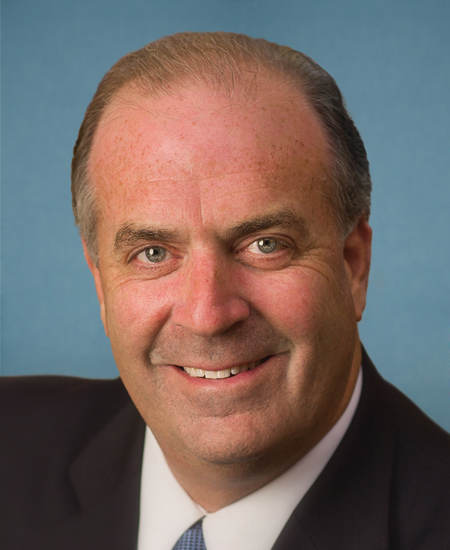
Rep. Daniel T. Kildee
Sponsored bills
Promoting Programming, Research, Education and Preservation in Civics and Government Act or the PREP Civics and Government Act This bill amends the National Foundation on the Arts and the Humanities Act of 1965 to include the study and interpretation of civics and government under the definition of humanities.
Hiring Incentive to Return Employment Act of 2021 or the HIRE Act of 2021 This bill increases the rate of the work opportunity tax credit from 40% to 50% of wages paid to members of the targeted groups eligible for such credit over a two-year period. It also increases to $10,000 the amount of wages taken into account for purposes of the credit.
SOS: Sustaining Outpatient Services Act This bill allows for payment under the Medicare prospective payment system for hospital outpatient department services of certain items and services that are furnished at off-campus outpatient departments. Specifically, the bill allows for payment of items and services for which payments to physician specialists (under the Medicare physician fee schedule) did not exceed $2 million during the previous year.
Combating Sexual Harassment in Science Act This bill addresses sexual harassment and gender harassment in the science, technology, engineering, and mathematics (STEM) fields by supporting research regarding such harassment and efforts to prevent and respond to such harassment. (Sec. 4) This bill directs the National Science Foundation (NSF) to award grants to institutions of higher education or nonprofit organizations (or their consortia) to expand research into sexual harassment and gender harassment in the STEM workforce, including students and trainees; and examine interventions for reducing the incidence and negative consequences of such harassment. (Sec. 5) The NSF must convene a working group composed of representatives of federal statistical agencies to develop questions on sexual harassment and gender harassment in STEM departments in order to gather national data on the prevalence, nature, and implications of such harassment in institutions of higher education. (Sec. 6) The NSF shall enter into agreements with the National Academies of Sciences, Engineering, and Medicine to (1) update a responsible conduct guide issued by the National Academies to include, among other things, updated professional standards of conduct in research and evidence-based practices for fostering a climate that is intolerant of sexual harassment and gender harassment; and (2) study the influence of such harassment in institutions of higher education on the career advancement of individuals in the STEM workforce. (Sec. 7) The National Science and Technology Council shall establish an interagency working group to coordinate the federal science agencies' efforts to reduce the prevalence of sexual harassment and gender harassment involving grant personnel. The Office of Science and Technology Policy must develop a uniform set of policy guidelines for such agencies to prevent and respond to reports of sexual harassment and gender harassment.
National Estuaries and Acidification Research Act of 2021 or the NEAR Act of 2021 This bill directs the Department of Commerce to arrange for the National Academies of Sciences, Engineering, and Medicine to conduct a study that examines the existing science of ocean acidification in estuarine environments, examines the challenges to studying ocean acidification and acidification's interactions with other environment stressors in estuarine environments, provides recommendations for improving future research with respect to ocean acidification in estuarine environments, and identifies pathways for applying science in management and mitigation decisions related to ocean acidification in those environments.
MSI STEM Achievement Act (Sec. 4) This bill supports efforts to increase science, technology, engineering, and mathematics (STEM) education at minority-serving institutions of higher education (IHEs), including Historically Black Colleges and Universities and Tribal Colleges or Universities. The bill requires the National Science Foundation to award grants for purposes including building the capacity of such IHEs to increase the number and success of their students in the STEM workforce. (Sec. 5) The Office of Science and Technology Policy (OSTP) shall develop a uniform set of policy guidelines for federal science agencies to carry out a program of outreach activities to increase clarity, transparency, and accountability for federal science agency investments in STEM education and research activities at minority-serving IHEs. The OSTP shall submit to Congress a report containing a strategic plan for each federal science agency to increase the capacity of minority-serving IHEs to compete for grants, contracts, or cooperative agreements and to encourage such IHEs to participate in federal programs.
Coastal and Ocean Acidification Stressors and Threats Research Act of 2021 or the COAST Research Act of 2021 This bill addresses the effects of ocean and coastal acidification on marine organisms and ecosystems. Specifically, the bill reauthorizes through FY2026 and revises the Ocean Acidification Program of the National Oceanic and Atmospheric Administration and the ocean acidification grant program of the National Science Foundation. The bill expands those programs, as well as the ocean acidification activities of the National Aeronautics and Space Administration (NASA), to include efforts to research and monitor the effects of coastal acidification.
Ghost Army Congressional Gold Medal Act This bill directs the Speaker of the House of Representatives and the President pro tempore of the Senate to award a Congressional Gold Medal to the 23rd Headquarters Special Troops and the 3133d Signal Service Company, known as the Ghost Army , collectively, in recognition of its service during World War II.
Rural STEM Education Research Act This bill specifies federal scientific research and development efforts towards STEM (science, technology, engineering, and mathematics, including computer science) workforce development and rural STEM education. (Sec. 3) The bill amends the objectives of the Manufacturing Extension Partnership program to include the provision to secondary schools of information about the job skills needed in manufacturing companies, and the promotion and expansion of certification systems offered through local high schools. The activities of a manufacturing extension center are expanded to include local high schools in the facilitation of collaborations and partnerships between manufacturing companies and schools to help those entities better understand the specific needs of manufacturers and to help manufacturers better understand the skill sets that students learn in school programs. The National Institute of Standards and Technology (NIST) must award prizes to stimulate research and development of creative technologies in order to deploy affordable and reliable broadband connectivity to underserved rural communities. NIST may award not more than a total of $5 million in prizes. (Sec. 4) The Office of Science and Technology Policy must establish a broadband research and development working group to address national research challenges and opportunities for improving broadband access and adoption across the United States. (Sec. 5) The National Science Foundation (NSF) shall enter into an agreement with the National Academy of Sciences under which the National Academy of Sciences agrees to evaluate aspects of STEM education and workforce development in rural areas. (Sec. 6) The Government Accountability Office shall conduct a study on the engagement of rural populations in federal STEM programs. (Sec. 7) Experimental Program to Stimulate Competitive Research (EPSCoR) programs shall consider modifications to award structures to increase the capacity of rural communities to provide quality STEM education and STEM workforce development programming to students and teachers. (Sec. 8) The NSF must award grants to institutions of higher education or nonprofit organizations for (1) research and development to advance innovative approaches to support and sustain high-quality STEM teaching in rural schools, (2) research and development of programming to identify the barriers rural students face in accessing high-quality STEM education, (3) development of innovative solutions to improve the participation and advancement of rural students in grades Pre-K through 12 in STEM studies, and (4) research on online STEM education courses for rural communities. The NSF may establish a pilot program of regional cohorts in rural areas to provide peer support, mentoring, and hands-on research experiences for rural STEM educators of students in grades Pre-K through 12 in order to build an ecosystem of cooperation among educators, researchers, academia, and local industry.