

STEM Opportunities Act This bill provides for guidance, data collection, and grants for groups historically underrepresented in science, technology, engineering, and mathematics (STEM) education at institutions of higher education (IHEs) and at federal science agencies. Specifically, the bill requires the Office of Science and Technology Policy (OSTP) to provide specified guidance related to such groups to federal science agencies and IHEs. Each federal science agency must collect comprehensive demographic data on recipients of merit-reviewed research and development grants given to IHEs and federal laboratories supported by that agency. Each agency must also implement recommendations from the OSTP report titled Reducing the Impact of Bias in the STEM Workforce . In addition, each agency must carry out a pilot program and implement evidence-based policies and practices to minimize the effect of implicit bias in the grant review process. The National Science Foundation (NSF) must carry out and publish a survey to collect data on the demographics of STEM faculty, by broad fields of STEM, at different types of IHEs. The NSF must also carry out a variety of grant programs, including grants for increasing (1) the recruitment, retention, and advancement of individuals from underrepresented minority groups in STEM careers; (2) the recruitment and retention of minority students who are underrepresented in STEM fields; and (3) student participation in computer science and computational thinking education programs at tribal colleges and universities.
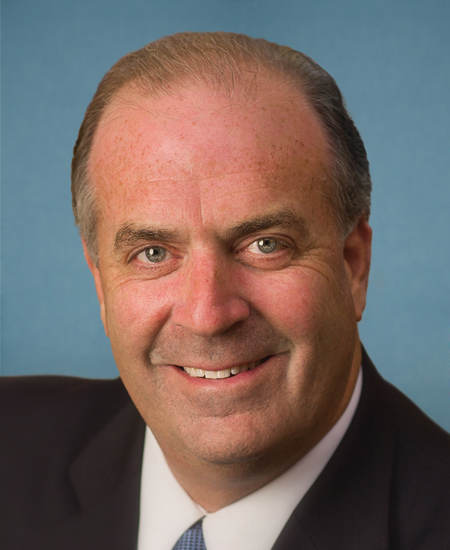
Rep. Daniel T. Kildee
Sponsored bills
Supporting Early-Career Researchers Act This bill authorizes the National Science Foundation to establish a two-year pilot program to award grants to highly qualified early-career investigators to carry out an independent research program at the institution of higher education chosen by such investigator, to last for a period not greater than two years. The NSF shall select grantees from among citizens, nationals, and lawfully admitted permanent resident aliens of the United States. The NSF shall conduct program outreach to recruit fellowship applicants (1) from all regions of the country; (2) from historically underrepresented populations in the fields of science, technology, engineering, and mathematics (STEM); and (3) who graduate from or intend to carry out research at a variety of types of institutions of higher education, including Historically Black Colleges and Universities.
This resolution expresses support for the designation of DIPG Awareness Day. DIPG is diffuse intrinsic pontine glioma, a terminal childhood brain cancer.
Institutional Grants for New Infrastructure, Technology, and Education for HBCU Excellence Act or the IGNITE HBCU Excellence Act This bill establishes a grant program to support long-term improvements of historically Black colleges and universities (HBCUs) and graduate programs at HBCUs. Specifically, the bill requires the Department of Education (ED) to award grants to HBCUs to improve campus facilities. A recipient must use grant funds for certain activities, such as constructing or renovating facilities, carrying out major repairs, and strengthening the safety and security of a campus. Any new construction, modernization, or renovation projects must meet building code and energy and water conservation requirements. Further, HBCUs must seek to procure contracts from certain small businesses, including those owned and controlled by veterans and service-disabled veterans. The bill prohibits the use of grant funds for specified activities, including for the payment of routine and predictable maintenance costs, minor repairs, and utility bills. The Government Accountability Office must study the implementation of the grant program. The bill also requires ED to repay the outstanding balance of principal, interest, fees, and costs and any related reimbursements for certain capital financing loans.
Protect Drinking Water from PFAS Act of 2021 This bill requires the Environmental Protection Agency (EPA) to address the level of perfluoroalkyl and polyfluoroalkyl substances (PFAS) in drinking water. PFAS are man-made and may have adverse human health effects. A variety of products contain PFAS, such as nonstick cookware or weatherproof clothing. In addition, the EPA must publish a maximum contaminant level goal (MCLG) and promulgate a national primary drinking water regulation for PFAS. The MCLG and regulation must be protective of the health of subpopulations that may be at greater risk than the general population of adverse health effects from exposure to PFAS in drinking water.
Medicare for All Act of 2021 This bill establishes a national health insurance program that is administered by the Department of Health and Human Services (HHS). Among other requirements, the program must (1) cover all U.S. residents; (2) provide for automatic enrollment of individuals upon birth or residency in the United States; and (3) cover items and services that are medically necessary or appropriate to maintain health or to diagnose, treat, or rehabilitate a health condition, including hospital services, prescription drugs, mental health and substance abuse treatment, dental and vision services, and long-term care. The bill prohibits cost-sharing (e.g., deductibles, coinsurance, and copayments) and other charges for covered services. Additionally, private health insurers and employers may only offer coverage that is supplemental to, and not duplicative of, benefits provided under the program. Health insurance exchanges and specified federal health programs terminate upon program implementation. However, the program does not affect coverage provided through the Department of Veterans Affairs or the Indian Health Service. The bill also establishes a series of implementing provisions relating to (1) health care provider participation; (2) HHS administration; and (3) payments and costs, including the requirement that HHS negotiate prices for prescription drugs. Individuals who are age 18 or younger, age 55 or older, or already enrolled in Medicare may enroll in the program starting one year after enactment of this bill; other individuals may buy into the program at this time. The program must be fully implemented two years after enactment.
COVID - 19 Hate Crimes Act This bill requires a designated officer or employee of the Department of Justice (DOJ) to facilitate the expedited review of COVID-19 (i.e., coronavirus disease 2019) hate crimes and reports of COVID-19 hate crimes. It defines COVID-19 hate crime as a violent crime that is motivated by two things: (1) the actual or perceived characteristic (e.g., race or ethnicity) of any person, and (2) the actual or perceived relationship to the spread of COVID-19 of any person because of that characteristic. The bill requires DOJ to issue guidance for state and local law enforcement agencies on (1) the establishment of online hate crime reporting processes and the availability of online reporting in multiple languages, and (2) the expansion of culturally competent education campaigns. Additionally, DOJ and the Department of Health and Human Services must issue guidance on best practices for mitigating racially discriminatory language in describing the COVID-19 pandemic.
National Child Identification Act of 2021 This bill authorizes the Department of Justice to award grants for state attorneys general to distribute in-home fingerprint and DNA identification kits to parents of children who attend kindergarten or elementary school. The kits may be turned over to law enforcement to assist in locating missing or trafficked children.
Uyghur Human Rights Protection Act This bill designates certain residents of the Xinjiang region in China as prioritized refugees of special humanitarian concern and addresses other related issues. This priority designation shall apply to individuals (and the spouses, children, and parents of such individuals) who (1) reside in or fled Xinjiang and who suffered persecution on account of their peaceful political, religious, or cultural activities or associations, or have a well-founded fear of such persecution; or (2) have been formally charged, detained, or convicted for certain peaceful actions related to Xinjiang. Such an individual may not be denied admission into the United States based primarily on an arrest or other adverse government action due to that individual's participation in protests. The bill also waives certain immigration-related requirements for such individuals. Furthermore, a Chinese national seeking refugee status shall be considered to have been persecuted on account of political opinion if the Chinese government revoked that individual's residency in any region of China because the individual submitted a nonfrivolous application for a U.S. immigration benefit. Similarly, if the Chinese government revoked a Chinese national's citizenship, nationality, or residency because that individual filed for a U.S. immigration benefit, that revocation shall constitute a changed circumstance. (Among other things, a changed circumstance may allow an individual who has been rejected for asylum to apply again.)
National Gun Violence Research Act This bill promotes gun violence research, including by removing limitations on the use of firearms tracing data by the Bureau of Alcohol, Tobacco, Firearms and Explosives; permitting funds made available to the Department of Health and Human Services to be used for gun violence research; establishing the National Gun Violence Research Program to promote gun violence research; and authorizing various competitive grants to support research into the nature, causes, consequences, and prevention of gun violence.