

Maddy summaryThis bill simplifies participation in Medicare's Accountable Care Organization (ACO) program by removing distinctions between small and large ACOs and eliminating the requirement for new ACOs to assume financial risk for three years before joining shared savings models. It creates a new "100% shared savings" option where ACOs keep all savings from cost reductions but bear full financial responsibility for losses. The bill also mandates clearer, transparent benchmark calculations for ACO performance, establishes appeal processes for disputed benchmarks, and requires technical assistance for rural and underserved providers. These changes directly affect Medicare ACOs, particularly smaller or newer organizations in rural or safety-net settings, aiming to make value-based care participation more accessible.
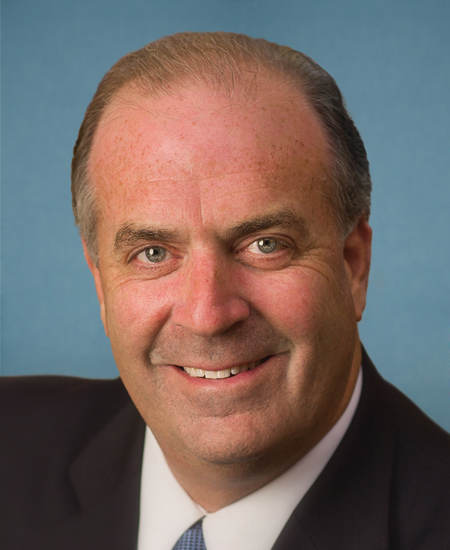
Rep. Daniel T. Kildee
Sponsored bills
Maddy summaryThe Lowering Drug Costs for American Families Act expands Medicare's drug price negotiation program from 20 to 50 drugs, allowing the government to negotiate lower prices for these medications. It requires private health insurance plans and group health coverage to apply these negotiated prices to their members' cost-sharing for covered drugs, with plans able to opt out while publicly disclosing their decision. The bill also extends these negotiated prices to drugs covered by commercial insurance markets, not just Medicare. This would directly affect Medicare beneficiaries and people with private health insurance who take the negotiated drugs.
Maddy summaryThis bill adds free PFAS blood testing to Medicare Part B coverage for seniors. It requires Medicare to cover physician-ordered blood tests for perfluoroalkyl and polyfluoroalkyl substances (PFAS) with no out-of-pocket costs starting January 1, 2024. The policy directly affects Medicare beneficiaries (primarily seniors) who receive a doctor's order for PFAS testing. Key provisions amend Medicare rules to include PFAS testing under preventive services with 100% coverage, defining it as a blood test to measure PFAS concentration. This change eliminates cost-sharing for eligible seniors seeking this specific type of screening.
Maddy summaryHR 4874, the Technical Assistance for Health Grants Act, requires the U.S. Department of Health and Human Services to provide tailored technical assistance to entities applying for or managing health grants under Section 2008 of the Social Security Act. It specifically mandates support for Indian tribes, tribal organizations, territories, and grantees running demonstration projects, including peer conferences and information sharing on best practices. The bill allocates $15 million for fiscal year 2024 to fund this assistance and requires annual reports to Congress on the nature of support provided. This law directly affects health grant recipients and aims to improve their ability to apply for, administer, and share knowledge about grant-funded projects. The changes take effect October 1, 2023.
Maddy summaryThe Pathways to Health Careers Act creates a federal grant program to help low-income individuals (those with family income at or below 200% of the Federal poverty level) enter health professions. It provides $425 million annually for fiscal years 2024-2028 to fund training programs that must include support services like adult basic education, child care, transportation, and career coaching. The bill requires grant recipients to serve at least 10% of participants who qualify for Temporary Assistance for Needy Families (TANF) and sets aside funding for demonstration projects focused on people with arrest/conviction records and maternal health career pathways. Recipients must track outcomes including credential attainment, employment in health professions, and earnings. This program directly affects low-income individuals seeking health careers and the organizations that will administer these training programs.
Maddy summaryThe Social Security 2100 Act would significantly enhance Social Security benefits for millions of Americans by increasing monthly payments for retirees, disabled workers, widows/widowers, and children. Key provisions include raising the minimum benefit for long-term low earners, improving cost-of-living adjustments using a more accurate index, eliminating the 5-month waiting period for disability benefits, and extending child benefits to age 26. The bill also changes how Social Security taxes are calculated by applying them to income above $400,000 and establishes a unified Social Security Trust Fund to manage program finances. Most provisions would apply to benefits payable from 2025 through 2034, affecting all current and future Social Security beneficiaries.
Maddy summary# Summary of Trade Legislation Document This is a comprehensive trade bill containing multiple sections that: 1. **Extends and modifies the Trade Adjustment Assistance (TAA) program** through 2030, with increased funding and expanded benefits for: - Workers (including child care, transportation, and mental health services) - Firms (with new eligibility criteria) - Communities (with strategic planning requirements) - Farmers (with new qualifying requirements) 2. **Increases health coverage tax credits** from 72.5% to 80% of premium costs for eligible individuals. 3. **Modifies and extends the Generalized System of Preferences (GSP)** through December 31, 2026, with new eligibility criteria including: - Human rights compliance - Environmental protection - Enforcement of labor rights - Review of laws relating to worker rights and equal protection 4. **Reauthorizes the American Manufacturing Competitiveness Act** through 2026, with new requirements for petitions including: - Certification that articles are not "finished goods" - Additional reporting requirements 5. **Provides new duty suspensions and reductions** for over 50 specific chemical and material products (sections 4101-4155), including: - Various chemicals (e.g., lithium hexafluorophosphate, potassium fluoride) - Specialty materials (e.g., scandium crystals, silica gel cat litter) - Food products (e.g., Irish dairy chocolate crumb, coconut water) - Industrial materials (e.g., tungsten concentrate, neodymium metal) The legislation includes detailed provisions for implementation, reporting requirements, and compliance reviews, with most provisions effective upon enactment and extending through 2030 for program funding.
Maddy summaryThis bill, the Public Servants Protection and Fairness Act of 2023, amends Social Security to better protect public servants who work in jobs not covered by Social Security (such as certain government positions). It creates a new formula for calculating retirement benefits that combines both covered and noncovered earnings, ensuring public servants receive the higher of two benefit calculations. The bill also provides an additional $150 monthly payment for certain public servants whose benefits were previously reduced by the windfall elimination provision. It improves Social Security account statements to clearly show noncovered earnings and requires a study of how state retirement plans handle these benefits. These changes will apply to benefits starting in 2025.
Maddy summaryThis bill modifies the $800 de minimis exemption for small shipments entering the U.S. duty-free. It excludes goods from nonmarket economy countries and nations on the U.S. trade "priority watchlist" from this exemption. Importers must submit detailed documentation (including origin, value, shipper details, and classification) to U.S. Customs within 180 days of enactment. Providing false information could result in $5,000 civil penalties per violation. The changes apply to shipments entered on or after 180 days after the bill’s enactment.
Maddy summaryThe Leveling the Playing Field 2.0 Act (HR 3882) updates U.S. trade law to better address international trade practices that disadvantage American businesses. It establishes special rules for handling multiple investigations of the same merchandise (called "successive investigations"), requiring the Commerce Department to consider previous injury determinations when making new findings. The bill also creates mechanisms to address market distortions from foreign government subsidies, including currency undervaluation, and strengthens procedures to prevent duty evasion through certification requirements for importers. These changes primarily affect foreign exporters of goods subject to U.S. antidumping and countervailing duty investigations, as well as U.S. importers of those goods.