

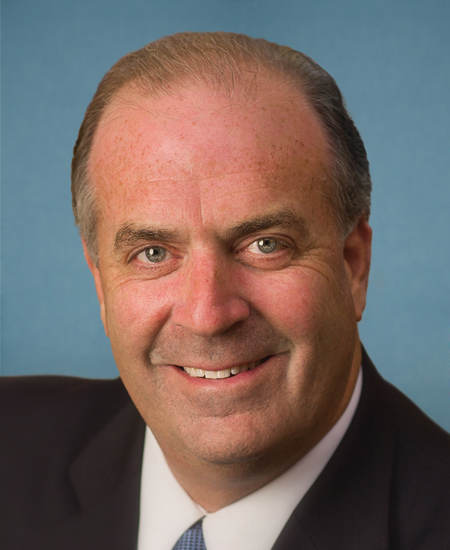
Photo of Daniel T. Kildee
D United States House · District 8 · Michigan

Rep. Daniel T. Kildee

Compare
Total votes
2,168
all sessions
Attendance
98%
46 missed
Near the chamber average
With party
97%
of cast votes
Near the chamber average
Bipartisan score
2%
crosses aisle rarely
Near the chamber average
Sponsored
981
bills & resolutions
Near the chamber average
Committees
0
assignments
981 bills and resolutions

Sponsored bills

Total
981
Primary
38
Co-sponsor
943
This page
981
matching current filters
Co-sponsor HR 3739
In committee · United States House · Co-sponsor
FAIR TARIFF Act of 2023

Maddy summaryHR 3739, the FAIR TARIFF Act of 2023, requires U.S. Customs to refund overpaid duties for specific imports from European Union countries during two defined periods: October 18-December 17, 2019, and January 12-February 10, 2022. It targets products classified under certain Harmonized Tariff Schedule codes (e.g., 9903.89.10-9903.89.49 for 2019, 9903.89.57-9903.89.59 for 2022) that were incorrectly taxed due to tariff misclassification. Importers must apply for refunds within one year of the law’s enactment, with refunds processed within 180 days of application. The bill also mandates a 60-day advance notice in the Federal Register before implementing new tariff increases under Section 301 of the Trade Act of 1974.

In committee Dec 17, 2024 1 co-sponsor
Co-sponsor HR 3461
In committee · United States House · Co-sponsor
Strengthening Tribal Families Act of 2023

Maddy summaryThe Strengthening Tribal Families Act of 2023 requires U.S. states receiving federal child welfare funding to explicitly comply with the Indian Child Welfare Act (ICWA) of 1978. It amends federal law to mandate that state child welfare agencies follow ICWA standards in cases involving Native American children, including timely tribal notice and proper placement decisions. The bill establishes specific metrics for measuring compliance, such as tracking how often courts return cases for insufficient "active efforts" and documenting foster care or adoption placements. States must submit biennial reports to Congress on their progress, and a new federal process will develop standardized compliance assessment tools by 2024. This directly affects state child welfare agencies, tribal organizations, and Native American families involved in custody proceedings.

In committee Dec 17, 2024 1 co-sponsor
Co-sponsor HR 3481
In committee · United States House · Co-sponsor
FAMILY Act

Maddy summaryThe FAMILY Act (HR 3481) would establish a national paid family and medical leave insurance program administered by the Social Security Administration. Eligible workers would receive wage replacement benefits (up to 85% of average earnings, with a maximum of $4,000 monthly) for up to 60 caregiving days per 12-month benefit period for qualifying reasons like caring for a sick family member, personal serious health conditions, or responding to domestic violence. The program would be funded through 0.2% payroll taxes from employees and employers (with self-employed individuals paying 0.4%), with benefits coordinated with existing state programs. The law includes protections against employer retaliation for taking leave and requires employers to maintain health coverage during leave periods.

In committee Dec 17, 2024 1 co-sponsor
Co-sponsor HR 3403
In committee · United States House · Co-sponsor
Strengthening Tribal Families Act of 2023

Maddy summaryThe Strengthening Tribal Families Act of 2023 requires state child welfare agencies to comply with the Indian Child Welfare Act of 1978 (ICWA) in all cases involving Native American children. It amends federal child welfare laws to mandate specific ICWA compliance measures in state plans, such as timely tribal notice in custody cases and proper foster care placements. The bill establishes a system for measuring state compliance, tracking factors like identification of Indian children and court decisions on parental rights. States must submit biennial reports to Congress on their progress in meeting these requirements.

In committee Dec 17, 2024 1 co-sponsor
Co-sponsor HR 2914
In committee · United States House · Co-sponsor
Health Coverage Tax Credit Reauthorization Act of 2023

Maddy summaryHR 2914 extends the Health Coverage Tax Credit (HCTC) program, which helps low-income workers afford health insurance, through 2028. It amends the tax code to change the expiration date from January 1, 2022, to January 1, 2028, for the credit's eligibility period. This directly affects eligible individuals who purchase health coverage through the marketplace, allowing them to continue receiving the tax credit. The bill makes no changes to the credit amount or eligibility rules, only extends the program's operational period.

In committee Dec 17, 2024 1 co-sponsor
Co-sponsor HR 2718
In committee · United States House · Co-sponsor
Elder Justice Reauthorization and Modernization Act of 2023

Maddy summaryThe Elder Justice Reauthorization and Modernization Act of 2023 reauthorizes $400 million annually for 2024-2027 to support nursing home worker training and retention through wage subsidies, tuition assistance, child care support, and transportation assistance for eligible workers. It also provides $8 million annually for adult protective services and $125 million annually for medical-legal partnerships that integrate legal services with health care for older adults. Additionally, the bill allocates $62.5 million annually to address social isolation among seniors through community-based interventions. These provisions aim to strengthen the elder care workforce, improve protections for vulnerable seniors, and enhance coordination between health, human services, and legal systems.

In committee Dec 17, 2024 1 co-sponsor
Co-sponsor HR 2663
In committee · United States House · Co-sponsor
Workplace Violence Prevention for Health Care and Social Service Workers Act

Maddy summaryThis bill establishes a new workplace violence prevention standard for healthcare and social service workers. It requires employers in covered facilities - including hospitals, nursing homes, mental health clinics, and social service settings - to develop and implement comprehensive prevention plans with specific requirements. These plans must include risk assessments, hazard prevention measures, employee training on violence prevention, and procedures for reporting and investigating violent incidents. The bill also amends Medicare regulations to require compliance with these standards for hospitals and skilled nursing facilities receiving Medicare funds.

In committee Dec 17, 2024 1 co-sponsor
Co-sponsor HR 2667
In committee · United States House · Co-sponsor
Fighting Trade Cheats Act of 2023

Maddy summaryHR 2667, the "Fighting Trade Cheats Act of 2023," increases penalties for importers who commit customs fraud or gross negligence. It triples civil penalties for fraudulent violations (to three times the domestic value) and raises gross negligence penalties to ten times, while adding five-year import bans for fraud and two-year bans for gross negligence. The bill also allows U.S. businesses, unions, or trade groups harmed by such violations to sue violators in federal court for triple damages, attorney fees, and injunctions against further imports. Additionally, it excludes violators and their affiliated companies from the Importer of Record program, with special rules to block shell companies evading customs laws. This directly affects importers who violate customs laws and U.S. businesses competing with those imports.

In committee Dec 17, 2024 1 co-sponsor
Co-sponsor HR 2534
In committee · United States House · Co-sponsor
PROTECT 340B Act of 2023

Maddy summaryThe PROTECT 340B Act of 2023 prohibits pharmacy benefit managers (PBMs), health insurance plans, and health insurance issuers from discriminating against healthcare providers participating in the 340B drug pricing program. It specifically bans these entities from paying less for 340B drugs than they would for similar drugs dispensed by non-340B providers, imposing special requirements on 340B providers, or requiring identification of 340B drugs in billing. The bill establishes civil penalties of up to $5,000 per violation per day for PBMs that violate these protections and requires the Health Resources and Services Administration to create implementing regulations. It directly affects safety-net hospitals, clinics, and health centers that serve low-income patients, particularly those in rural areas, by protecting their ability to use 340B drug discounts to provide affordable care.

In committee Dec 17, 2024 1 co-sponsor
Co-sponsor HR 2474
In committee · United States House · Co-sponsor
Strengthening Medicare for Patients and Providers Act

Maddy summaryHR 2474, the "Strengthening Medicare for Patients and Providers Act," changes how Medicare pays physicians for services. It replaces the previous two-part payment system (used through 2025) with a single annual payment rate update starting in 2024. This update will be based on the Medicare Economic Index (MEI), which tracks costs for medical providers. The change directly affects Medicare-certified doctors and clinics who receive payments under the physician fee schedule.

In committee Dec 17, 2024 1 co-sponsor
Showing 31 to 40 of 981 bills
Previous 1 3 4 5 99 Next