

Maddy summaryHR 8796, the "Stop Comstock Act," removes outdated restrictions from federal law that previously banned the distribution of materials related to contraception and abortion as "obscene" or "indecent." The bill amends Title 18 and the Tariff Act by deleting references to "indecent," "immoral," "unlawful abortion," and "procuring abortion" from provisions governing obscene materials. It clarifies that the law only prohibits "obscene materials" in commerce, eliminating broad restrictions on reproductive health information. This directly affects internet platforms, healthcare providers, and individuals sharing reproductive health resources by removing legal barriers to their distribution.
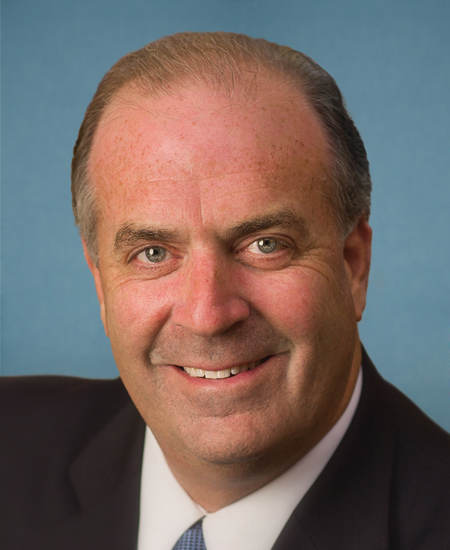
Rep. Daniel T. Kildee
Sponsored bills
Maddy summaryThis bill requires Medicare Advantage plans to implement electronic prior authorization systems by 2027 and publish detailed data on their approval and denial rates for medical services by 2026. It directly affects Medicare Advantage plans (private insurers offering Medicare coverage) and their enrollees (seniors 65+), mandating transparency about prior authorization decisions, processing times, and appeal outcomes. Key provisions include requiring plans to report annual statistics on request approvals/denials, average processing times, and use of technology, with this data published publicly by the Centers for Medicare & Medicaid Services. The bill also sets timelines for plan responses to prior authorization requests and mandates reports to Congress on implementation and impacts.
Maddy summaryThe Essential Caregivers Act of 2024 requires nursing homes and similar facilities to allow residents to designate essential caregivers who provide emotional support or assistance with daily activities. During emergencies when regular visitation is restricted, facilities must permit at least one essential caregiver access to residents daily and cannot deny access without following specific procedures. Facilities may deny access for a maximum of 7 days during emergencies (or 14 days with state approval), and must provide a written explanation and appeal process if access is denied. The bill establishes a 48-hour appeal process for residents and caregivers to challenge denials, with facilities required to prove violations during appeals. This law applies to Medicare skilled nursing facilities, Medicaid nursing facilities, intermediate care facilities, and certain inpatient rehabilitation facilities.
Maddy summaryThis bill updates how cost-of-living adjustments (COLAs) affect Supplemental Security Income (SSI) beneficiaries who receive state supplementary payments. It requires the Personal Needs Allowance (PNA) - a portion of SSI for personal care items - to receive COLA increases alongside the base SSI amount, starting after September 2024. It also mandates that states pass through all federal COLA increases to their supplemental payments, ensuring these amounts rise with inflation. The changes apply to state payments effective October 1, 2024, directly benefiting SSI recipients who rely on state supplements.
Maddy summaryThe 401Kids Savings Account Act of 2024 establishes automatic savings accounts for every U.S. citizen under age 18, created at birth or naturalization (or when the program starts). These accounts receive annual government deposits of $500 (or $750 for families eligible for the Earned Income Credit) and up to $250 in matching contributions for EIC-eligible families. After age 18, account holders can use funds for education, first-time home purchases, or roll over balances into ABLE accounts or Roth IRAs. The accounts are designed to be disregarded for means-tested benefits like SSI and Medicaid, though balances exceeding $100,000 will count toward eligibility.
Maddy summaryThe PEERS Act of 2023 (HR 6748) would add Medicare coverage for "peer support services" starting January 1, 2025. These services, provided by certified specialists who have recovered from mental health or substance use conditions, offer emotional, informational, and community support to Medicare beneficiaries diagnosed with mental disorders or substance use disorders. The bill establishes payment rates (80% of a fee schedule) for community mental health centers and certified community behavioral health clinics offering these services and modifies Medicare exclusions to allow coverage. It directly affects Medicare beneficiaries with these diagnoses, certified peer support specialists, and eligible healthcare providers like Federally Qualified Health Centers.
Maddy summaryThe Marriage Equality for Disabled Adults Act removes a rule requiring disabled adult children to remain unmarried to receive Social Security benefits. It ensures married disabled adult children, or their spouses, can maintain eligibility for Social Security Disability Insurance and Medicaid without losing benefits due to marriage. The bill changes how income and resources are counted, so a spouse's income and resources are no longer deemed against the disabled adult child for benefit calculations. It also requires states to preserve Medicaid eligibility for these individuals at the same level as if they were unmarried.
Maddy summaryHR 5819, the COMPLETE Care Act, incentivizes Medicare primary care providers to integrate behavioral health services by increasing payments for specific services (like mental health and substance use disorder support) during 2025-2027. Providers using designated HCPCS codes for integrated care would receive 125-175% of standard payment rates, with the percentage declining annually. The bill also requires these providers to report on integration quality measures and mandates technical assistance for practices adopting integrated models, funded through new appropriations for 2024-2027. It directly affects Medicare-participating primary care practices serving beneficiaries needing mental health or substance use services.
Maddy summaryThe MORE Act (HR 5601) would federally decriminalize cannabis by removing it from the Schedule I list of controlled substances under the Controlled Substances Act. It requires federal courts to expunge non-violent cannabis convictions and associated arrests, with a focus on addressing racial disparities in cannabis enforcement. The bill creates an Opportunity Trust Fund that would allocate 50% of funds to criminal justice programs, 20% to small business assistance for minority cannabis entrepreneurs, and 20% to community reinvestment grants for individuals impacted by the War on Drugs. It also prohibits federal agencies from denying benefits or security clearances based on cannabis use or past cannabis convictions, and establishes a Cannabis Justice Office to administer these programs.
Maddy summaryHR 5408, the SSI Savings Penalty Elimination Act, increases the resource limits for Supplemental Security Income (SSI) program eligibility. It raises the individual resource limit from $2,250 to $20,000 (and the couple limit from $1,500 to $10,000) for 2023, with future annual increases tied to inflation using the Consumer Price Index. This change directly affects low-income SSI recipients who currently lose benefits if their savings exceed the current thresholds. The key mechanism is raising these savings limits to reduce the "penalty" for saving modest amounts, while maintaining program integrity through automatic inflation adjustments.