

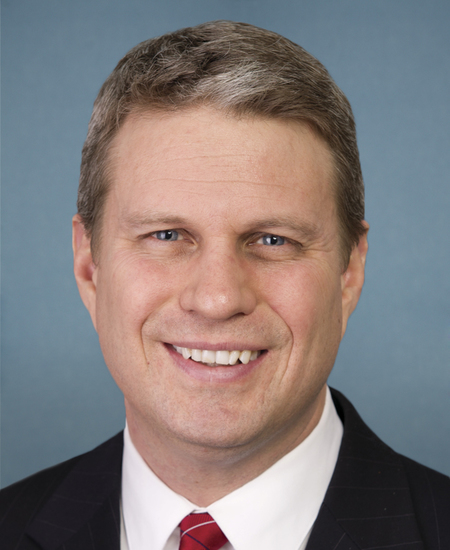
Photo of Bill Huizenga
R United States House · District 4 · Michigan On the 2026 ballot

Rep. Bill Huizenga

Compare
Total votes
2,837
all sessions
Attendance
99%
40 missed
Near the chamber average
With party
96%
of cast votes
Near the chamber average
Bipartisan score
2%
crosses aisle rarely
Near the chamber average
Sponsored
725
bills & resolutions
Near the chamber average
Committees
6
assignments
725 bills and resolutions

Sponsored bills

Total
725
Primary
80
Co-sponsor
645
This page
725
matching current filters
Co-sponsor HR 26
Passed · United States House · Co-sponsor
Born-Alive Abortion Survivors Protection Act

Maddy summaryThis bill requires healthcare providers to give the same medical care to infants born alive during abortions as they would to any newborn, and to immediately admit such infants to a hospital. It mandates reporting of non-compliance to law enforcement and imposes penalties including up to 5 years in prison for violations. Women who undergo abortions can file civil lawsuits seeking money damages for injuries, three times the abortion cost, and punitive damages if care standards are not met. The bill also clarifies that abortion includes intentionally killing an unborn child or terminating pregnancy without specific exceptions (e.g., after viability to preserve life or removing a dead fetus).

Passed Jan 25, 2023 1 co-sponsor
Co-sponsor HR 451
In committee · United States House · Co-sponsor
Protecting Families from Fertility Fraud Act of 2023

Maddy summaryHR 451, the Protecting Families from Fertility Fraud Act of 2023, creates a federal crime for knowingly misrepresenting the source or nature of DNA used in fertility treatments like IVF or sperm insemination. It directly affects fertility clinics, patients, and individuals who commit such fraud by making it punishable by fines or up to 10 years in prison. The law applies when the fraud involves interstate commerce (e.g., payments, communications, or materials crossing state lines) or occurs within U.S. territories. It also extends the statute of limitations for prosecution to 10 years after DNA identifies the perpetrator. This bill targets specific deceptive practices in assisted reproductive technology, not broader fertility care.

In committee Jan 24, 2023 1 co-sponsor
Co-sponsor HCONRES 3
Passed · United States House · Co-sponsor
Expressing the sense of Congress condemning the recent attacks on pro-life facilities, groups, and churches.

Maddy summaryHCONRES 3 is a non-binding congressional resolution expressing support for pro-life facilities, groups, and churches targeted by vandalism and threats following the Supreme Court's Dobbs decision. It condemns specific incidents like graffiti, window-smashing, and arson at pregnancy centers and churches (e.g., in Frederick, MD, and Portland, OR), while recognizing the role of these organizations in supporting pregnant women. The resolution calls on the Biden Administration to use law enforcement to protect these facilities but does not create new laws or policies. As a symbolic measure, it has no legal effect on the incidents described.

Passed Jan 23, 2023 1 co-sponsor
Co-sponsor HR 431
In committee · United States House · Co-sponsor
Life at Conception Act

Life at Conception Act This bill declares that the right to life guaranteed by the Constitution is vested in each human being at all stages of life, including the moment of fertilization, cloning, or other moment at which an individual comes into being. Nothing in this bill shall be construed to authorize the prosecution of any woman for the death of her unborn child.

In committee Jan 20, 2023 1 co-sponsor
Co-sponsor HR 335
In committee · United States House · Co-sponsor
STOP Fentanyl Act

Standardizing Thresholds Of Penalties for Fentanyl Act or the STOP Fentanyl Act This bill reduces the drug quantity thresholds that trigger a mandatory minimum prison term for a defendant who manufactures, distributes, imports, exports, or possesses with intent to distribute fentanyl. The bill also creates enhanced criminal penalties for certain violations involving fentanyl that was imported along the U.S.-Mexico border. Specifically, the bill reduces from 400 to 5 grams the fentanyl quantity and from 100 to 0.05 grams the fentanyl analogue quantity that trigger a mandatory minimum prison term for high-level first-time or repeat offenders. It also reduces from 40 to 0.5 grams the fentanyl quantity and from 10 to 0.005 grams the fentanyl analogue quantity that trigger a mandatory minimum prison term for low-level first-time or repeat offenders. Additionally, the bill creates enhanced mandatory minimum prison terms for importing or exporting fentanyl that was imported along the U.S.-Mexico border.

In committee Jan 20, 2023 1 co-sponsor
Co-sponsor HR 353
In committee · United States House · Co-sponsor
Protect Local Farms Act

Maddy summaryThe Protect Local Farms Act (HR 353) would override state laws that require overtime pay for agricultural workers after fewer than 60 hours in a workweek. It amends federal labor law to preempt any state regulation setting a lower maximum workweek threshold (e.g., 40 or 50 hours) for farm employees. This directly affects agricultural employers and workers in states with stricter overtime rules, such as California or New York, by replacing those state standards with the federal 60-hour threshold. The bill does not change federal overtime rules but ensures states cannot impose more stringent requirements on farm labor.

In committee Jan 12, 2023 1 co-sponsor
Co-sponsor HR 337
In committee · United States House · Co-sponsor
GAS Act

Maddy summaryThe GAS Act (HR 337) prohibits any federal agency from banning the sale or use of gas-burning stoves in the United States. This applies to all agencies defined under federal law, including the Environmental Protection Agency and Consumer Product Safety Commission. The bill directly blocks agencies from enacting new regulations that would restrict gas stoves, preventing future regulatory actions. It does not affect existing stove sales or current agency authority but sets a clear restriction on future rulemaking.

In committee Jan 12, 2023 1 co-sponsor
Co-sponsor HR 297
In committee · United States House · Co-sponsor
To direct the Secretary concerned to reinstate a member involuntarily separated from the Armed Forces solely on the basis of the refusal of such member to receive a vaccination against COVID-19.

Maddy summaryHR 297 requires the military Secretary to reinstate service members who were involuntarily separated solely for refusing a COVID-19 vaccine. It applies specifically to those separated only due to vaccine refusal, not other reasons. If a covered member chooses reinstatement, they must be returned to their previous rank and branch of service. The bill mandates this action without requiring the member to receive the vaccine.

In committee Jan 11, 2023 1 co-sponsor
Co-sponsor HR 252
In committee · United States House · Co-sponsor
Inflation Prevention Act of 2023

Maddy summaryHR 252, the Inflation Prevention Act of 2023, would require Congress to block any new spending bill or amendment that could increase inflation above 4.5%, as measured by the Consumer Price Index (CPI). If current inflation exceeds 4.5%, the bill would prevent consideration of new spending measures unless a three-fifths Senate supermajority votes to override the rule. The Congressional Budget Office (CBO) would estimate the inflation impact of proposed spending and notify Congress if inflation rises above 4.5%. This rule applies to all spending bills, amendments, and conference reports in both the House and Senate, directly affecting how Congress processes budget-related legislation. The bill focuses on procedural rules for spending decisions, not on specific policies or affected groups.

In committee Jan 10, 2023 1 co-sponsor
Co-sponsor HR 231
In committee · United States House · Co-sponsor
Terminate TikTok on Campus Act of 2023

Maddy summaryThis bill requires colleges and universities receiving federal funding to ban TikTok (and related ByteDance apps) on all school-owned electronic devices - including computers, tablets, and smartphones - within 90 days of enactment. It prohibits federal funding for institutions that fail to implement such a ban, with an exception for research related to national security, law enforcement, or cybersecurity. The policy directly affects all public and private higher education institutions that accept federal funds, including grants and student aid programs. It does not restrict TikTok use on personal devices or apply to non-federal funding sources.

In committee Jan 10, 2023 1 co-sponsor
Showing 481 to 490 of 725 bills
Previous 1 … 48 49 50 … 73 Next