

Maddy summaryH.J. Res. 30 seeks to block a Department of Labor rule that would have required retirement plan managers (like those handling 401(k)s) to follow strict "prudence and loyalty" standards when selecting investments and voting on company matters. The rule, published in December 2022, aimed to protect retirement savings by ensuring fiduciaries prioritize participants' interests. This resolution, if passed, would prevent the rule from taking effect, avoiding new compliance requirements for retirement plan managers and sponsors. It directly affects retirement plan administrators and the millions of participants in these plans.
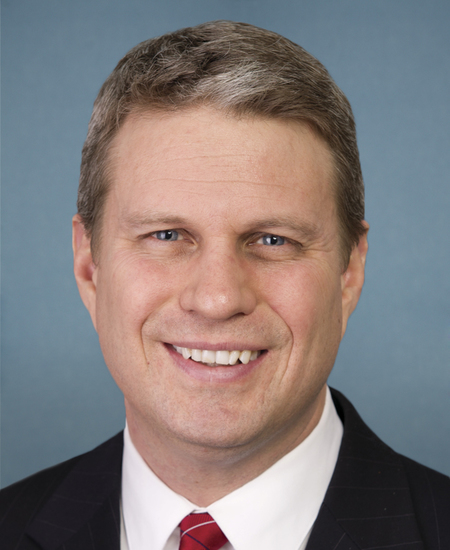
Rep. Bill Huizenga
Sponsored bills
Maddy summaryHRES 243 (March 22, 2023) is a non-binding House resolution expressing the sense of Congress that the U.S. President and Secretary of State should work with Canada to prevent permanent nuclear waste storage in the Great Lakes Basin. It specifically addresses Canada’s plan to build a deep geological repository for high-level nuclear waste near Lake Huron in South Bruce, Ontario, which could threaten the shared water resources used by over 40 million people. The resolution urges U.S. officials to take diplomatic action to ensure nuclear waste storage does not occur in the basin, citing environmental risks and the importance of protecting the Great Lakes, which are vital for drinking water, ecosystems, and treaty rights. It does not create new laws but formally states congressional concern about the proposed Canadian project.
Maddy summaryThe PHIT Act of 2023 allows individuals and families to deduct certain fitness expenses as medical costs on their federal taxes. It covers gym memberships, fitness classes, and specific equipment used exclusively for exercise (like home workout gear), with a yearly limit of $1,000 ($2,000 for joint returns). Expenses for activities like golf, hunting, or non-exercise-focused facilities (e.g., private clubs) are excluded, and equipment must be used solely for physical activity. This directly affects taxpayers who pay for qualifying fitness programs, making these costs partially tax-deductible under revised IRS rules.
Maddy summaryThis bill creates a dedicated Inspector General position for the Consumer Financial Protection Bureau (CFPB), replacing the previous arrangement where the Federal Reserve's IG also oversaw the CFPB. It requires the CFPB to allocate 2% of its annual funding to support the Inspector General's office and mandates semiannual congressional hearings by the IG to report on oversight activities. The bill also sets a 60-day deadline for the President to appoint the IG after enactment. These changes directly affect the CFPB's internal oversight structure and reporting requirements.
Maddy summaryHR 1379, titled the *Access to Small Business Investor Capital Act*, simplifies reporting requirements for investment companies that hold shares in business development companies (BDCs). The bill allows registered investment companies (like mutual funds) to exclude BDC-related fees and expenses from their standard "Acquired Fund Fees and Expenses" calculations in registration statements, instead disclosing these costs in a footnote. This change directly affects investment companies managing portfolios with BDC investments and the BDCs themselves, reducing administrative complexity. The provision modifies existing SEC disclosure rules under the Investment Company Act of 1940 without creating new capital access for small businesses.
Maddy summaryHR 1313, the Transparency in CFPB Cost-Benefit Analysis Act, requires the Consumer Financial Protection Bureau (CFPB) to include detailed cost-benefit analyses in all proposed financial regulations. The bill mandates that the CFPB explain the need for a regulation, assess costs and benefits for small businesses and the economy, evaluate alternatives, and justify decisions where benefits don't outweigh costs. It also requires consultation with the Small Business Administration if a rule increases costs for small businesses and a distribution analysis of burdens. This bill directly affects the CFPB's rulemaking process by increasing transparency in how financial regulations are developed.
This bill authorizes the Department of Agriculture to waive the matching funds requirement for grants under the specialty crop research initiative. Currently, entities that receive grants under the initiative must provide nonfederal matching funds (including funds from an agricultural promotion, research, and information program) equal to not less than the amount of the grant.
Maddy summaryThis resolution (HRES 139) celebrates the 75th anniversary of NASCAR, marking its founding on February 21, 1948. It commends NASCAR's contributions to the U.S. economy and society, highlighting its role as a global motorsports leader that hosts over 1,200 races annually, supports community initiatives (like donating $43 million to children via the NASCAR Foundation), and drives tourism and entertainment. As a ceremonial resolution, it does not create new laws or affect any individuals or entities. The House formally recognizes NASCAR's historical significance and ongoing impact through this symbolic gesture.
Maddy summaryThis bill authorizes a single Congressional Gold Medal to honor all U.S. Army Dustoff crews who served during the Vietnam War (1962-1973). It recognizes their critical role in evacuating nearly 900,000 wounded personnel, including U.S., South Vietnamese, and allied forces, under extreme combat conditions. The medal, designed with input from the Secretary of Defense, will be presented to the U.S. Army Medical Department Museum for permanent display. Duplicate bronze medals may be sold to cover costs, but the primary action is the commemorative recognition of these crews' service.
Finish the Wall Act This bill requires the Department of Homeland Security (DHS) to resume activities related to the construction of a barrier system along the U.S.-Mexico border and addresses other border-related issues. DHS must resume all such construction activities that were planned or underway prior to January 20, 2021. DHS must also expend all funds appropriated or explicitly obligated since October 1, 2016, for construction of this barrier system. DHS may not cancel contracts for activities related to such construction entered into on or before January 20, 2021. Furthermore, within 14 days of this bill's enactment, DHS must certify to Congress that U.S. Customs and Border Protection facilities that process adults taken into custody at the border are fully compliant with certain laws related to the collection of DNA. (Among other things, these laws allow for the collection of DNA samples from non-U.S. persons detained under U.S. authority.)