

Maddy summaryThe Affordable Housing Credit Improvement Act of 2025 would reform the Low-Income Housing Credit program, which provides tax credits to developers of affordable housing. It would increase state allocations based on population with annual cost-of-living adjustments, modify tenant eligibility rules to allow higher income limits for some residents, and add protections for domestic violence victims in housing. The bill would simplify rules for rural and Native American housing projects, clarify credit eligibility requirements, and require greater transparency in program administration. These changes would directly affect developers, property owners, and low-income tenants in housing projects that receive LIHC tax credits.
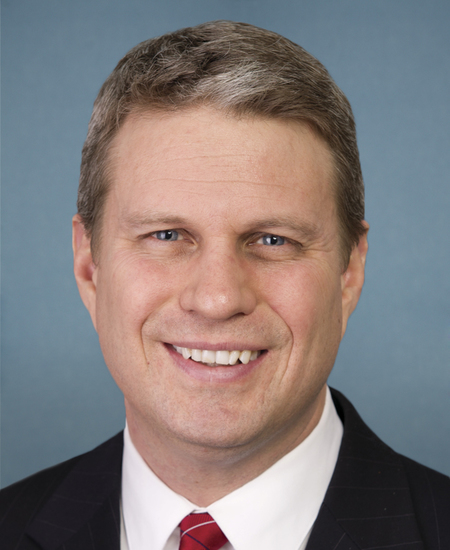
Rep. Bill Huizenga
Sponsored bills
Maddy summaryHR 2729, the "Carnivals are Real Entertainment Act," creates a new temporary work visa category for carnival and circus workers. It directly affects mobile entertainment providers (like traveling carnivals, circuses, and affiliated food/game concession services) and their workers who perform essential tasks such as transporting, assembling, operating, and maintaining rides and equipment at seasonal fairs and festivals. The bill amends immigration law to define "mobile entertainment workers" as those entering temporarily for functions integral to these operations, subject to labor program requirements similar to other temporary work visas. It requires the Departments of Homeland Security and Labor to issue implementing rules within one year of enactment.
Maddy summaryThis bill, HR 2102 (Major Richard Star Act), allows veterans with combat-related disabilities to receive both full military retired pay and veterans' disability compensation simultaneously, without the previous offset that reduced retired pay. It directly affects veterans already eligible for both benefits due to combat-related injuries, removing the requirement that their retired pay be reduced by the disability compensation amount. The key provision amends Title 10 and Title 38 to eliminate the offset rule (sections 5304 and 5305 of Title 38) for these veterans. The change applies to payments starting after the bill’s enactment date, effective for all qualifying veterans. This is a policy change to increase financial support for affected veterans, not a new benefit.
Maddy summaryThis bill codifies a "maximum pressure" policy toward Iran, requiring the U.S. to maintain all sanctions until Iran meets specific conditions related to its nuclear program, missile development, support for terrorism, and human rights violations. It expands sanctions on Iran's Revolutionary Guard Corps (IRGC) and entities supporting Iran's ballistic missile program, while prohibiting waivers of sanctions on these entities. The bill mandates regular reports to Congress on Iran's nuclear activities, support for terrorist groups like Hamas and Hezbollah, and human rights abuses within Iran. It also directs the use of frozen Iranian assets to support victims of state-sponsored terrorism and prevents the release of funds that could benefit Iran's terrorist proxies. The bill aims to maintain economic and diplomatic pressure on Iran until it changes its behavior across multiple fronts.
Maddy summaryThis bill, titled "Secure Family Futures Act of 2025" but actually focused on tax code changes, primarily affects a specific subset of insurance companies. It amends the Internal Revenue Code to exclude certain debts (like bonds or notes) held by these companies from being counted as capital assets (Section 2), and extends their capital loss carryover period to 10 years for losses from foreign expropriation or losses incurred by these companies (Section 3). The changes apply to debts acquired and losses arising after December 31, 2025. The bill's title is misleading, as it does not relate to family policy but is a technical tax amendment targeting defined insurance industry entities.
Maddy summaryHR 2513 establishes a dedicated Inspector General (IG) position for the Consumer Financial Protection Bureau (CFPB), replacing the current shared IG arrangement with the Federal Reserve. The bill requires the CFPB to allocate 2% of its annual funding to the IG's office and mandates semiannual hearings before specific congressional committees to review the IG's reports. It also sets a 60-day deadline for the President to appoint the first CFPB IG after the bill's enactment. These changes directly affect the CFPB's internal oversight structure and its reporting obligations to Congress.
Maddy summaryThe Freedom from Unfair Gun Taxes Act of 2025 would prohibit states and local governments from imposing taxes on the sale of firearms, ammunition, or firearm parts during interstate or foreign commerce. This bill directly affects state tax policies and manufacturers or dealers selling these items across state lines. It explicitly states that the bill does not change the existing federal tax on firearms and ammunition that funds wildlife conservation programs. The key provision bans state-level taxes for these sales in interstate transactions while preserving current federal funding mechanisms.
Maddy summaryHRES 254 is a non-binding resolution recognizing the 250th anniversary of the United States Marine Corps, to be observed on November 10, 2025. The resolution honors the Corps' founding at Tun Tavern in Philadelphia on November 10, 1775, its history of service in major conflicts, and its values of honor, courage, and commitment. It encourages public participation in commemorative events and local recognition of Marines' contributions to national defense.
Maddy summaryHR 2358, the "ESG Act of 2025," primarily amends investment advice rules to prioritize financial (pecuniary) factors over non-financial considerations like environmental, social, or governance (ESG) factors. It requires investment advisers to base recommendations on financial impacts unless clients provide written consent to consider non-financial factors, and mandates detailed disclosures about the financial effects of such considerations over three years. The bill directly affects investment advisers, brokers, and dealers who provide advice to clients. Key provisions include new disclosure requirements for advisers using non-financial factors and a 12-month implementation timeline after enactment. (Note: The bill's title references "ESG," but its core policy restricts ESG considerations in investment advice, not promotes them.)
Maddy summaryHR 2325, the CEMAC Act, requires the U.S. to withhold its voting support at the International Monetary Fund (IMF) for any CEMAC member state until the IMF publicly clarifies that funds paid by oil companies to the Bank of Central African States (BEAC) for site rehabilitation cannot count toward a country's foreign exchange reserves. This directly affects U.S. oil and gas companies operating in the CEMAC region, as the bill aims to prevent CEMAC countries from misusing these restoration funds as reserves - a practice the IMF has not properly addressed. The key mechanism is the U.S. withholding its vote on IMF quota increases or special financial assistance for CEMAC nations until this IMF clarification occurs. The bill does not alter CEMAC's regulation but pressures the IMF to correct a policy that risks billions in oil investment.