Illegal Immigrant Payoff Prohibition Act This bill prohibits the payment of a settlement to an alien for a civil action brought against the United States in connection with the alien's inadmissibility to, or unlawful presence in, the United States.
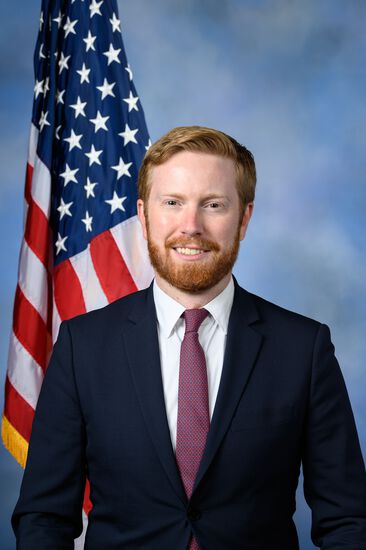
Rep. Peter Meijer
Sponsored bills
Supporting Every at-Risk Veteran In Critical Emergencies Act of 2021 or the SERVICE Act of 2021 This bill authorizes the Office of Community Oriented Policing Services within the Department of Justice to make grants to support the creation and operation of veterans' response teams in state, local, and tribal law enforcement agencies.
Smarter Pretrial Detention for Drug Charges Act of 2021 This bill removes the presumption of pretrial detention for an individual who is charged with a federal drug offense for which the maximum term of imprisonment is 10 years or more.
Welcoming Evacuees Coming from Overseas to Mitigate Effects of Displacement Act of 2021 or the WELCOMED Act of 2021 This bill makes certain individuals from Afghanistan eligible for any benefit that is available to a refugee, such as resettlement assistance. Specifically, this bill shall apply to a national of Afghanistan (or an individual with no nationality who last habitually resided in Afghanistan) who is temporarily paroled into the United States for urgent humanitarian reasons or significant public benefit during the four-year period beginning on July 1, 2021.
Showing American Values by Evacuating (SAVE) Afghan Partners Act of 2021 This bill increases the number of special immigrant visas available to qualified Afghan nationals who worked for the U.S. government or the NATO missions in Afghanistan. Specifically, this bill makes available an additional 10,000 visas for principal aliens under this special visa program, to be available until all such visas have been issued. (The numerical limitations in this program apply only to the principal alien who applies for the visa, not to any accompanying spouse or child.)
Havana Syndrome Attacks Response Act This bill requires the President to sanction foreign persons and governments for carrying out clandestine attacks on U.S. personnel that have caused brain injury. Specifically, the President must impose visa- and asset-blocking sanctions on any foreign person that has directed or carried out such an attack. If the President determines a foreign government carried out such an attack, the President must notify Congress and sanction that country by terminating any foreign assistance (except for humanitarian aid or food or agricultural commodities or products) and arms transactions, restricting commercial exports, and denying access to U.S. credit or other financial assistance. The President must remove these sanctions after 12 months, provided that (1) the country's government gives reliable assurances that it will not conduct future attacks, and (2) the executive branch does not have persuasive information indicating an attack occurred in the preceding six months. The bill also requires a congressional briefing and report about suspected clandestine attacks on U.S. personnel that have caused brain injury, including hypotheses concerning the identity of the perpetrators and the technical methods used to carry out the attacks.

Transnational Repression Accountability and Prevention Act of 2021 or the TRAP Act of 2021 This bill establishes requirements related to U.S. cooperation with International Criminal Police Organization (INTERPOL) communications. Specifically, no U.S. agency or department may extradite an individual based solely on an INTERPOL notice. In addition, the Department of Justice and the Department of State must take certain actions to support reforms to increase transparency of INTERPOL, including with respect to its communications. The bill also requires reports on countries that abuse INTERPOL communications for political motives and other unlawful purposes.
Responsibility for Unaccompanied Minors Act This bill amends provisions relating to responsibilities of the Department of Health and Human Services (HHS) for the care of unaccompanied alien children. The Office of Refugee Resettlement of HHS may provide care for an unaccompanied alien child until the conclusion of the child's immigration proceedings or the child reaching 18 years of age, whichever occurs first. Before placing an unaccompanied alien child with a sponsor, the office shall evaluate the child's future need for follow-up services. Before placing an accompanied alien child, HHS shall (1) require the proposed sponsor to execute a sponsor care agreement, (2) notify the welfare agency of the state where the child will be placed, and (3) conduct a background check of the sponsor and all adults living in the household in which the child will reside. Under the care agreement, each sponsor shall agree to (1) provide for the child's physical and mental well-being, and (2) ensure the child's presence at immigration proceedings and compliance with all court and agency orders. HHS shall assume physical custody of a child if the non-parent or legal guardian sponsor fails to comply with the care agreement. HHS shall periodically report to Congress on instances where a sponsor failed to comply with a care agreement. The Department of Justice shall increase the number of immigration judge teams by at least 225.
America's Cultivation of Hope and Inclusion for Long-term Dependents Raised and Educated Natively Act of 2021 or the America's CHILDREN Act of 2021 This bill provides lawful permanent resident status to certain college graduates who entered the United States as children and addresses other immigration-related issues. Specifically, this bill allows an alien to apply for lawful permanent resident status if the alien (1) was lawfully admitted into the United States as a dependent child of an alien on a temporary worker visa, (2) was in the United States with such status for at least four years, (3) has graduated from an institution of higher education in the United States, and (4) is not deportable or otherwise inadmissible. In addition, the alien must have been lawfully present in the United States for at least 10 years at the time of the application. The bill also modifies various provisions related to the calculation of an alien's age for immigration purposes and the priority date of certain immigration-related applications.
Deferred Removal for Iraqi Nationals Including Minorities Act of 2021 This bill defers the removal of qualified Iraqi nationals from the United States for two years from the date of the bill's enactment. To qualify, an Iraqi national shall (1) have been ordered removed to Iraq before the date of the bill's enactment, and (2) have resided in the United States on or before January 1, 2016. Aliens under removal deferral under this bill (1) shall be authorized for employment, and (2) may not be detained for immigration status-related reasons or for a motion by the alien to reopen removal proceedings. An alien shall not receive removal deferral under this bill where (1) the Department of Homeland Security determines that the alien is directly responsible for specific and significant harm to U.S. security, (2) the alien voluntarily returns to Iraq, or (3) the alien is subject to extradition.