

Golden Visa Accountability Act This bill requires the Department of State to establish and maintain a database containing information about investor visa denials due to the applicant's involvement in corruption or serious human rights abuses. (Generally, the United States offers immigrant visas to qualified individuals who invest in the United States and create a certain number of full-time jobs.) Initially, the database must include records related to such denials of U.S. investor visas. The bill also requires the State Department to eventually expand the database to include records of such denials of investor visas in other countries. The State Department shall prioritize including records from European Union countries and from Australia, Canada, New Zealand, and the United Kingdom. The State Department may admit a foreign country to be part of the database if the State Department determines (1) that country will be honest and forthcoming with its records, and (2) that country's investor visa program is at risk of abuse by corrupt foreign officials.
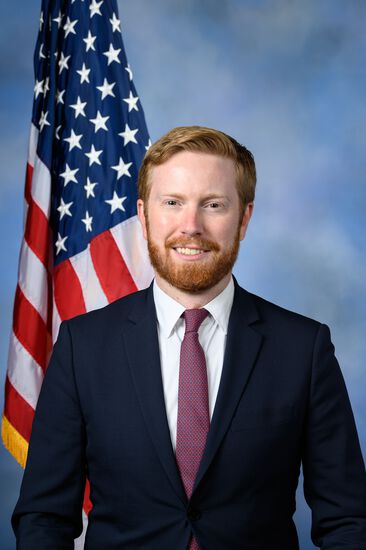
Rep. Peter Meijer
Sponsored bills
H-2B Returning Worker Exception Act of 2021 This bill modifies the H-2B (temporary nonagricultural workers) nonimmigrant visa program, including by exempting certain workers from an annual numerical limit on such visas and requiring civil penalties for program violations. Under this bill, if a worker seeking a H-2B visa has been counted toward the 66,000 annual cap on such visas in one of the three preceding fiscal years, that worker shall not be counted against the cap again. Furthermore, the Department of Homeland Security (DHS) must impose a civil monetary penalty on an employer for (1) failing to meet requirements related to an H-2B visa petition, or (2) making a willful misrepresentation of material fact in such a petition. DHS must also ensure the establishment of an electronic platform (1) for employers to submit and request approval of an H-2B petition, and (2) to act as a single point of access for applicants and the relevant government agencies. The Department of Labor must maintain a publicly available online database of all job orders by H-2B employers. Furthermore, Labor may take certain actions to enforce program requirements, such as imposing penalties and seeking injunctions. The bill provides statutory authority for the current practice of limiting the program to workers who are nationals of countries approved by DHS. DHS may make exceptions to this limitation in individual cases if it is in the U.S. interest to do so. DHS shall select approved countries based on various factors, such as the rate of overstay by H-2B visa holders from each country.
Protecting Individual Sovereignty Through Our Laws Act or the PISTOL Act This bill modifies the definition of rifle for purposes of the National Firearms Act to exclude from such definition a pistol equipped with a rear brace or rear attachment designed to assist the shooter in controlling the pistol. The bill also directs the Department of Justice to amend applicable regulations governing pistols to provide that the presence or absence of rear mounted braces or attachments that can assist a user in controlling the pistol shall not cause a firearm to be considered a pistol.
Justice for Victims of Kleptocracy Act of 2021 This bill requires the Department of Justice to publish and regularly update its website with an accounting of property that is forfeited to the United States as a result of foreign government corruption. It also expresses the sense of Congress that recovered assets shall be returned for the benefit of the people harmed by the corruption.
COVID-19 Safer Detention Act of 2021 This bill expands statutory authority for federal prisoners to be released before completing their sentences or to be placed in the community to serve the final portion of their sentences. First, the bill makes changes to the early release pilot program. The early release pilot program authorizes the Bureau of Prisons to release early and place on home confinement elderly offenders and terminally ill offenders who meet eligibility criteria. This bill expands eligibility to offenders serving time for an offense under the laws of the District of Columbia, expands eligibility to offenders who have served at least one-half (currently, two-thirds) of their prison term, reduces the amount of time an offender must serve by the good time credits earned by the offender, and creates a judicial review process for prisoners and shortens the waiting period for judicial review during the COVID-19 pandemic. Second, the bill modifies the compassionate release process. The compassionate release process authorizes federal courts to reduce a prisoner's sentence and impose a term of probation or supervised released in certain circumstances. This bill expands eligibility to prisoners sentenced before November 1, 1987, specifies that vulnerability to COVID-19 is a basis for compassionate release, and shortens the waiting period for judicial review during the COVID-19 pandemic.
Fully Informed Veteran Act of 2021 This bill requires the Department of Veterans Affairs to authorize physicians and other health care providers of the Veterans Health Administration to provide veterans with information about participating in state-approved marijuana programs if their state has such a program available. Under the bill, the term state includes the District of Columbia, federally recognized tribes, and U.S. territories and possessions.
Afghan Allies Protection Act of 2021 This bill provides for 4,000 additional special immigrant visas to qualified nationals of Afghanistan who were employed by or on behalf of the United States or the International Security Assistance Force after October 6, 2001. The visa allotment, in addition to any unused allocations of such special immigrant visas since FY2015, shall be available beginning FY2021, and unused visas shall carry over to subsequent fiscal years until exhausted.
Major Richard Star Act This bill provides that combat-disabled uniformed services retirees with fewer than 20 years of creditable service may concurrently receive, without reduction, veterans' disability compensation and retired pay or combat-related special compensation.
Global Malnutrition Prevention and Treatment Act of 2021 This act sets out programs and otherwise directs the U.S. Agency for International Development (USAID) to carry out activities to prevent and treat malnutrition globally. Specifically, USAID may leverage resources to address malnutrition through the Global Nutrition Coordination Plan (an interagency effort to strengthen the impact of U.S. investments in nutrition) and its role on the board of directors of the U.S. International Development Finance Corporation. USAID must also select countries based on specified malnutrition-related indicators for purposes of targeting malnutrition prevention and treatment programs and update the selection within five years. Additionally, USAID may establish the Nutrition Leadership Council to coordinate federal government activities to prevent and treat malnutrition; and target resources and nutrition interventions to the populations most susceptible to severe malnutrition and otherwise support efforts to prevent and treat malnutrition globally. The act also requires USAID to provide to Congress an implementation plan and annual reports concerning its programs for treating and preventing malnutrition. The act's provisions terminate seven years after its enactment.
This bill designates the facility of the United States Postal Service located at 3900 Crown Road Southwest in Atlanta, Georgia, as the John R. Lewis Post Office Building.