

Brycen Gray and Ben Price COVID-19 Neurological Impact Act This bill authorizes grants and requires other activities to address neurological and psychiatric illnesses associated with COVID-19 infection. Specifically, the National Science Foundation may award competitive grants for multidisciplinary research on such illnesses. In addition, the White House Office of Science and Technology Policy must establish a temporary interagency working group to coordinate relevant federal programs, data collection, and other activities focused on neurological and psychiatric illnesses associated with COVID-19 infection. The working group must also engage with researchers and nonfederal stakeholders to ensure the sharing and dissemination of relevant research, information, and best practices pertaining to those illnesses. The working group terminates after five years.
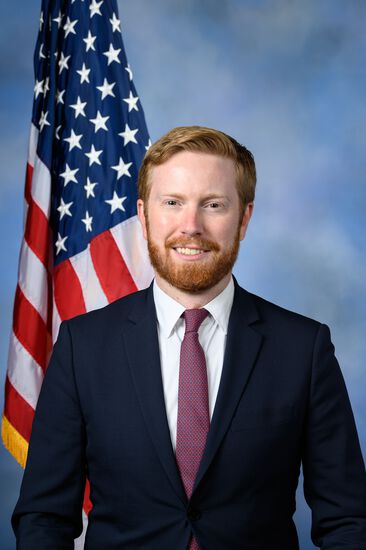
Rep. Peter Meijer
Sponsored bills
China Watcher Act This bill establishes the China Watcher Program within the Department of State. The program must (1) monitor and combat China's malign influence in foreign countries, (2) monitor China's military trends abroad and counter its activities and advancements in foreign nations that pose a threat to U.S. interests and the rules-based order, and (3) strengthen U.S. government capacity to engage with foreign countries and international organizations to counter China's malign influence. Under this program, the State Department must place officers in select U.S. diplomatic and consular posts to engage with Chinese and third-party nationals, as well as host governments and nongovernment entities, on the above-referenced matters.
State, Local, Tribal, and Territorial Fiscal Recovery, Infrastructure, and Disaster Relief Flexibility Act This bill allows states, tribes, territories, and localities to use certain COVID-19 relief funds for new categories of spending, including for natural disasters and infrastructure projects. It also makes changes to expenditure deadlines and other aspects of this funding. Specifically, recipients may use funds for emergency relief from natural disasters and associated negative economic impacts of natural disasters. In addition, recipients may use a portion of their COVID-19 relief funds for designated infrastructure projects, such as nationally significant freight and highway projects. Furthermore, the bill allows recipients to expend COVID-19 relief funds on these types of infrastructure projects until September 30, 2026. Under current law, recipients must expend the funds by December 31, 2024. Other changes in the bill include (1) modifying eligibility and allocation requirements for funding set aside for counties and Indian tribes that are near public lands, (2) allowing Indian tribes an additional year to expend their COVID-19 relief funds, and (3) establishing a process for government entities to decline COVID-19 relief funds and requiring any declined funds to be used to reduce the federal deficit.
This resolution expresses solidarity with the Lebanese people following the explosions at the Port of Beirut on August 4, 2020, and supports their right to peacefully demonstrate to achieve political goals and anti-corruption reforms.
This resolution strongly disapproves of the escalation of political tensions between the government of Ethiopia and the Tigray People's Liberation Front into armed conflict, and it calls for the immediate cessation of hostilities in the Tigray region as well as an end to violence throughout Ethiopia. Further, the resolution urges all parties to work to protect human rights, and it calls on relevant U.S. agencies to take specified actions that encourage an end to the conflict and that provide humanitarian support.
Bolstering the Effectiveness, Success, and Transparency of Ambassadors Act or the BEST Ambassadors Act This bill expands disclosure requirements for individuals nominated to serve as an ambassador or in a related position. If the President's nominee to serve as a chief of mission is not a career member of the Foreign Service, the President must provide to Congress a justification explaining whether a career member was available and why the nominee is uniquely qualified to serve in the position. The President must certify that any campaign contributions made by an individual (or the individual's immediate family members) played no role in the decision to nominate the individual to serve as a chief of mission. The nominee must also provide to Congress an explanation concerning how the nominee meets the criteria for performing the position's duties. A nominee to serve as a chief of mission, ambassador at large, or minister must report to Congress political contributions made by the individual or immediate family members in the 10 calendar years preceding the nomination (currently, the report only requires reporting of contributions from the preceding 4 calendar years). The Department of State must make this information available on its public website.
Maddy summaryH.J. Res. 39 proposes a constitutional amendment to limit the U.S. Supreme Court to no more than nine justices. This would prevent future increases in the Court's size beyond its current nine-member structure. Congress would have the power to create laws enforcing this cap if the Court exceeded nine justices. The amendment would directly affect the Court's composition and the process for appointing justices.
American Critical Mineral Independence Act of 2021 This bill provides support for a domestic supply of critical minerals, establishes deadlines to complete the environmental review of critical mineral projects on federal land, and sets forth related requirements to expedite the review of such projects under the National Environmental Policy Act of 1969 (NEPA). Specifically, the National Science Foundation must award grants to support research to advance critical mineral mining strategies and technologies. The Department of Energy must also provide grants to research, develop, and assess technologies and techniques to recover critical minerals from mine waste and metallurgical activities. If an environmental assessment or environmental impact statement is required for a critical mineral project, then all necessary federal review and permit considerations must be completed within 18 or 24 months, respectively. However, the review may exceed the time limit if the project sponsor agrees. The lead agency of the environmental review of such project must allow a state or another appropriate entity to assume certain federal responsibilities regarding the environmental review of the project upon the request of such entity. Further, the bill authorizes a lead agency to determine that the requirements of NEPA have been satisfied if a state or federal agency acting under state or federal law has addressed specified factors. If the lead agency does not make such a determination, then the agency must enter into an agreement with the project sponsor to set time limits for each part of the permitting process.
Khalid Jabara and Heather Heyer National Opposition to Hate, Assault, and Threats to Equality Act of 2021 or the Jabara-Heyer NO HATE Act of 2021 This bill creates grants for state and local governments to combat hate crimes. It also authorizes additional penalties for hate crime offenses. Specifically, it establishes grants for states to create state-run hate crimes reporting hotlines. It also authorizes grants for states and local governments to implement the National Incident-Based Reporting System and to conduct law enforcement activities or crime reduction programs to prevent, address, or respond to hate crimes. Finally, in the case of an individual convicted of a hate crime offense and placed on supervised release, the bill allows a court to order that the individual participate in educational classes or community service as a condition of supervised release.
COVID-19 Border Protection (CBP) Act This bill requires the Department of Homeland Security (DHS) to devise and implement a strategy to ensure that no alien with COVID-19 (i.e., coronavirus disease 2019) in DHS or Department of Health and Human Services custody may be released into the community during a public health emergency related to COVID-19. Funds previously provided to the Department of State for supporting international efforts to help migrants and refugees respond to COVID-19 shall be transferred to DHS to implement this strategy.