Fairness for Federal Contractors Act of 2021 This bill prohibits executive agencies from requiring contractors to receive a COVID-19 vaccination. The bill also requires the Government Accountability Office to study the degree to which Executive Order 14042 (Ensuring Adequate COVID Safety Protocols for Federal Contractors) caused disruptions to federal contracts, supply chains, and transportation systems.
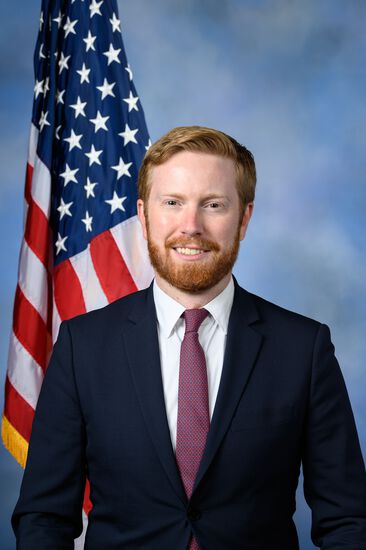
Rep. Peter Meijer
Sponsored bills
Pregnancy Loss Mental Health Research Act of 2021 This bill expands research and related activities that address mental health complications following a pregnancy loss (i.e., miscarriage, stillbirth, or abortion). Specifically, the National Institutes of Health and the National Institute of Mental Health (NIMH) must expand and intensify research on mental health complications following pregnancy loss. In particular, NIMH must conduct a longitudinal study to determine the prevalence and other information about such mental health complications. Additionally, the Department of Health and Human Services must award grants to health providers, state or local governments, or other appropriate nonprofits to deliver services to individuals with mental health conditions following a pregnancy loss. Funding made available under this bill may not be provided to an entity (or an entity's affiliate, subsidiary, successor, or clinic) that performs abortions other than in the case of a pregnancy (1) that is the result of rape or incest; or (2) when the life of the woman is in danger due to a physical disorder, injury, or illness.

This joint resolution nullifies a Department of Labor emergency temporary standard for preventing the transmission of COVID-19 in employment settings. Under the standard issued on November 5, 2021, employers with 100 or more employees must require their onsite employees to either be fully vaccinated against COVID-19 or undergo weekly COVID-19 testing.
Provider Relief Fund Improvement Act This bill extends deadlines, expands the uses of, and makes other changes pertaining to the Provider Relief Fund. The fund reimburses health care providers for increased expenses or lost revenue attributable to COVID-19. Specifically, the bill extends the deadline by which providers must use any reimbursements they received in 2020 from the fund to the end of the COVID-19 emergency. Providers must use reimbursements received in the first half of 2021 by the end of the emergency or June 30, 2022, whichever is later. Additionally, the Department of Health and Human Services must distribute the remaining provider relief funds by March 31, 2022. Providers must use these funds by June 30, 2023. The bill also allows the use of the funds for workplace safety activities, such as hiring additional security personnel.
Maddy summaryThis resolution expresses the House of Representatives' support for designating November 10 as "National Science Day." It highlights science's critical role in government agencies (like the CDC and NASA), economic growth, and daily life, noting over 7 million Americans work in science and engineering fields. The resolution is symbolic and non-binding - it does not create new laws or directly affect any individuals or groups. Its purpose is to celebrate scientific achievements and inspire future generations through recognition.
Honoring Our Promises through Expedition for Afghan SIVs Act of 2021 or the HOPE for Afghan SIVs Act of 2021 This bill authorizes the Department of State and the Department of Homeland Security (DHS) to postpone the medical exam requirement for qualifying citizens or nationals of Afghanistan seeking entry into the United States as special immigrants. Specifically, this bill applies to an existing program that provides special immigrant status to an individual (or the spouse or child of such an individual) who (1) faithfully performed sensitive and trusted duties for the U.S. government or the International Security Assistance Force in Afghanistan on or after October 7, 2001, and (2) has experienced or is experiencing an ongoing serious threat due to the performance of those duties. Under this bill, the State Department and DHS may jointly issue a blanket waiver of any requirement for such individuals to undergo a medical exam before admission into the United States. DHS shall ensure, to the greatest extent practicable, that individuals admitted under such a waiver undergo medical exams no later than 30 days after admission into the United States. Such an individual shall be admitted as a conditional permanent resident. DHS shall remove the conditions once the individual receives and passes a medical examination.
Temporary Family Visitation Act This bill establishes a new nonimmigrant visa classification for an alien temporarily entering the United States to visit a relative who is a U.S. citizen or lawful permanent resident. The maximum period of stay for a family visitor visa shall be 90 days. An alien seeking such a visa must have health insurance for the duration of the stay. An alien who holds such a visa may not change to another nonimmigrant visa classification except in certain limited instances. If an alien has been approved for a family-based immigrant visa and is waiting for one to become available, the alien may obtain a family visitor visa if the alien meets the eligibility requirements.
Fiscal State of the Nation Resolution This concurrent resolution requires the congressional budget committees to conduct an annual joint hearing to receive a presentation from the Comptroller General regarding (1) the Government Accountability Office's audit of the financial statement of the executive branch, and (2) the financial position and condition of the federal government.
VA Medicinal Cannabis Research Act of 2021 This bill requires the Department of Veterans Affairs (VA) to conduct clinical trials of the effects of medical-grade cannabis on the health outcomes of covered veterans diagnosed with chronic pain and those diagnosed with post-traumatic stress disorder. Covered veterans are those who are enrolled in the VA health care system. The trials must include a control group and an experimental group that are of similar sizes and structures and represent the demographics of the veteran population. Data collected in the trials must be preserved to facilitate further research. Under the bill, participation in the clinical trials does not affect a covered veteran's eligibility or entitlement to other VA benefits.
Veterans Patient Advocacy Act This bill requires the Office of Patient Advocacy within the Veterans Health Administration to ensure (1) there is not fewer than one patient advocate for every 13,500 veterans enrolled in the Department of Veterans Affairs health care system, and (2) highly rural veterans may access the services of patient advocates. The bill also requires the Government Accountability Office to report on the implementation of such policies.