

Maddy summaryThis bill creates two main pathways to build expertise in critical minerals. First, it allows immigration waivers for foreign engineers working full-time in U.S. businesses or government agencies focused on critical minerals extraction, processing, or recycling (defined by the 2020 Energy Act). Second, it establishes new educational exchange programs, including funding for U.S. students studying abroad in this field, foreign students studying in the U.S., and international partnerships for research and training. The bill directly affects engineers in the critical minerals supply chain and educational institutions developing specialized curricula. It aims to strengthen domestic workforce capacity through targeted immigration and international education initiatives.
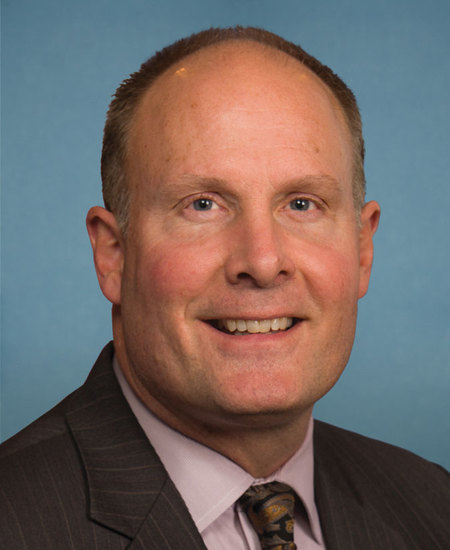
Rep. John R. Moolenaar
Sponsored bills
Maddy summaryThis bill authorizes the U.S. Secretary of the Interior to establish international agreements with designated "partner foreign countries" to share earth science data and resources. It prioritizes cooperation with nations having defense treaties, strategic mineral partnerships, or existing agreements, focusing on mineral assessments, geoscience data analysis, and training for sustainable resource management. The legislation allocates $3 million for fiscal year 2025, requiring at least 70% of funds to directly support these agreements and their activities. It affects U.S. agencies (via the Geological Survey) and partner countries through new frameworks for collaborative critical mineral resource data sharing.
Maddy summaryThis bill establishes a federal task force led by the Cybersecurity and Infrastructure Security Agency (CISA) and the FBI to coordinate responses against cyber threats from the People's Republic of China targeting U.S. critical infrastructure, specifically referencing state-sponsored actors like Volt Typhoon. The task force must produce an initial report within 540 days and annual reports for five years, assessing risks, needed resources, and potential disruptions to infrastructure in a conflict, including classified evaluations of threats to energy, transportation, and military operations. These reports will include recommendations for improving cybersecurity defenses and a public awareness campaign to help critical infrastructure owners (such as utility companies and transportation systems) access federal security resources. The task force will operate under exemptions from certain federal advisory and paperwork laws to streamline coordination.
Maddy summaryHR 7673, the Liberty in Laundry Act, amends the Energy Policy and Conservation Act to change how the Department of Energy sets energy efficiency standards for clothes washers. It requires the Secretary of Energy to determine that any new or amended standard must be both technologically feasible/economically justified and not increase net costs for consumers (including purchase, maintenance, and disposal costs) before implementation. The bill also mandates that any standard must result in "significant conservation of energy" to be enforced. This legislation directly affects the Department of Energy's regulatory authority over appliance efficiency standards, not consumers or manufacturers directly.
Maddy summaryHR 7438 directs the U.S. Treasury to mint commemorative coins for the 2026 FIFA World Cup, including 100,000 $5 gold coins, 500,000 $1 silver coins, and 750,000 half-dollar coins. The coins will be sold to the public at face value plus surcharges ($35, $10, and $5 per coin, respectively), with all surcharge revenue paid to FWC2026 US, Inc. for U.S. soccer programs. These funds must support soccer initiatives, particularly in underserved communities and youth development, as specified in the bill. The coins are legal tender but will only be issued during 2026, with no net cost to the U.S. government.
Maddy summaryThis bill amends the Foreign Agents Registration Act to require individuals who previously acted as agents for foreign governments or organizations to retroactively register with the U.S. government for any period they served in that role, even if they no longer work as agents. It directly affects past foreign agents who failed to register during their service under the 1938 law. The key provision allows the Attorney General to seek court orders mandating retroactive registration compliance for past periods, even if the person is no longer acting as an agent at the time the order is issued.
Maddy summaryThis bill reinstates a pre-American Rescue Plan Act (ARP) tax reporting rule for gig economy platforms. It requires third-party payment platforms (like Uber or DoorDash) to report transactions to the IRS only if a gig worker earns over $20,000 in total or completes more than 200 transactions in a year. This directly affects gig workers whose income falls below these thresholds, exempting them from the reporting requirement. The provision effectively reverses a change made by the ARP, reducing administrative burden for both platforms and lower-earning gig workers. The bill amends IRS Code Section 6050W to restore these specific de minimis payment thresholds.
Maddy summaryHR 6751 authorizes the U.S. Mint to produce commemorative coins honoring Roberto Clemente, a Hall of Fame baseball player and humanitarian, including 50,000 $5 gold coins, 400,000 $1 silver coins, and 750,000 half-dollar coins. The coins must feature Clemente's image and inscriptions like "Roberto Clemente" and "2027," with all sales including a surcharge ($5-$35 per coin) paid to the Roberto Clemente Foundation. The foundation, which supports youth sports, education, and disaster relief programs, will use these funds for its mission, while the U.S. Treasury must recover all production costs. The coins will be sold exclusively in 2027, with no net cost to the government.
Maddy summaryHR 760, the Chinese Military and Surveillance Company Sanctions Act of 2023, expands U.S. sanctions to block all transactions (including debt and equity financing) with Chinese military-affiliated and surveillance technology companies, moving beyond previous restrictions that only targeted public stock transactions. It requires the President to impose full asset-blocking sanctions via the Treasury’s Specially Designated Nationals (SDN) list on companies designated under updated Treasury lists or determined to support China’s military/surveillance sectors. This directly affects U.S. individuals and businesses, prohibiting them from engaging in any financial, commercial, or technological dealings with these designated entities. Exceptions include U.S. intelligence activities and the importation of physical goods, with the sanctions set to expire 7 years after enactment.
Maddy summaryHR 9151 establishes a new Department of Justice task force within 120 days to investigate and prosecute international trade crimes like tariff evasion, smuggling, and trade-based money laundering. The task force will hire specialized prosecutors, coordinate with U.S. Customs and Border Protection and Homeland Security, and focus on violations under specific U.S. Code sections including smuggling (18 U.S.C. 545) and fraud (18 U.S.C. 1001). It authorizes $20 million for fiscal year 2025, with 80% dedicated to criminal prosecutions, and requires annual congressional reports detailing case statistics, funding use, and future needs. The bill directly affects importers/exporters engaging in trade violations and DOJ agencies handling cross-border enforcement.