

Maddy summaryThis bill would require employer-sponsored health plans and group health insurance to treat telehealth services as "excepted benefits," meaning they would no longer need to comply with certain federal rules that apply to most health coverage (like pre-authorization requirements). It directly affects employers offering group health plans and insurers providing group coverage, making telehealth services subject to fewer regulatory standards. The key change is adding "Benefits for telehealth services" to the list of exceptions under the Public Health Service Act, ERISA, and tax code. This would take effect for plan years beginning after the bill's enactment.
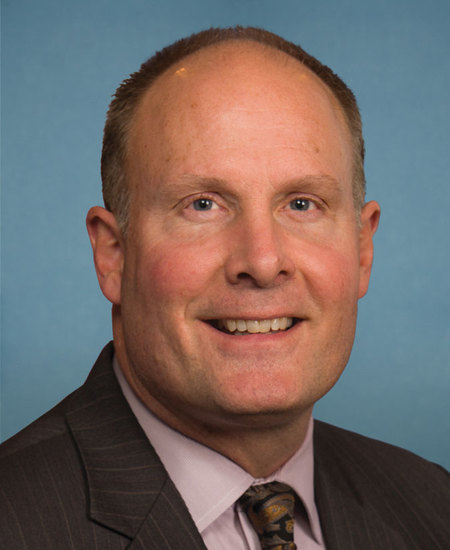
Rep. John R. Moolenaar
Sponsored bills
Maddy summaryHR 589, the MAHSA Act, imposes U.S. sanctions on Iran's Supreme Leader, President, and affiliated entities responsible for human rights abuses and terrorism. It targets the Supreme Leader's Office, the President's cabinet, security forces involved in the crackdown following Mahsa Amini's death, and entities financing abuses. The bill requires the President to annually determine and apply existing sanctions - like property blocking and visa bans - against these individuals and entities. This directly affects Iran's top leadership and security apparatus, aiming to hold them accountable for abuses including the Morality Police's role in Amini's detention and the subsequent violent suppression of protests.
Maddy summaryHR 497, the Freedom for Health Care Workers Act, eliminates a federal requirement for healthcare workers in Medicare and Medicaid programs to be vaccinated against COVID-19. The bill directly affects healthcare providers who treat patients under these federally funded programs by preventing the enforcement of the November 2021 HHS rule mandating staff vaccinations. Its key provision prohibits the Department of Health and Human Services from implementing, enforcing, or creating a similar rule regarding vaccination for these workers. This bill changes the policy by removing a specific vaccine mandate for providers in Medicare and Medicaid programs.
Maddy summaryHR 407, the "Protect the UNBORN Act," prohibits federal agencies from implementing or enforcing two specific executive orders issued by President Biden in 2022 (Executive Orders 14076 and 14079), which aimed to protect access to reproductive healthcare services. The bill bans the use of federal funds, including those from the 2022 Consolidated Appropriations Act, to carry out, administer, or enforce these executive orders. It directly affects federal agencies and programs that would otherwise comply with the Biden administration's policies on reproductive healthcare access. The bill does not create new healthcare rules but blocks the implementation of existing executive actions.
Maddy summaryThis bill bans federal funding for abortions in most cases, prohibiting the use of taxpayer money for abortion services or health insurance plans covering abortion. Exceptions allow funding for abortions resulting from rape, incest, or when a pregnancy endangers a woman's life. It requires health insurance plans sold through the Affordable Care Act (ACA) marketplaces to clearly disclose any separate costs for abortion coverage and prohibits ACA subsidies from being used for plans that cover abortion (except in the specified exceptions). The law directly affects federal programs like Medicaid, ACA marketplace plans, and insurers offering health coverage to individuals using federal subsidies.
Maddy summaryHR 152, titled the "Hearing Protection Act," actually addresses firearm silencers (suppressors), not hearing protection. The bill removes federal registration requirements for silencers by directing the Attorney General to destroy all existing silencer records within 365 days. It also preempts state laws that tax, register, or impose recordkeeping requirements on silencers, making such state rules unenforceable. Additionally, the bill updates tax codes to include silencers as taxable items and clarifies their definition in firearm laws.
Maddy summaryHJRES 142 is a congressional disapproval resolution targeting a Department of Labor rule issued on April 25, 2024. It seeks to block the "Retirement Security Rule: Definition of an Investment Advice Fiduciary" (89 Fed. Reg. 32122), which defined standards for financial advisors handling retirement accounts. If passed, this resolution would make the Labor Department's rule ineffective, directly affecting retirement plan advisors and financial institutions subject to the regulation. The bill uses a specific procedural mechanism under Title 5, U.S. Code, to nullify the rule without creating new law.
Maddy summaryThis bill denies federal Community Development Block Grants (CDBG) to any state or local government designated as a "sanctuary jurisdiction." A sanctuary jurisdiction is defined as one with policies restricting sharing immigration status information with federal authorities or refusing to comply with DHS detainer requests (with an exception for victims/witnesses of crimes). The law amends the 1974 Housing Act to require grant recipients to certify they are not sanctuary jurisdictions and will not become one during the grant period. This directly affects cities or counties with such policies by cutting off a key source of federal funding for housing, infrastructure, and community programs. The policy change is limited to CDBG funding under the 1974 Act, with no broader immigration enforcement provisions.
Maddy summaryThe SECURE Minerals Act of 2024 establishes a Critical Mineral Reserve to reduce U.S. reliance on imported critical minerals, particularly those dominated by China. The Reserve will provide loans to private companies (authorized market makers) to support domestic and allied production of minerals essential for technology, defense, and renewable energy. It sets specific targets requiring domestic and allied production to supply at least 40% of U.S. demand for critical minerals while reducing dependence on foreign sources to 60% or less. The Reserve will be managed by a Board of Governors with expertise in minerals and finance, and will maintain a list of critical minerals to guide its operations.
Maddy summaryThis bill adds export controls for specific battery recycling materials ("black mass" and "swarf") to prevent their export to China and other designated foreign adversaries. It requires U.S. exporters to obtain licenses for these materials when the end-user is a foreign adversary (including China, Russia, Iran, North Korea, and Cuba), with automatic license denial for China. "Black mass" is defined as processed material from spent lithium-ion batteries containing lithium, cobalt, nickel, manganese, and graphite, excluding intact batteries. The law directly affects U.S. companies exporting these materials and Chinese entities seeking to import them.