

Maddy summaryHR 1638, the CROWN Act of 2025, prohibits discrimination based on hair texture or hairstyle that is commonly associated with race or national origin, particularly affecting Black individuals who wear natural or protective styles like braids, locs, cornrows, twists, or Afros. The bill explicitly expands protections under existing federal civil rights laws (including the Civil Rights Act of 1964 and the Fair Housing Act) to cover hair-based discrimination in federally funded programs, housing, public accommodations, employment, and equal rights. It requires schools, employers, and other entities receiving federal funds to eliminate grooming policies that disproportionately target these hairstyles. The law clarifies that such discrimination violates federal law and provides enforcement through existing civil rights mechanisms.
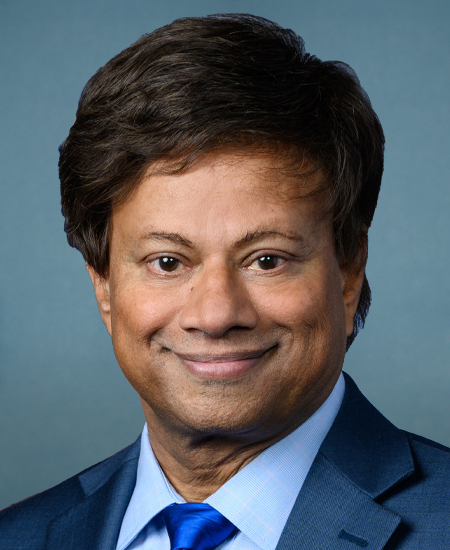
Rep. Shri Thanedar
Sponsored bills
Maddy summaryHR 788 requires the Department of Energy (DOE) and Small Business Administration (SBA) to establish formal agreements for joint research and development (R&D) projects. This mandates that small businesses must be included in these collaborative efforts, aligning DOE and SBA missions to advance shared goals like clean energy innovation. The bill creates a two-year reporting requirement for the agencies to Congress, detailing coordination, research achievements, and future collaboration opportunities. It does not authorize new funding and ensures R&D activities comply with existing research security rules.
Maddy summaryHRES 163 is a non-binding resolution expressing the House of Representatives' goal that all U.S. students achieve grade-level reading proficiency as a foundation for success in school, work, and life. It encourages schools to implement 1-on-1 tutoring for students reading below grade level (5 days/week) and promotes collaboration between schools, states, and private organizations to develop literacy programs for both students and adults. The resolution cites research supporting these approaches but does not create new laws or mandate specific actions.
Maddy summaryThis bill requires schools receiving federal funding to increase the number of Title IX Coordinators based on student population (one per 75,000 students in grades 7+ and one per 150,000 students in grades 6 and below), ensuring these coordinators have no conflicting responsibilities. It mandates annual anonymous surveys to assess students' and staff's experiences with sex-based harassment, including off-campus and online incidents, and requires trauma-informed prevention education for students and staff. The bill includes $50 million annually for five years to support schools in implementing these requirements, with priority for underserved areas and schools facing financial burdens. Schools must also monitor complaints, identify patterns of discrimination, and provide clear reporting procedures for sex-based harassment incidents. The legislation aims to improve school responses to harassment through standardized reporting, prevention, and support mechanisms.
Maddy summaryEthan's Law requires gun owners to store firearms securely in homes where minors live or where residents are legally prohibited from owning guns. It makes it unlawful to leave firearms unsecured if a minor or ineligible person could access them, with fines of $500 per violation and harsher penalties if injury or death occurs. The bill creates a federal grant program to help states implement similar secure storage laws and treats unsafe storage as negligence in legal cases. It directly affects households with children or residents who cannot legally possess firearms, aiming to reduce accidental shootings and unauthorized access.
Maddy summaryHR 1548, the "Leveling the Playing Field 2.0 Act," amends U.S. trade laws to strengthen enforcement of antidumping and countervailing duty regulations. The bill creates new rules for handling multiple investigations on the same merchandise (successive investigations), addresses market distortions in foreign countries that affect production costs, and improves mechanisms to prevent companies from circumventing existing duties. It also establishes procedures for investigating currency undervaluation as a form of subsidy and strengthens requirements for importers to certify compliance with trade laws. These changes primarily affect U.S. importers of foreign goods, foreign exporters, and the Department of Commerce, which administers these trade enforcement mechanisms.
Maddy summaryHR 1535, the BAD DOGE Act, repeals Executive Order 14158, which created the U.S. DOGE Service (USDS) and the U.S. DOGE Service Temporary Organization (USDSTO). The bill targets the controversial structure led by Elon Musk, claiming it operated beyond legal authority by freezing federal payments, accessing personnel data without authorization, and attempting to dismantle agencies like USAID without congressional approval. Key provisions require ending the USDSTO and USDS as established under the repealed executive order, reversing actions deemed violations of federal law and the Constitution. The bill directly affects the USDS/USDSTO structure and its leadership, aiming to restore statutory compliance with government ethics and operational limits.
Maddy summaryThis bill requires the Comptroller General to produce a report analyzing actions taken by the Department of Government Efficiency (created by an executive order). The report must evaluate how those actions - like reducing civil service staff, ending or pausing federal programs - affect the U.S.'s long-term financial, public health, and safety interests. It also must check if the department followed privacy laws (Privacy Act of 1974) and federal program rules. The report must be submitted to Congress by December 31, 2025. The bill directly affects the Department of Government Efficiency and Congress through this mandated oversight.
Maddy summaryThe Access Technology Affordability Act of 2025 creates a new tax credit for individuals who purchase technology designed to assist blind people, such as screen readers or braille displays. This credit covers up to $2,000 in expenses per three-year period for qualified access technology used by the taxpayer, their spouse, or a blind dependent. The credit adjusts for inflation after 2026 but does not apply to costs already covered by other tax benefits. The credit expires after 2030, with adjustments for cost-of-living changes starting in 2027.
Maddy summaryHR 1544, the LEASH DOGE Act, requires the Department of Government Efficiency (DOGE) to report detailed information about its employees and operations to Congress. Specifically, it mandates a report listing all DOGE employees with their roles, background check results, security clearances, and conflict of interest disclosures; appearances before congressional committees; and a public website updated weekly with employee data, funding reductions, and contact information for public inquiries. The bill sets a March 31, 2025, deadline for compliance, with penalties including restrictions on using federal funds for DOGE activities or new DOGE Agency Teams until requirements are met. It directly affects DOGE leadership, its employees, and congressional oversight committees. The law focuses on transparency about DOGE’s staffing and budget decisions, not policy outcomes.