

Maddy summaryThe Elder Pride Protection Act of 2025 establishes a federal task force (the ELDER Task Force) within the Department of Justice to address elder abuse targeting LGBTQI+ individuals. The task force, created within 90 days of the bill’s passage, will study the rise in such abuse, develop national best practices for law enforcement, and create educational materials for prevention and response. It will coordinate efforts across local, state, and federal agencies and submit a report to Congress within one year. The bill directly affects older LGBTQI+ adults (aged 60+) facing abuse, which includes physical, sexual, emotional, or financial harm, but does not create new funding or penalties.
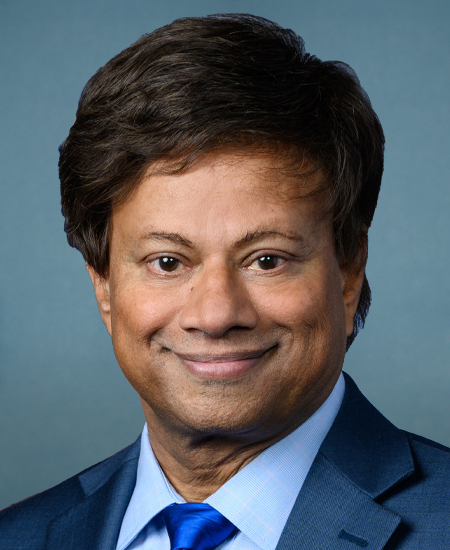
Rep. Shri Thanedar
Sponsored bills
Maddy summaryThe TRACE Act requires all new firearms manufactured in the U.S. to include a second, hidden serial number (inside the receiver or visible only under infrared light) within 12 months of enactment. It extends the retention period for background check records from 24 hours to 180 days and mandates that licensed firearm dealers conduct regular physical inventory checks of their stock. The bill also removes longstanding funding restrictions in federal appropriations laws that previously prohibited using funds to implement these measures. These changes directly affect firearm manufacturers, licensed dealers, and the Bureau of Alcohol, Tobacco, Firearms and Explosives (ATF), which must issue implementing regulations within 180 days.
Maddy summaryHR 3754, the "Don’t Miss Your Flight Act," creates a federal grant program to fund transportation infrastructure projects connecting to public airports. It authorizes $1 billion annually (2027-2031) from the Highway Trust Fund for projects like highways, bridges, transit systems, or rail improvements within 5 miles of airports, aimed at reducing congestion and improving access. Eligible applicants include states, tribes, and local governments managing airports, with 50% of funds reserved for large hub airports and 30% for medium hub airports. The program requires a 50% non-federal cost share, allowing entities to use passenger facility charges or TIFIA credit assistance toward this requirement. This bill directly affects airport-connected transportation infrastructure planning and funding at the state and local government level.
Maddy summaryThe Housing Stability for Dreamers Act prevents federal housing programs from denying mortgage insurance or loans to individuals based on their DACA (Deferred Action for Childhood Arrivals) status. It amends key housing laws - including the National Housing Act, Rural Housing Service programs, Fannie Mae, Freddie Mac, and VA loans - to prohibit eligibility restrictions tied to DACA status for single-family mortgages. The bill defines a "DACA recipient" as someone granted deferred action under the 2012 Department of Homeland Security memo. This directly affects DACA recipients seeking home loans through these federally backed programs, ensuring they cannot be denied based solely on immigration status.
Maddy summaryThis bill imposes a mandatory court stay on civil lawsuits involving presidential candidates, the President-elect, or sitting Presidents during the 90 days before a general presidential election and throughout their term. It also applies to the President's immediate family (spouse or children) and any business or entity where the President or family member is a grantor or beneficiary. The stay automatically pauses all proceedings, including tolling the statute of limitations, until the end of the President's term or until the election results are certified if the candidate isn't elected. The law explicitly does not prevent the President from accessing courts or block government agencies from filing civil actions involving the U.S. government.
Farmers Feeding America Act of 2025 This bill reauthorizes The Emergency Food Assistance Program (TEFAP), increases funding for the program, and provides additional delivery options for geographically isolated states (i.e., Hawaii, Alaska, Puerto Rico, the Northern Mariana Islands, the U.S. Virgin Islands, and Guam). TEFAP is a federal program that helps supplement the diets of people with low income by providing them with emergency food assistance at no cost. Through TEFAP, the Department of Agriculture (USDA) purchases a variety of commodities and makes those food products (e.g., canned, frozen, dried, and fresh fruits and vegetables, eggs, meat, dairy, and whole-grain and enriched grain products) available to state distributing agencies. The bill increases funding for purchasing commodities under the program. Further, the bill directs USDA to coordinate with geographically isolated states to (1) establish alternative delivery options for allocated commodities, and (2) allow for the states to order commodities through the USDA Department of Defense Fresh Fruit and Vegetable Program. USDA may also provide geographically isolated states the ability to directly purchase domestically grown food in lieu of receiving a portion of the commodities. Under this option, USDA may distribute as cash to the state up to 20% of the cash value of the commodities that are allocated to the state under TEFAP. Further, USDA may consider additional factors beyond lowest price in determining winning bids for contracts for fresh produce packages (including product variety and transportation distance).
Maddy summaryHR 3773 (PROTECT Act of 2025) amends federal law to recognize tribal courts as having authority equivalent to state courts for certain electronic evidence cases. It requires that warrants for electronic communications stored 180 days or less must follow procedures from the Indian Civil Rights Act (25 U.S.C. 1302(a)(2)) when issued by tribal courts. The bill also expands tribal jurisdiction over controlled substance offenses (like drug trafficking or possession) and firearms offenses (such as possession by domestic violence offenders) by defining these terms for tribal courts. This directly affects tribal courts and tribal law enforcement by standardizing legal procedures for evidence handling and broadening their authority under federal law. The changes align tribal court processes with federal and state standards for digital evidence and criminal jurisdiction.
Maddy summaryHR 3757, the Pride In Mental Health Act of 2025, provides $20 million annually (2026-2030) to fund grants for mental health services targeting LGBTQ+ youth, including nonbinary, intersex, and Two Spirit youth, and their families/caregivers. The bill mandates grantees to provide trauma-informed care, cultural competency training, school bullying prevention guidelines, and evidence-based practices while explicitly prohibiting the use of funds for conversion therapy or its promotion. It also requires the federal government to restore mental health reports on LGBTQ+ youth, conduct a national survey measuring mental health distress, and produce a report on mental health services for LGBTQ+ youth in foster care. The law directly affects these youth populations by expanding access to tailored mental health resources and data collection, with funding administered through the Substance Abuse and Mental Health Administration.
Maddy summaryThe bill's title ("Protect Vulnerable Immigrant Youth Act") does not align with its actual provisions. HR 3763 amends two sections of the Immigration and Nationality Act to adjust employment-based visa categories, specifically adding "or (J)" to existing numerical limitations and preference allocation rules. These changes would affect certain employment-based visa applicants (e.g., those in categories like "J" for religious workers or other specific employment groups) by removing numerical caps that previously applied to them. The bill contains no provisions related to youth protection, immigration status for minors, or direct safeguards for vulnerable immigrant youth.
Maddy summaryHR 3762, the Supporting Healthy Moms and Babies Act, requires health insurance plans to cover comprehensive prenatal, childbirth, neonatal, perinatal, and postpartum care without cost-sharing (like copays or deductibles). It mandates specific services including ultrasounds, care for pregnancy loss, delivery support, and postpartum behavioral health services for conditions like diabetes or hypertension. The bill applies to group health plans and individual insurance policies starting after the law's enactment, covering both biological mothers and legal parents who did not give birth. This policy directly affects insured individuals seeking maternal and newborn healthcare, ensuring these essential services are fully covered under existing Affordable Care Act requirements.