

Maddy summaryHR 2467, America's Red Rock Wilderness Act, would designate approximately 1.3 million acres of public land across Utah as wilderness areas, protecting them from development and managing them for conservation. The bill specifically designates 77 wilderness areas in the Great Basin and Colorado Plateau regions, including lands within existing national monuments like Grand Staircase-Escalante and Bears Ears. It includes provisions for water rights protection, allows continued livestock grazing under certain conditions, and withdraws the designated lands from mining and mineral leasing. The bill also ensures Tribal rights are protected and requires the Secretary of the Interior to administer these areas according to wilderness management standards.
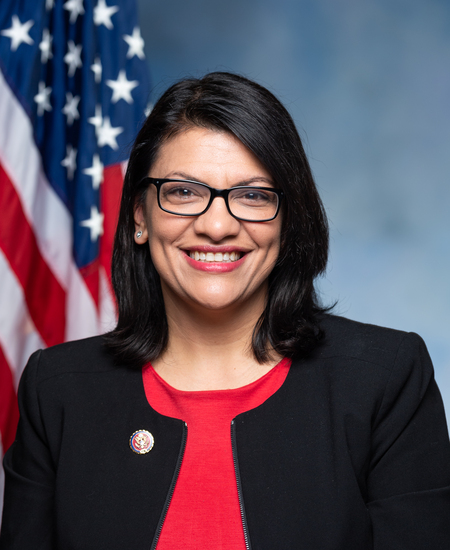
Rep. Rashida Tlaib
Sponsored bills
Maddy summaryThis bill, HR 2411, directs the U.S. government to immediately resume funding for the United Nations Relief and Works Agency for Palestine Refugees (UNRWA) by repealing two prior funding restrictions. It requires the State Department to restart payments to UNRWA under existing authorities and mandates the President to rescind a 2025 executive order ending UNRWA support. The bill affects Palestinian refugees in Gaza, Jordan, Lebanon, Syria, and the West Bank who rely on UNRWA for humanitarian aid, as well as U.S. funding mechanisms. It also requires quarterly reports through 2028 on UNRWA’s progress implementing accountability reforms from an independent review led by Catherine Colonna.
Maddy summaryHR 2402, the No Hungry Kids in Schools Act, creates a new option for states to implement a statewide program under the National School Lunch Act starting in 2025. States would cover costs from non-federal funds to allow all schools in the state to receive full federal reimbursement for meals served, eliminating income-based eligibility thresholds. Key provisions include setting the eligibility threshold to zero and calculating student eligibility statewide instead of by individual school district. This directly affects state education agencies (which must fund the program) and schools (which gain simplified access to full meal reimbursement), benefiting students in qualifying schools.
Maddy summary# Summary of the American Housing and Economic Mobility Act of 2025 This comprehensive legislation addresses housing affordability, civil rights, financial inclusion, and tax policy through multiple titles: **Fair Housing Expansion (Title I):** - Expands protections under the Fair Housing Act to include gender identity, sexual orientation, marital status, source of income, and veteran status - Requires housing providers receiving federal assistance to comply with enhanced accessibility standards (twice as many units must be accessible) **Community Reinvestment Act Strengthening (Title II):** - Requires banks to form diverse Community Advisory Committees in each metropolitan area - Mandates regular biannual consultations between bank executives and community advisory groups - Requires detailed data collection on lending practices by demographic factors (including race, ethnicity, and disability status) - Establishes new requirements for banks to analyze and report on disparities in access to credit **Veterans' Housing Access (Title III):** - Expands eligibility for VA home loans to include direct descendants of veterans who served between June 22, 1944, and April 11, 1968, who are first-time, first-generation homebuyers **Public Housing Improvements (Title IV):** - Requires public housing agencies to analyze where participants live and develop strategies to increase access to higher-opportunity neighborhoods - Mandates regional collaboration among housing agencies to reduce disparities in access - Requires HUD to develop mapping tools to help agencies analyze neighborhood access **Estate Tax Reforms (Title V):** - Increases estate tax rates for large estates (over $13 million) - Reduces the basic exclusion amount from $13 million to $3.5 million - Imposes a 10% surtax on estates exceeding $1 billion - Increases the exclusion limit for farm real property from $750,000 to $3 million - Increases the exclusion for land subject to conservation easements from $500,000 to $2 million - Creates a new 5-8% surcharge on high-income estates and trusts **Additional Provisions:** - Strengthens credit union service to underserved areas - Raises public welfare caps for banks to increase investments in low-income communities - Requires new data collection and reporting requirements for financial institutions This legislation represents a significant expansion of housing rights, financial inclusion, and tax policy reforms aimed at reducing disparities in access to housing and financial services while reforming the estate tax system.
Maddy summaryThe Providing Veterans Essential Medications Act requires the Department of Veterans Affairs to reimburse State homes or provide medications directly for certain high-cost drugs used by veterans in State-run nursing homes. A medication is defined as high-cost if its price (including a 3% fee) exceeds 8.5% of the VA's monthly payment for the veteran's care at that home. This applies specifically to State homes that provide such medications to veterans under VA contracts. The bill ensures veterans receive essential medications without financial burden on the State homes, using clear cost thresholds to determine eligibility.
Maddy summaryThis bill provides housing loans and education assistance to Black World War II veterans who were denied GI Bill benefits due to racial discrimination, or to their surviving spouses, children, or direct descendants. To qualify, applicants must certify they were denied benefits on racial grounds under the original 1944 GI Bill and apply within five years of the law's enactment. The Department of Veterans Affairs must implement these provisions within 90 days and report to Congress on participation and program costs. It specifically addresses documented historical discrimination where Black veterans were steered toward vocational training instead of college, with only 6% earning degrees compared to 19% of White veterans.
Maddy summaryHRES 256 designates March 2025 as Endometriosis Awareness Month, recognizing endometriosis as a common chronic condition affecting approximately 1 in 10 women of reproductive age. The resolution supports raising public awareness, promoting early detection and culturally competent care for those with the disease, and encourages increased research funding for better treatments and a potential cure. It specifically highlights the significant impacts of endometriosis, including diagnostic delays (3-11 years), chronic pain, high healthcare costs ($13,000+ annually per patient), and reduced workforce participation. This non-binding resolution directly affects women and girls living with endometriosis and aims to foster public education and support through designated awareness activities.
Maddy summaryHR 2361, the "Cameras in the Courtroom Act," requires the U.S. Supreme Court to permit television coverage of all its open public sessions unless a majority of justices vote to block it in a specific case, citing due process concerns. This bill directly affects the Supreme Court's proceedings and its handling of public access to hearings. The key provision replaces the current policy by mandating TV coverage as the default, with the exception requiring a majority vote of the justices. It does not change the Court's authority to limit coverage in individual cases but shifts the default position from prohibition to permission. The bill focuses solely on procedural access to Supreme Court proceedings, not on altering legal outcomes.
Maddy summaryHR 2381, the SCREENS for Cancer Act of 2025, reauthorizes and updates the National Breast and Cervical Cancer Early Detection Program (NBCCEDP). It directly affects low-income, uninsured, or underinsured women across all 50 states, territories, and tribal communities by expanding access to breast and cervical cancer screenings, diagnostic services, and patient navigation support. Key provisions include updating program language to emphasize prevention alongside detection and control, adding specific strategies to reduce disparities, and appropriating $235 million annually for fiscal years 2026-2030. The bill also requires a GAO study by 2027 to assess program eligibility, service trends, and barriers to screening access.
Maddy summaryThis bill, titled "Abolish Super PACs Act" but actually regulating them, would impose contribution limits on super PACs by redefining them as "independent expenditure committees" under federal election law. It sets a $5,000 annual threshold for activities qualifying a committee as a super PAC, capping individual contributions to these entities to reduce corruption risks from unlimited donations. The legislation targets the top contributors who gave over 96% of super PAC funds in 2024, aiming to limit the appearance of quid pro quo arrangements. It would apply to all qualifying committees starting in the first full calendar year after enactment.