

Medicare for All Act This bill establishes a national health insurance program that is administered by the Department of Health and Human Services (HHS). Among other requirements, the program must (1) cover all U.S. residents; (2) provide for automatic enrollment of individuals upon birth or residency in the United States; and (3) cover items and services that are medically necessary or appropriate to maintain health or to diagnose, treat, or rehabilitate a health condition, including hospital services, prescription drugs, mental health and substance abuse treatment, dental and vision services, long-term care, gender affirming care, and reproductive care, including contraception and abortions. The bill prohibits cost-sharing (e.g., deductibles, coinsurance, and copayments) and other charges for covered services. Additionally, private health insurers and employers may only offer coverage that is supplemental to, and not duplicative of, benefits provided under the program. Health insurance exchanges and specified federal health programs terminate upon program implementation. However, the program does not affect coverage provided through the Department of Veterans Affairs or the Indian Health Service. The bill also establishes a series of implementing provisions relating to (1) health care provider participation; (2) HHS administration; and (3) payments and costs, including the requirement that HHS negotiate prices for prescription drugs. Individuals who are age 18 or younger, age 55 or older, or already enrolled in Medicare may enroll in the program starting one year after enactment of this bill; other individuals may buy into the program at this time. The program must be fully implemented two years after enactment.
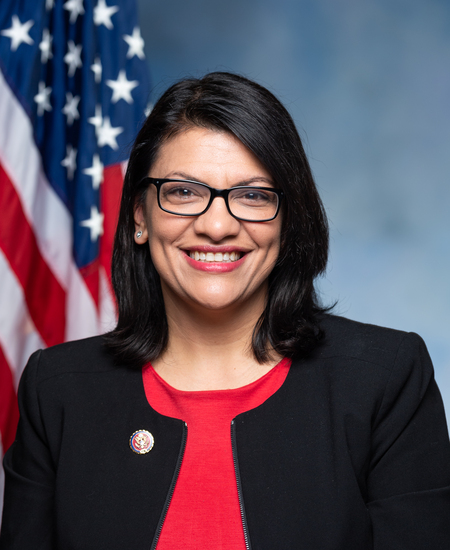
Rep. Rashida Tlaib
Sponsored bills
Maddy summaryThis bill provides federal funding incentives to states that enact laws prohibiting nonconsensual removal of sexual protection barriers (like condoms or dental dams) during sexual activity. States with such laws can receive up to a 20% increase in funding for their Sexual Assault Services Program grants under the Violence Against Women Act. The funding increase applies for a 4-year period and cannot be awarded more than four times per state. It directly affects states that pass qualifying laws and the federal grant program supporting sexual assault services. The bill does not create new federal penalties but ties existing grant funding to state-level legal protections.
Maddy summaryHR 3060, the "No Biometric Barriers to Housing Act of 2025," prohibits owners of federally assisted rental housing (including public housing, Section 8 units, and supportive housing programs) from using facial recognition, fingerprint, or remote biometric technology (like voice or gait analysis) for surveillance or other purposes that could unfairly affect tenant access to housing. The ban takes effect one year after the bill's enactment and applies to all covered housing types listed in the bill, such as those under the Housing Act of 1937 or Native American housing programs. It also requires the Department of Housing and Urban Development to report to Congress within a year on past biometric use in these units, its impacts on tenants, and effects on vulnerable communities. This law directly affects housing owners in federally subsidized properties by banning specific surveillance technologies and mandating transparency about their prior use.
Maddy summaryThis bill requires most private health insurance plans to cover diagnostic and supplemental breast exams with no out-of-pocket costs (like deductibles or copays) for enrolled patients. It specifically covers exams used to evaluate abnormalities found in screenings (diagnostic) or for high-risk screening without abnormalities (supplemental), based on medical guidelines. Plans can still require prior authorization for these exams, and state laws offering stronger protections remain in effect. The rule takes effect for plan years starting January 1, 2026.
Maddy summaryThe Tenants' Right to Organize Act gives tenants receiving housing assistance the right to form and operate tenant organizations without fear of retaliation. It requires public housing agencies and property owners to recognize these organizations, provide meeting spaces, and seriously consider tenant concerns. The bill prohibits adverse actions like lease termination, rent increases, or service reductions for participating in organizing activities. It applies to tenants in housing choice voucher programs and low-income housing tax credit properties, with enforcement through administrative complaints and potential legal action.
Maddy summaryThe Victims of Agent Orange Act of 2025 provides U.S. government assistance to Vietnamese residents affected by Agent Orange exposure during the Vietnam War (1961-1975), their children, and Vietnamese Americans with exposure-related health issues. It directs USAID to fund medical care, caregiver support, home repairs, and environmental cleanup of contaminated sites in Vietnam, prioritizing military bases and heavily sprayed areas. The Department of Health and Human Services must also conduct health assessments and establish treatment centers for Vietnamese Americans in the U.S. affected by Agent Orange. The bill requires implementation within 18 months of enactment and mandates quarterly progress reports to Congress.
Maddy summaryHRES 351 is a symbolic House resolution supporting the designation of April as National Arab American Heritage Month (NAAHM) to celebrate the cultural contributions of Arab Americans. It recognizes Arab Americans' historical and ongoing impacts on U.S. society, including their roles in economy, science, arts, and social justice movements. The resolution highlights that 48 states and numerous cities already observe April as NAAHM, building on the White House's 2023 proclamation. It urges the public to engage in activities celebrating Arab American heritage, without creating new laws or altering existing policies.
Maddy summaryHR 2993, the ESOP Funding for SBA Position Act of 2025, creates a new position within the Small Business Administration (SBA) to assist small businesses in establishing Employee Stock Ownership Plans (ESOPs). This role provides guidance on ESOP setup - including tax treatment, regulatory compliance, and funding options - and coordinates with agencies like the Department of Labor to improve support. The SBA Administrator must report annually to Congress on the position’s activities, including the number of small businesses assisted and policy recommendations. The bill authorizes $500,000 for the first year to fund this position, with ongoing appropriations as needed.
Maddy summaryHR 3006 would limit Medicare coinsurance for certain surgical procedures performed in ambulatory surgical centers (ASCs). Specifically, it prevents patients from paying coinsurance exceeding the annual inpatient hospital deductible for those procedures. If the coinsurance amount would surpass the deductible, the Medicare program must reduce the patient's share to match the deductible and reimburse the ASC for the difference. This change applies to services provided on or after January 1, 2026, directly affecting Medicare beneficiaries using ASCs for qualifying surgeries.
Maddy summaryThis bill limits how much Social Security can withhold from monthly benefits to recover overpayments. It sets a 10% cap on withholdings for cases without fraud (unless the recipient requests a higher rate), affecting Social Security beneficiaries who received more than they were entitled to. The key provision prevents excessive deductions from monthly payments, ensuring recipients retain at least 90% of their benefit for non-fraudulent overpayments. The law applies to overpayments existing after the bill's effective date.