

Maddy summaryHCONRES 56 is a symbolic congressional resolution recognizing the persistent wage gap faced by Latina women in the U.S. It specifically highlights that, as of 2024, Latina workers earn just 58 cents for every dollar paid to White, non-Hispanic men working full-time year-round. The resolution designates October 8, 2025, as "Latina Equal Pay Day" to raise awareness about this disparity, which affects over 14 million Hispanic women in the labor force. It does not create new laws or policies but formally acknowledges the economic impact of this gap on Latina families and the broader economy.
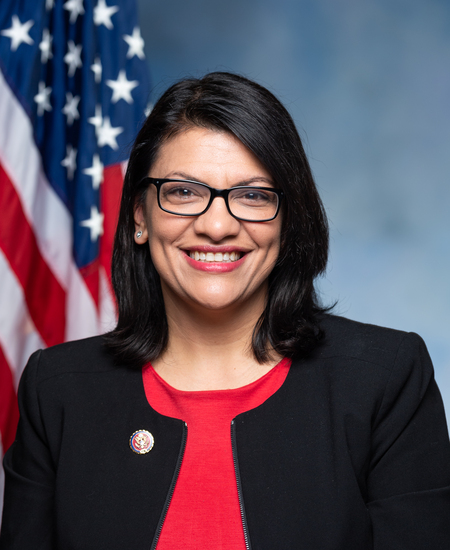
Rep. Rashida Tlaib
Sponsored bills
Maddy summaryHRES 792 is a symbolic resolution designating May 31, 2026, as "Youth Mental Health Day" and September 9 annually as "Youth Suicide Prevention Day." It calls for increased investments in youth mental health services and encourages state and local governments to adopt these observances while promoting community-based mental health initiatives. The resolution does not create new laws or allocate funding but aims to raise awareness about the youth mental health crisis, which disproportionately affects marginalized groups like LGBTQ+, Black, Indigenous, and low-income young people. It references CDC and NIH data showing rising rates of depression, suicidal ideation, and suicide among U.S. youth, particularly ages 10-34.
Maddy summaryHRES 797 is a non-binding resolution expressing concern about the rising number of book bans in U.S. schools and libraries. It cites PEN America data showing 6,870 book bans affecting 3,751 titles between July 2024 and June 2025, with books about race, LGBTQ+ experiences, and marginalized communities disproportionately targeted (e.g., *The Handmaid’s Tale*, *Maus*, *This Book Is Gay*). The resolution calls on schools to follow best practices for book challenges, protect students’ access to diverse materials, and return books removed from military schools under recent executive orders. It directly addresses students, educators, librarians, and authors impacted by censorship, emphasizing that such bans threaten free expression and democratic values.
Maddy summaryHRES 793 is a non-binding resolution supporting the designation of October 2025 as "National Learning Disabilities Awareness Month." It highlights that specific learning disabilities affect 32% of students receiving special education services, with over 96% of affected 4th and 8th graders lacking reading proficiency and 92% lacking math proficiency in 2023-2024. The resolution calls on schools to continue providing free appropriate public education for these students, emphasizing evidence-based instructional methods. This is a symbolic measure with no new funding or mandates, aimed at raising awareness about learning disabilities and educational gaps.
Maddy summaryHR 5705 requires the federal government to reimburse state agencies for funds they use to maintain participation in the WIC program during a government shutdown. It directly affects states that cover WIC costs using their own money when federal funding lapses. The bill establishes a process where states can seek reimbursement from the federal government after the shutdown ends. This ensures states aren’t burdened with costs for a federal funding gap that impacts nutrition assistance for women, infants, and children.
Maddy summaryThis bill creates a federal grant program to help communities develop non-police mental health crisis response teams. It provides funding for local governments, clinics, fire departments, and nonprofits to recruit behavioral health professionals, establish co-response teams (combining mental health clinicians with emergency responders), and integrate these teams into 911 or 988 dispatch systems. The grants specifically support replacing police as the primary responders for mental health crises with clinician-led mobile teams or emergency medical services, while respecting existing state laws on detention. Recipients must report on response outcomes, diversion rates (cases handled without police), and community feedback.
Maddy summaryHR 5725, the Mental Health Crisis Response Act of 2025, establishes a federal grant program to help state and local governments create health-centered alternatives for mental health emergencies. It provides $25 million annually (2027-2031) for jurisdictions to embed mental health professionals in 911 systems, develop direct routing to crisis hotlines like 988, and build partnerships between emergency services and dispatch centers. The bill specifically aims to reduce law enforcement involvement in behavioral health crises by creating streamlined pathways to crisis care, without requiring police removal or overriding state emergency authority laws. Jurisdictions receiving grants must report on response times, use of force, and diversion rates to health services.
Maddy summaryHR 5707, the Voter Purge Protection Act, sets strict standards for states removing voters from registration lists. It requires states to use only objective, reliable evidence (like proof of death or moved residence) to remove voters - not factors like not voting or not responding to notices - and mandates 48-hour written notice to affected voters with reinstatement instructions. States must also issue public notices about removal programs to help voters verify their status. This bill directly affects state election officials and voters whose registration might be challenged, aiming to prevent improper removals under the National Voter Registration Act. It amends existing federal voting laws to enforce these new verification and notice requirements.
Maddy summaryHR 5720, the Federal Worker Childcare Protection Act of 2025, would provide reimbursement to federal employees who face a pay gap during a government funding lapse (starting October 1, 2025) while paying for childcare. It directly affects federal workers who are furloughed or working without pay during such a lapse. Employees would receive reimbursement for childcare costs if they provide documentation, such as receipts from a childcare provider, to the General Services Administration. This reimbursement is subject to available congressional appropriations and does not guarantee payment.
Maddy summaryThis bill requires Medicare, Medicaid, CHIP, and federal employee health plans to cover medically necessary specialized foods, vitamins, and amino acids for people with specific digestive and metabolic conditions. It defines "medically necessary food" as prescribed formulas, vitamins, and amino acids designed for conditions like inherited metabolic disorders, inflammatory bowel disease, and severe food allergies that cannot be managed through regular diet. The bill mandates coverage of these items and necessary equipment for administration (like feeding tubes), with Medicare covering 80% of costs. This would directly benefit thousands of patients who rely on these specialized treatments to avoid serious health complications like malnutrition, hospitalizations, and developmental issues.