

Maddy summaryHR 6870, the GRACE Act, sets a minimum annual refugee admission floor of 125,000 for the U.S., replacing prior flexible caps. It creates a new pathway allowing community groups or private sponsors to provide resettlement services (like housing and support) for refugees, reducing reliance on traditional resettlement agencies. The bill requires the President to submit quarterly public reports to Congress detailing actual admissions, progress toward annual goals, regional allocations, processing times, and security checks. This directly affects refugees seeking admission, resettlement agencies, and federal agencies managing refugee processing, with transparency mechanisms to track compliance.
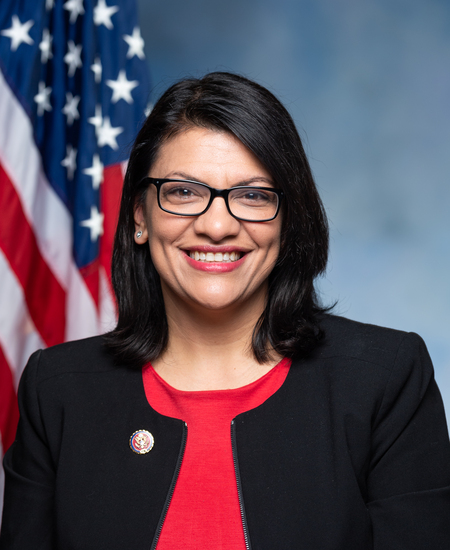
Rep. Rashida Tlaib
Sponsored bills
Maddy summaryThis bill amends Section 287(g) of immigration law to restrict immigration enforcement authority exclusively to U.S. Immigration and Customs Enforcement (ICE) officers and DHS employees. It removes state and local law enforcement agencies' ability to verify immigration status, investigate, or arrest individuals for immigration violations under current 287(g) agreements. The change directly affects local police departments that previously participated in immigration enforcement through federal partnerships. The bill does not create new policies but alters existing authority to limit enforcement to federal officers only.
Maddy summaryThis bill amends the Servicemembers Civil Relief Act to create a new 6% interest rate cap for student loan consolidation or refinancing. Specifically, it limits interest to 6% on loans consolidated or refinanced during military service to cover student debt incurred *before* service (not new debt during service). This applies to active-duty servicemembers (or jointly with their spouse) who refinance pre-service loans while serving. The change affects how military members manage existing student debt during their service, without altering interest rates on other loans or providing debt forgiveness.
Maddy summaryHCONRES 64 is a congressional resolution directing the President to withdraw U.S. military forces from any hostilities against Venezuela that lack explicit congressional authorization. It applies to ongoing military operations in Venezuela not approved by Congress through a declaration of war or specific law authorizing force. The resolution invokes the War Powers Resolution (50 U.S.C. 1544(c)), requiring the removal of troops within the timeframe specified by that law. This bill does not affect military actions already authorized by Congress but mandates the end of unapproved operations.
Maddy summaryHCONRES 61 directs the President to withdraw U.S. military forces from hostilities against any terrorist organization designated by the president in the Western Hemisphere. This bill specifically applies to military operations involving U.S. armed forces in the region targeting such groups. The key provision requires the withdrawal unless Congress has passed a formal declaration of war or specific authorization for that military action. The resolution invokes Section 5(c) of the War Powers Resolution to compel this change in military deployment.
Maddy summaryHRES 955 is a symbolic House resolution recognizing the importance of maintaining U.S. leadership in ending pediatric HIV/AIDS globally. It affirms support for existing programs like PEPFAR and the Global Fund, which provide critical prevention services (e.g., antiretroviral prophylaxis for pregnant women) and treatment for children. The resolution specifically calls for continued commitment to closing the treatment gap for children, expanding access to long-acting prevention methods, and advancing the Global Alliance to End AIDS in Children by 2030. As a recognition measure, it does not create new laws or allocate funding but underscores ongoing U.S. efforts to prevent mother-to-child transmission and improve pediatric HIV outcomes.
Maddy summaryHR 6815 creates a publicly available EPA tool to identify communities facing environmental burdens, such as poor air quality, climate risks, health issues, poverty, and racial disparities. The tool uses geospatial mapping to flag neighborhoods meeting specific thresholds across six categories of factors (e.g., asthma rates, proximity to pollution sources, unemployment). Federal agencies must adopt this tool within a year to prioritize funding and resources for affected communities. The EPA will update the tool annually based on public feedback and new data, with annual reports to Congress on changes in identified communities.
Maddy summaryThis bill requires the President to reimburse the U.S. Treasury for Secret Service protection and related government costs when traveling for personal business interests tied to entities owned by or benefiting the President (Section 2). It bans the President from soliciting donations for presidential libraries or museums while in office and mandates annual reports from the President and private library entities (Section 4). Additionally, it prohibits the President from operating businesses, serving on boards, or engaging in day-to-day business operations during their term, with any income from such activities subject to a 100% tax (Section 5). Immediate family members engaging in prohibited business activities must submit quarterly reports to Congress. The bill directly affects the President and their immediate family by imposing financial accountability measures for potential conflicts of interest.
Maddy summaryHR 6818, the Part-Time Worker Bill of Rights Act, would expand rights for part-time workers by reducing eligibility requirements for family and medical leave from 12 months to 90 days of employment under the FMLA. The bill prohibits employers from discriminating against part-time workers based on hours worked, requiring equal treatment for benefits, promotions, and scheduling. It mandates that employers obtain written statements from employees about their desired work hours and prioritize offering available work hours to existing employees before hiring new external workers. The bill establishes enforcement mechanisms including civil penalties for violations and allows employees to file private lawsuits for damages, with the Secretary of Labor having investigative authority to ensure compliance. This legislation directly affects part-time workers and employers with more than 15 employees across both private and public sectors.
Maddy summaryThe Schedules That Work Act would require employers in retail, food service, hospitality, cleaning, and warehouse sectors to provide workers with 14 days' advance notice of their schedules and pay predictability wages for last-minute changes. It allows employees to request schedule changes related to caregiving responsibilities, health conditions, education, or other jobs, with employers required to engage in good-faith discussions about such requests. The bill prohibits retaliation against employees who request schedule changes and mandates written notice of schedule changes and predictability pay. It applies to employers with 15 or more employees in covered sectors, aiming to address widespread issues with unpredictable schedules that negatively impact workers' ability to care for family members, maintain housing stability, and access health care.