

Maddy summaryHR 670, the Lady Liberty Act of 2025, sets a minimum annual refugee admission target of 125,000 people for fiscal years after 2026. It directly affects the U.S. refugee resettlement program by overriding the President’s usual authority to set admission numbers. The key provision amends the Immigration and Nationality Act to require that the number of refugees admitted each year cannot fall below 125,000, regardless of presidential determination. This creates a fixed minimum floor for refugee admissions starting in fiscal year 2027.
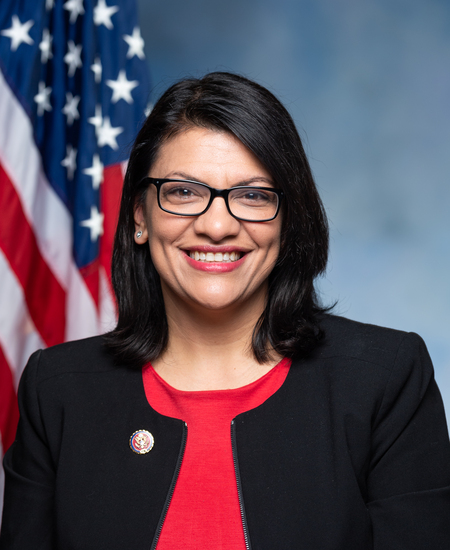
Rep. Rashida Tlaib
Sponsored bills
Maddy summaryThis bill prohibits states from pursuing or collecting Medicaid recovery claims against individuals' estates for payments made during their lifetime. It requires states to withdraw all existing recovery liens within 90 days of enactment and notify affected individuals or their estates. The law specifically ends state efforts to reclaim Medicaid funds from beneficiaries' estates after death, applying to claims initiated before the law's effective date. It directly affects Medicaid beneficiaries and their estates who were subject to prior state recovery actions. The key mechanism is a mandatory 90-day withdrawal of all existing liens and a permanent ban on new recovery claims for correctly paid assistance.
Maddy summaryThis bill expands VA healthcare access to military family members (including those in utero) who lived or worked at military locations where veterans have a presumption of service-connected illness due to toxic exposure (e.g., Camp Lejeune). It requires the VA to provide hospital care and medical services for covered illnesses if families demonstrate exposure to the same toxins qualifying veterans for benefits. Key limitations include requiring exhausted third-party payment claims (like insurance) before VA coverage, and restricting care to illnesses with VA-established presumptions. The VA must report annually on utilization, denials, and pending applications starting in 2027. This directly affects military families residing at contaminated bases, not veterans themselves.
Maddy summaryThis resolution (HRES 969) expresses support for designating the week beginning September 8, 2025, as "National Hispanic-Serving Institutions Week." It recognizes colleges and universities with at least 25% Hispanic undergraduate enrollment (known as Hispanic-Serving Institutions or HSIs) and their role in serving diverse, low-income students. The resolution does not create new policies or funding but encourages public observance through ceremonies and activities to honor HSIs’ contributions to higher education access and economic mobility. It applies symbolically to all 615+ HSIs across the U.S. and Puerto Rico.
Maddy summaryHR 4611 (EACH Act of 2025) requires all federally funded health programs - including Medicaid, Medicare, military health plans, and the Indian Health Service - to cover abortion services without restrictions, repealing the Hyde Amendment's long-standing ban on federal funding for most abortions. This directly affects millions of people enrolled in these programs, particularly low-income women, women of color (including 25% of Black women and 22% of Hispanic women on Medicaid), and young people. The bill mandates coverage in all federally administered health plans and prohibits state or private insurers from restricting abortion coverage in health insurance. It aims to eliminate current federal and state barriers that deny abortion access to people who rely on government health programs.
Maddy summaryThis bill prohibits landlords from charging application fees, tenant screening fees, and excessive late fees on "covered" rental properties - those with federally backed mortgages (like FHA, VA, or USDA loans) or HUD assistance. It caps late fees at 3% of monthly rent after a 15-day grace period and requires landlords to disclose total monthly costs, past tenant litigation, maintenance issues, and rent history for the past decade before signing leases. The law directs regulators like HUD to define "junk fees" and ban reporting unpaid fees to credit agencies. It directly affects renters in federally supported housing by limiting unexpected costs and increasing transparency.
Maddy summaryHR 1404, the CHAMPVA Children’s Care Protection Act of 2025, expands healthcare eligibility under the CHAMPVA program for children of veterans. It increases the maximum age for children to receive medical benefits from 21 to 26 years old, regardless of marital status. This change directly affects dependent children of veterans who were previously eligible until age 21, extending coverage through their mid-twenties. The policy amendment applies to medical care provided on or after the bill’s enactment date.
Maddy summaryThis bill establishes a voluntary federal certification program recognizing employers that meet specific family-friendly workplace standards. To qualify, employers must offer paid family leave (at least 12 weeks annually for reasons like childbirth, adoption, or caring for sick family members), paid sick days separate from other leave, fertility/adoption assistance, child care subsidies, flexible scheduling after parental leave, remote work options when feasible, and lactation support. The program, administered by the Secretary of Labor, would certify employers demonstrating these policies through a submitted application. The certification aims to publicly recognize companies supporting employees in balancing work and family responsibilities.
Maddy summaryThe Buy Now, Pay Later Protection Act of 2025 brings "buy now, pay later" (BNPL) loans under federal consumer credit regulations by amending the Truth in Lending Act (TILA). It defines BNPL loans as closed-end retail loans repaid in four or fewer interest-free installments with no finance charge, directly affecting consumers using these payment plans and BNPL lenders. The bill extends existing TILA protections - such as disclosure requirements and consumer defenses against creditors - to BNPL loans, updating references in key sections to include BNPL alongside credit cards. The Consumer Financial Protection Bureau (CFPB) must issue implementing rules within one year, bringing BNPL lenders under federal supervision for the first time.
Maddy summaryThis bill directs the President to restrict U.S. natural gas exports through regulations aimed at keeping domestic energy prices low. It requires the President to issue a rule prohibiting natural gas exports, with limited exemptions for national security or strategic allies that must be approved by Congress. The bill claims such restrictions would prevent projected price increases for households (up to $124 annually) and industries (up to $125 billion by 2050) cited in its findings. It directly affects U.S. energy consumers and industries reliant on domestic natural gas, as defined by the bill's stated purpose.