

Maddy summaryThe Healthcare Workforce Resilience Act (HR 6205) reallocates unused employment-based immigrant visas from fiscal years 1992-2021 to directly support foreign nurses and physicians seeking permanent residency in the U.S. It creates 40,000 new visas - 25,000 for nurses and 15,000 for physicians - available only to those with petitions filed within three years of the bill’s enactment. The bill includes expedited processing without fees, exempts these visas from country limits, and requires employers to attest that hiring foreign workers won’t displace U.S. workers. This policy change specifically targets healthcare staffing shortages by streamlining pathways for qualified foreign healthcare professionals.
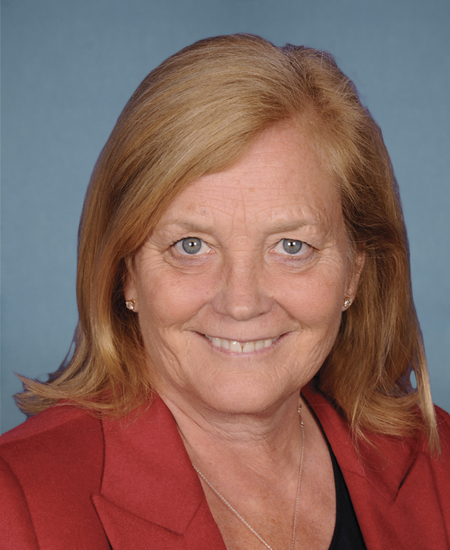
Rep. Chellie Pingree
Sponsored bills
Maddy summaryThe REPAIR Act requires car manufacturers to provide vehicle owners and independent repair shops with free, unrestricted access to vehicle data and repair information. It bans manufacturers from using technological or legal barriers to block access to diagnostics, tools, or aftermarket parts, and prohibits mandating specific brands for repairs or restricting customers’ choice of repair facility. The law also prevents manufacturers from requiring waivers of these rights as a condition of purchase, lease, or warranty service. The Federal Trade Commission will enforce these provisions to ensure fair competition in vehicle repair.
Maddy summaryHR 5983, the Clean Water Act of 2023, redefines "protected water resources" under federal law to explicitly include all interstate and intrastate waters (such as intermittent and ephemeral streams), wetlands, and their tributaries. This directly affects federal agencies like the EPA, states managing water quality, and developers or landowners needing permits for activities near these waters. The bill eliminates the Supreme Court’s narrow "navigable waters" definition from Sackett v. EPA (2023), restoring protections for tens of millions of acres of wetlands and millions of miles of small streams. Key mechanisms require the EPA to annually review and adjust exclusions from protections based on scientific evidence, ensuring water bodies critical to drinking water, flood control, and ecosystems remain safeguarded.
Maddy summaryHR 5937, the National Children’s Museum Act, formally designates the National Children’s Museum (operating as a nonprofit under IRS 501(c)(3)) as the official national children’s museum and secures its space in the Ronald Reagan Building. The bill requires the General Services Administration (GSA) to enter a cooperative agreement providing the museum with rent-free use of its current 32,369-square-foot space (suite C-001) for the duration of its existing lease, subject to the museum maintaining its 501(c)(3) status and using the space as a children’s museum. Funding for this arrangement will come from existing GSA funds (Pennsylvania Avenue Development Corporation or International Trade Center funds), and the museum must submit annual reports on operations and finances to specific congressional committees. This procedural bill primarily affects the museum’s operational stability and space agreement, not broader policy.
Maddy summaryThis bill would require employers with 5 or more employees to provide 56 hours of paid leave annually for employees experiencing pregnancy loss, failed fertility procedures (including IVF), failed adoption or surrogacy arrangements, or fertility-impacting diagnoses. Employees could also use this leave to care for a spouse or domestic partner facing these circumstances. Employers would need to provide clear notice of this policy and cannot discriminate against employees who use this leave. The bill applies to private sector employers, government employees, and others covered under the defined terms, with enforcement mechanisms to protect employees' rights.
Maddy summaryHRES 783 is a symbolic House resolution supporting the designation of October 16, 2023, and October 16, 2024, as "World Food Day" in the United States. It does not create new laws, funding, or policies - it merely expresses congressional support for recognizing an existing global observance established by the UN's Food and Agriculture Organization (FAO). The resolution cites global hunger statistics and encourages Americans to observe the day with activities, but it has no binding effect on government action or policy. As a procedural resolution, it affects no specific groups or programs and serves only to affirm existing international recognition of World Food Day.
Maddy summaryHRES 771 is a non-binding resolution expressing the U.S. House of Representatives' support for Israel following Hamas' October 7, 2023, attack. It condemns Hamas' actions, affirms Israel's right to self-defense, and calls for the immediate release of hostages. The resolution also urges enforcement of existing laws restricting aid to terrorists and sanctions against Iran for supporting Hamas. It does not create new policies or allocate funds, as it is a symbolic statement of congressional support.
Maddy summaryHRES 768 is a symbolic House Resolution expressing congressional support for Israel following Hamas' October 7, 2023 attacks. It condemns Hamas' actions, reaffirms Israel's right to self-defense, and calls for the immediate release of hostages. The resolution references the U.S. commitment to Israel's security through existing military aid programs, including the 2016 U.S.-Israel Memorandum of Understanding, and emphasizes enforcement of laws like the Taylor Force Act to prevent U.S. aid from reaching terrorist groups. As a symbolic resolution, it does not create new policy but serves as a statement of congressional support for Israel.
Maddy summaryHR 6047 requires the U.S. Postal Service to implement specific recommendations from its Inspector General (IG) regarding undelivered and partially delivered mail routes. The bill directs the Postal Service to review and adopt the IG's 2022 report (Report No. 21-262-R23) on improving identification and notification processes for such mail within one year of the bill's enactment. This affects the Postal Service's operational procedures for handling mail delivery issues. The key provision mandates the Postal Service to act on these IG recommendations, aiming to enhance mail delivery reliability. The bill focuses on procedural changes to the Postal Service's internal operations, not new funding or broader policy.
Maddy summaryThe Safe Schools Improvement Act (HR 6031) requires public elementary and secondary schools to implement comprehensive anti-bullying policies that specifically prohibit harassment based on protected characteristics like race, gender identity, disability, religion, and sexual orientation. It mandates schools to collect and publicly report annual data on bullying incidents while establishing clear grievance procedures for students and parents. The bill also requires states to submit biennial reports on school compliance and supports evidence-based interventions, such as restorative practices, to reduce exclusionary discipline. This legislation directly affects all public K-12 schools and students in the U.S., aiming to create safer learning environments through standardized policy requirements and data transparency.