

Maddy summaryThe SEAfood Act requires the National Oceanic and Atmospheric Administration to commission a National Academies study on offshore aquaculture's environmental impacts, regulatory needs, and potential benefits. It establishes an assessment program for demonstration projects that must use native species, avoid salmon, follow strict environmental safeguards, and prioritize projects owned by veterans or benefiting communities with environmental justice concerns. The bill creates Aquaculture Centers of Excellence at minority-serving institutions, historically Black colleges, and Tribal Colleges to develop aquaculture curricula focused on business skills, research, and community engagement. It mandates regular reporting on project impacts, includes provisions to protect coastal communities and marine ecosystems, and requires consultation with Tribal and Indigenous communities. The legislation aims to establish science-based regulatory standards while promoting equitable opportunities in the growing aquaculture industry.
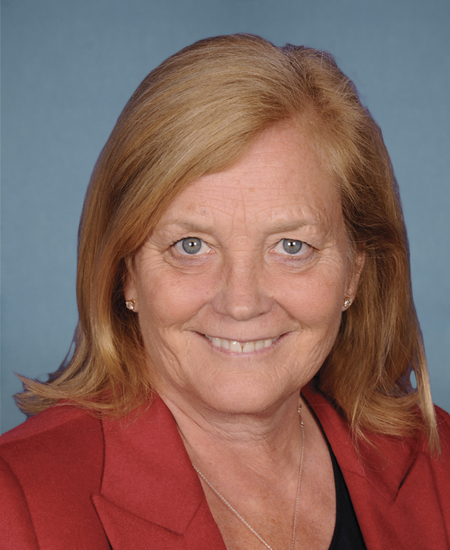
Rep. Chellie Pingree
Sponsored bills
Supporting Early-childhood Educators' Deductions Act of 2023 or the SEED Act of 2023 This bill expands the tax deduction for the expenses of elementary and secondary school teachers to include early childhood educators.
Health Care Practitioner Disaster Protection Act This bill extends certain liability protections available for health care practitioners who provide voluntary health care services in declared emergencies through a community health center other than the one that initially sponsored them. Current law makes the liability protections available to volunteer practitioners that are sponsored by a particular community health center. This bill maintains the liability protections for a volunteer practitioner who provides services through a different community health center if the center (1) seeks the assistance of the volunteer practitioner to respond to a declared emergency, and (2) promptly notifies the Department of Health and Human Services that the volunteer practitioner will be providing services.
Maddy summaryThis bill replaces "Columbus Day" with "Indigenous Peoples’ Day" as the official federal holiday observed on the second Monday in October. It directly affects federal government operations and all federal documents, rules, or laws that previously referenced "Columbus Day" by automatically updating those references to "Indigenous Peoples’ Day" upon enactment. The key mechanism is a simple amendment to federal law (5 U.S.C. § 6103(a)) to change the holiday name and a provision ensuring all existing federal references to Columbus Day are legally treated as referring to Indigenous Peoples’ Day instead. This is a procedural change to federal holidays and references, not a new policy or program.
Maddy summaryThis bill requires federal agencies to adjust contract prices to reimburse contractors for paying employees during government funding lapses (e.g., shutdowns). It covers costs for furloughed, laid-off, or reduced-hour workers, or for restoring paid leave used during the lapse, with a weekly cap of $1,442 per employee. Directly affecting federal contractors and their employees who experienced work disruptions due to funding gaps, it mandates agencies to make these adjustments promptly after enactment. Contractors must provide proof of costs, and the Office of Federal Procurement Policy must report on implementation to Congress within a year.
Maddy summaryHR 5784 would provide federal grants to public schools (including Bureau of Indian Education schools) to make them more environmentally sustainable and equitable. It prioritizes schools in the most vulnerable communities (based on CDC Social Vulnerability Index) for full funding to become "healthy zero-carbon schools" through energy-efficient retrofits and new construction, while offering reduced funding for less vulnerable schools. The grants require community engagement in planning, mandate hiring from local communities with specific diversity goals, fund social services and mental health support, and include strict energy efficiency standards for all projects. The bill also includes funding for educational equity planning and climate resiliency programs to help schools serve as community centers during disasters.
Maddy summaryHRES 733 is a non-binding resolution expressing concern about the rising number of book bans in U.S. schools and libraries. It cites data showing nearly 3,400 book removals affecting 1,557 titles from July 2022-June 2023, with disproportionate targeting of books featuring LGBTQ+ themes (36%) and racial justice content (37%). The resolution urges school districts to follow established best practices for handling book challenges and reaffirms the importance of protecting students' access to diverse materials. It does not create new laws but calls for local governments to support free expression as protected by the First Amendment.
Maddy summaryThe WIC for Kids Act expands eligibility for the Special Supplemental Nutrition Program for Women, Infants, and Children (WIC) by adding new qualifying pathways. It allows children to qualify if they live in households where someone receives Head Start, Indian reservation food assistance, or Puerto Rico/Northern Mariana Islands nutrition block grants, and streamlines documentation by permitting states to use existing records. The bill extends certification periods for children from one to two years and automatically enrolls infants born to current WIC participants. This directly affects low-income families with children who qualify for related assistance programs but previously faced barriers to WIC access.
Maddy summaryThe Student Loan Refinancing and Recalculation Act establishes a program allowing eligible borrowers to refinance existing Federal Direct and FFEL loans. Borrowers with loans first disbursed or applications received before July 1, 2024, can apply to have their loans reissued with a new interest rate calculated as the 10-year Treasury note yield plus 1 percent. The bill also eliminates origination fees for future Federal Direct Loans and prevents interest capitalization on certain loans, meaning borrowers won't pay interest on unpaid interest. This program aims to provide relief by potentially lowering interest rates while maintaining original repayment terms for eligible borrowers. The refinancing program will expire on a date determined by the bill's provisions.
Maddy summaryThis bill extends the funding period for the Distance Learning and Telemedicine Program from 2023 to 2028. It directly affects rural communities by ensuring continued access to telehealth services and educational programs through this existing federal initiative. The key provision is a simple amendment to the program's authorization date in existing law, without creating new requirements or altering the program's scope. The change ensures uninterrupted support for rural healthcare and education providers relying on this funding.