

Maddy summaryHR 6592, the Fight Book Bans Act, provides federal grants to reimburse public school districts for legal costs when they choose to keep instructional or library materials after parental objections. It directly affects school districts (covered local educational agencies) that select materials for students and handle challenges to their removal. The bill authorizes up to $100,000 per case in grants to cover attorney fees and court costs, provided the district didn’t remove the materials and wasn’t reimbursed by the state. Funding of $15 million is authorized for fiscal years 2024-2028. The grants are strictly for legal challenges to decisions not to remove materials, not for the content of the materials themselves.
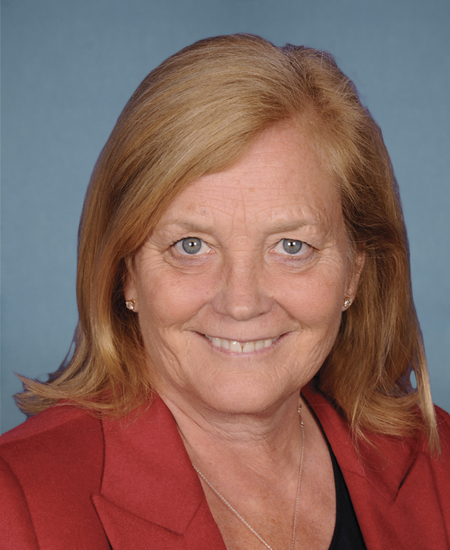
Rep. Chellie Pingree
Sponsored bills
Maddy summaryHRES 907 is a non-binding House resolution condemning rising antisemitism in the U.S., citing increased hate crimes (25% rise in 2022 per FBI data) and campus incidents (41% increase from 2021-2022 per ADL). It calls on all Americans, including campus leaders and government agencies, to combat antisemitism and urges implementation of the U.S. National Strategy to Counter Antisemitism. The resolution specifically requests increased funding for the Nonprofit Security Grant Program to strengthen safety protections for Jewish communities. It directly affects Jewish Americans, campus communities, and government agencies responsible for hate crime prevention and community safety.
Maddy summaryHR 6527, the JUST Act of 2023, strengthens civil rights accountability within the USDA by requiring corrective actions for employees found to have engaged in discriminatory practices, retaliation, or misconduct (such as denying service receipts or delaying applications). It establishes a new Assistant Secretary for Civil Rights position to oversee compliance, creates an independent Civil Rights Ombudsperson office to assist program participants, and grants the Assistant Secretary authority to provide equitable relief - such as restoring denied benefits - to individuals who faced discrimination. The bill directly affects USDA employees, program applicants, and participants (including farmers and ranchers) by streamlining complaint resolution and shifting the burden of proof to the USDA in appeals. These changes aim to improve transparency and fairness in USDA program access.
Maddy summaryHRES 895 is a resolution introduced in the U.S. House of Representatives on November 28, 2023, that condemns statements by some members of Congress calling for the expulsion of Palestinians from the United States. The resolution states such rhetoric is un-American, bigoted, and dangerous because it unfairly conflates Palestinians with Hamas and ignores the U.S. history of welcoming immigrants of all backgrounds. It specifically references H.R. 6211 (introduced November 2, 2023) as an example of harmful rhetoric. This resolution has no legal effect - it is a symbolic statement expressing the House's position.
Maddy summaryHRES 793 is a resolution passed by the U.S. House of Representatives calling on Hamas to immediately release all 199 hostages taken during Hamas' October 7, 2023 attack on Israel. The resolution condemns Hamas for the attack, the taking of hostages, and threats against hostages, while stating that holding hostages violates international humanitarian law under the Geneva Conventions. It demands the immediate release of all hostages and expresses sympathy for victims and their families. As a symbolic resolution, it does not create legal obligations but formally expresses the House's position.
Maddy summaryHR 6451, the Mental Health Justice Act of 2023, provides $250 million in federal grants to states, tribes, and localities to hire mental health professionals as first responders for specific emergencies. It directs these professionals to replace police in situations involving mental health crises, substance use, or intellectual/developmental disabilities - such as when a 911 caller describes a mental health emergency or a first responder identifies someone needing mental health support. The bill requires grantees to train responders in de-escalation techniques, link individuals to community-based services (not incarceration), and report on outcomes like reduced arrests or use of force. It also mandates data collection on demographics and prevents funneling people into institutional settings, with annual reports to Congress on program effectiveness.
Maddy summaryHR 6397, the STAR Act, is a procedural bill that makes minor technical changes to existing transportation law. It rearranges the numbering of sections in Title 49 of the U.S. Code related to transit art programs, specifically modifying Section 5323(h) and Section 5309. The bill does not create new policies or affect any people, organizations, or funding. It only updates the legal structure of current provisions without changing any substantive requirements for transit art. As a technical amendment, it has no direct impact on transit agencies, artists, or the public.
Maddy summaryHR 6415, the CARE for First Responders Act, creates targeted mental health support for first responders, including law enforcement, firefighters, EMTs, and 911 operators (previously excluded from many services). It establishes a 24/7 confidential mental health hotline integrated with the 988 Suicide Lifeline, funds mobile crisis teams for disaster response, and mandates specialized training to reduce stigma and improve access to culturally competent care. The bill requires the development of peer support programs and education for responders and their families on mental health coping strategies. It authorizes $5 million annually (2024-2028) for grants to states and organizations to implement these services, specifically addressing the higher rates of mental health challenges and suicide among first responders compared to the general population.
Maddy summaryThe Climate Displaced Persons Act establishes a new admission pathway for individuals displaced by climate-related environmental disasters, defining "climate-displaced persons" as those compelled to leave their homes due to climate events like floods, droughts, or sea level rise who cannot safely return or integrate locally. The bill sets a minimum annual admission goal of 100,000 climate-displaced persons to the United States beginning in fiscal year 2024, requires the government to collect and analyze data on climate displacement, and mandates the creation of a Global Climate Change Resilience Strategy to address climate impacts on vulnerable populations. It also requires training for U.S. diplomats and immigration officers on climate displacement and establishes procedures for applications, including exemptions for unaccompanied children and cases of changed circumstances. The legislation aims to provide a structured humanitarian response to climate-driven displacement while acknowledging the U.S. historical responsibility for climate change.
Maddy summaryHR 6105, the No Toxics in Food Packaging Act of 2023, prohibits the use of specific chemicals in food packaging by deeming them unsafe under existing law. It directly bans ortho-phthalates (like DEHP and DBP), PFAS, certain bisphenols (including BPA), styrene, and antimony trioxide in all food contact materials. The bill requires the FDA to consider vulnerable populations - such as infants, pregnant women, and workers - when evaluating alternative substances. The ban takes effect two years after the bill's enactment. This law primarily affects food manufacturers, packaging producers, and the FDA's regulatory oversight of food contact substances.