

Maddy summaryHR 8572, the Government by the People Act, establishes two key programs to increase small-dollar political participation. The "My Voice Voucher Pilot Program" would allow 3 selected states to provide $25 vouchers to eligible voters (residents of voting age who are not prohibited from making contributions), which can be allocated to congressional candidates in $5 increments. The "Small Dollar Financing" program would provide matching funds (up to 6 times the amount of qualified small dollar contributions) for congressional candidates who receive at least $50,000 from 1,000 individual contributors making contributions between $1-$200. These programs would be funded through a "Freedom From Influence Fund" and apply to congressional elections beginning in 2030.
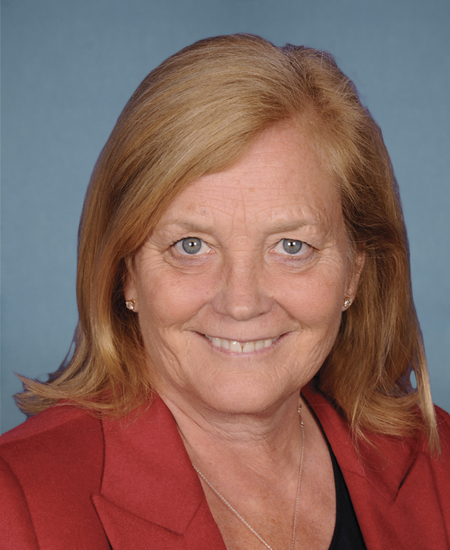
Rep. Chellie Pingree
Sponsored bills
Maddy summaryThis bill reauthorizes the National Alzheimer's Project Act through 2035 (extending the previous deadline of 2025) and adds new requirements to promote healthy aging and reduce Alzheimer’s risk factors. It mandates the program to provide information on healthy behaviors that may lower cognitive decline risk and expands the advisory group to include representatives from agencies like the Department of Justice, FEMA, and Social Security Administration, plus experts with diverse clinical trial experience. The bill directly affects Alzheimer’s research, care programs, and the federal advisory group overseeing national efforts. Key changes include requiring annual evaluations instead of initial ones and adding a focus on reducing health disparities in Alzheimer’s initiatives.
Maddy summaryThe HELP Act of 2023 provides $550 million annually for 2024-2025 and $450 million for 2026-2030 to strengthen 211 (human services information and referral) and 988 (mental health crisis) services nationwide. It requires states to develop coordinated systems that ensure 24/7 accessibility, reduce non-emergency 911 calls, and connect individuals to appropriate human services and mental health resources. The bill mandates states to create comprehensive service databases, ensure accessibility for people with disabilities, and establish oversight councils with diverse representation to monitor racial equity and service effectiveness. States must also implement diversion programs to connect individuals with mental health responders instead of law enforcement for non-emergency situations. The legislation includes regular reporting requirements and biennial evaluations to measure how effectively the program connects people to needed services and reduces unnecessary law enforcement interactions.
Maddy summaryHR 8383, the Rural Obstetrics Readiness Act, creates a federal program to improve emergency obstetric care in rural areas lacking dedicated obstetric units. It authorizes $5 million (2025-2027) for training programs that teach non-obstetric rural healthcare providers to handle emergencies like severe bleeding, high blood pressure, or mental health crises during pregnancy or postpartum. The bill also allocates $15 million (2025-2028) for grants to rural hospitals and consortia to purchase equipment, hire staff, integrate training, and develop transfer protocols for obstetric emergencies. Additionally, it funds a $5 million teleconsultation pilot (2025-2028) to connect rural facilities with maternal health specialists via telehealth for urgent consultations. The program directly supports rural health facilities in designated maternity care shortage areas, aiming to expand access to emergency obstetric care.
Interstate Milk Freedom Act of 2024 This bill prohibits federal regulation of the interstate traffic of unpasteurized milk or milk products packaged for direct human consumption under specified circumstances. Specifically, the prohibition applies if such products (1) would be considered in violation of federal law solely because they are unpasteurized; (2) are allowed by the state of origin to be distributed for direct human consumption by any means; (3) are produced, packaged, and moved in compliance with the laws of such state; and (4) are moved from the state of origin with the intent to transport them to another state that allows the distribution of such products for direct human consumption.
Maddy summary# Summary of Legislative Text This is a comprehensive legislative proposal focused on addressing substance use disorder through public health approaches, with significant funding and program requirements. Key elements include: 1. **Major Funding Programs:** - **Subtitle A (Local Grants):** $3.0 billion annually (2024-2033) for local entities to provide prevention, treatment, and recovery services - **Subtitle B (State/Regional Grants):** $4.6 billion annually (2024-2033) for state-level programs - **Subtitle C (Other Grants):** $1.0 billion annually (2024-2033) for specific entities and underserved populations - **Subtitle D (Innovation/Training):** $1.5 billion annually (2024-2033) for training, research, and capacity building 2. **Key Program Requirements:** - Mandates for evidence-based treatment services across multiple levels of care - Requirements for cultural competency, particularly for Native American communities - Specific focus on harm reduction, prevention, and recovery support - Provisions for naloxone distribution and overdose reversal programs 3. **Regulatory Changes:** - New certification requirements for covered manufacturers, distributors, and dispensers of Schedule II controlled substances - Penalties for failure to submit certifications or submitting false certifications - Creation of a "Comprehensive Addiction Resources Fund" for penalty revenues 4. **Focus Areas:** - Prevention services (including trauma-informed approaches) - Early intervention services - Recovery support services - Harm reduction programs - Workforce development for treatment providers - Special attention to underserved populations (rural communities, racial minorities, formerly incarcerated individuals) 5. **Funding Priorities:** - 10% of funds for Native American communities - Specific requirements for cultural competency and language access - Mandated data collection and reporting systems This legislation represents a significant shift toward public health approaches to substance use disorder, emphasizing prevention, treatment, and recovery support rather than punitive measures, with substantial funding commitments over a decade.
Maddy summaryHRES 1063 is a non-binding resolution passed by the U.S. House of Representatives to reaffirm America's commitment to NATO ahead of its 75th anniversary. It formally recognizes NATO's role in collective security, emphasizes Article 5's importance for mutual defense, and supports Finland and Sweden's membership. The resolution also calls on NATO allies to meet the 2% defense spending target, but does not create new laws or affect specific individuals or groups.
Maddy summaryThe Public Service Freedom to Negotiate Act of 2024 establishes federal minimum standards for collective bargaining rights for public employees and supervisory employees. The Federal Labor Relations Authority will determine if each state's laws "substantially provide" for these rights, and if not, federal standards will apply to that state. These standards include the right to self-organization, collective bargaining, recognition of labor organizations, and procedures for resolving disputes. The bill preserves existing collective bargaining agreements and excludes certain employee categories like emergency services workers from some provisions.
Maddy summaryHR 8407, "Domenic and Ed's Law," amends the Higher Education Act to allow parents who took out federal student loans for their children to have those loans forgiven if their child becomes permanently disabled or dies. The bill expands existing loan forgiveness provisions to include these two specific circumstances, directly affecting parents with outstanding federal education loans. Key provisions require the child's disability to be determined as permanent and total by the Secretary or the child's death, with no requirement that the disability or death occurred after the loan was taken out. This change applies to all parent loans, regardless of when the loan was received or when the disability or death occurred.
Maddy summaryThe Rights for the TSA Workforce Act of 2024 would transition Transportation Security Administration (TSA) employees, particularly screening agents, from TSA-specific personnel rules to the standard federal government personnel system under Title 5 of the U.S. Code by December 31, 2024. The bill prohibits changes to current personnel policies for covered employees until the transition date and ensures no reduction in pay or benefits during the conversion process. It preserves certain benefits like law enforcement availability pay for Federal air marshals and maintains collective bargaining rights for screening agents. The bill also requires various reports to Congress on recruitment, implementation, diversity, and workplace safety to be submitted within specified timeframes.