Maddy summaryHR 8501 prohibits the U.S. government from issuing licenses to export certain defense articles to the United Arab Emirates (UAE) or its agencies. This ban takes effect immediately upon the bill's enactment and continues until the President certifies to Congress that the UAE has stopped providing material support to Sudan's Rapid Support Forces (RSF). The restriction applies specifically to military equipment listed in Categories I-VIII, XIV, XVI-XVIII of the U.S. Munitions List (e.g., weapons, vehicles, and related technology). The bill directly affects U.S. defense exporters and the UAE government, requiring congressional oversight before exports can resume.
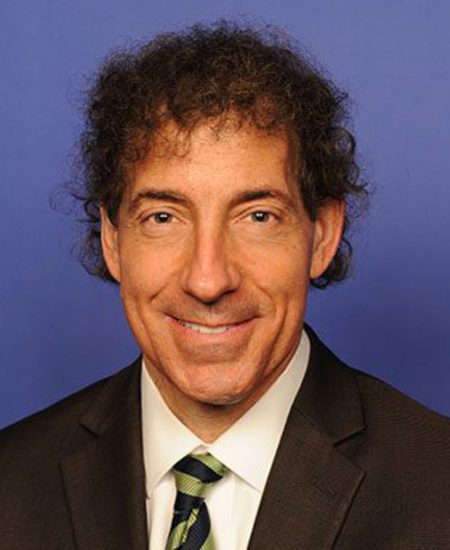
Rep. Jamie Raskin
Sponsored bills
Maddy summaryHR 8483 corrects a technical error in the 2024 federal funding law for the District of Columbia Public Defender Service (DC PDS). It removes a specific reference to $3 million reserved for relocation costs (until September 2026) that was incorrectly included in the funding allocation. This bill does not change funding amounts or policies - it only fixes a misplaced text in the existing law. The correction applies retroactively to the original appropriations act.
Maddy summaryHR 8485, the "No Foreign Emoluments Without Congressional Consent Act," prohibits senior federal officials - including the President, Vice President, Cabinet members, Members of Congress, and high-level presidential staff - from accepting foreign payments (such as from foreign governments or entities controlled by them) without prior congressional approval. It requires officials to submit detailed written notices to the Office of Government Ethics before accepting such payments, triggering a 90-day congressional review period during which Congress must approve via a specific concurrent resolution. The bill covers payments received during official service and for two years after leaving office, with strict penalties including civil fines up to $5,000 plus the payment's value or criminal charges for violations. Excluded are standard gifts or decorations under existing law and certain large investment entities meeting specific SEC criteria.
Maddy summaryThe Voter Choice Act (HR 8462) creates a federal grant program to help states and local governments transition to ranked choice voting systems for elections. It authorizes $40 million in fiscal year 2025 to fund technical assistance, voting equipment, ballot design, and voter education for jurisdictions adopting this voting method. The program requires grants to cover no more than 50% of transition costs and prioritizes diverse geographic and demographic representation among recipients. This bill directly affects state and local election officials considering ranked choice voting, providing financial support without mandating its adoption. The law amends the Help America Vote Act to establish this new grant program under Title V.
Maddy summary# Summary of Legislative Text This is a comprehensive legislative proposal focused on addressing substance use disorder through public health approaches, with significant funding and program requirements. Key elements include: 1. **Major Funding Programs:** - **Subtitle A (Local Grants):** $3.0 billion annually (2024-2033) for local entities to provide prevention, treatment, and recovery services - **Subtitle B (State/Regional Grants):** $4.6 billion annually (2024-2033) for state-level programs - **Subtitle C (Other Grants):** $1.0 billion annually (2024-2033) for specific entities and underserved populations - **Subtitle D (Innovation/Training):** $1.5 billion annually (2024-2033) for training, research, and capacity building 2. **Key Program Requirements:** - Mandates for evidence-based treatment services across multiple levels of care - Requirements for cultural competency, particularly for Native American communities - Specific focus on harm reduction, prevention, and recovery support - Provisions for naloxone distribution and overdose reversal programs 3. **Regulatory Changes:** - New certification requirements for covered manufacturers, distributors, and dispensers of Schedule II controlled substances - Penalties for failure to submit certifications or submitting false certifications - Creation of a "Comprehensive Addiction Resources Fund" for penalty revenues 4. **Focus Areas:** - Prevention services (including trauma-informed approaches) - Early intervention services - Recovery support services - Harm reduction programs - Workforce development for treatment providers - Special attention to underserved populations (rural communities, racial minorities, formerly incarcerated individuals) 5. **Funding Priorities:** - 10% of funds for Native American communities - Specific requirements for cultural competency and language access - Mandated data collection and reporting systems This legislation represents a significant shift toward public health approaches to substance use disorder, emphasizing prevention, treatment, and recovery support rather than punitive measures, with substantial funding commitments over a decade.

Maddy summaryThe Public Service Freedom to Negotiate Act of 2024 establishes federal minimum standards for collective bargaining rights for public employees and supervisory employees. The Federal Labor Relations Authority will determine if each state's laws "substantially provide" for these rights, and if not, federal standards will apply to that state. These standards include the right to self-organization, collective bargaining, recognition of labor organizations, and procedures for resolving disputes. The bill preserves existing collective bargaining agreements and excludes certain employee categories like emergency services workers from some provisions.
Maddy summaryHRES 1228 is a ceremonial resolution passed by the U.S. House of Representatives to formally recognize May as Asian American, Native Hawaiian, and Pacific Islander (AANHPI) Heritage Month. It celebrates the historical contributions of AANHPI communities to the United States, citing their diverse cultural impact and key milestones like the completion of the transcontinental railroad. The resolution does not create new laws or policies but encourages the public to observe the month through educational programs and events. It directly affects all Americans by promoting awareness of AANHPI history and achievements, while acknowledging ongoing challenges like anti-Asian hate crimes.
Maddy summaryHR 6462, the READINESS Act, helps federal employees who are spouses of military members or Foreign Service officers when their spouse receives a permanent relocation order. The bill requires federal agencies to offer these employees one of four options within 30 days: full-time remote work, a local transfer to a position of equal grade, a remote transfer, or unpaid leave for up to 36 months. Agencies must report all requests and actions taken annually to the Office of Personnel Management (OPM), with OPM then summarizing this data for Congress each year. This directly affects federal employee spouses facing relocation due to a service member's permanent duty station change, aiming to reduce employment disruption.
Maddy summaryThe Rights for the TSA Workforce Act of 2024 would transition Transportation Security Administration (TSA) employees, particularly screening agents, from TSA-specific personnel rules to the standard federal government personnel system under Title 5 of the U.S. Code by December 31, 2024. The bill prohibits changes to current personnel policies for covered employees until the transition date and ensures no reduction in pay or benefits during the conversion process. It preserves certain benefits like law enforcement availability pay for Federal air marshals and maintains collective bargaining rights for screening agents. The bill also requires various reports to Congress on recruitment, implementation, diversity, and workplace safety to be submitted within specified timeframes.
Maddy summaryHRES 1203 is a symbolic resolution designating July 17, 2024, as "Glioblastoma Awareness Day." It expresses congressional support for raising public awareness about glioblastoma, a highly aggressive brain cancer with a 6.9% 5-year survival rate and limited treatment options. The resolution encourages greater public understanding of the disease's challenges, honors those affected by it, and urges continued research and collaboration. This is a non-binding awareness measure with no new funding or policy changes.