

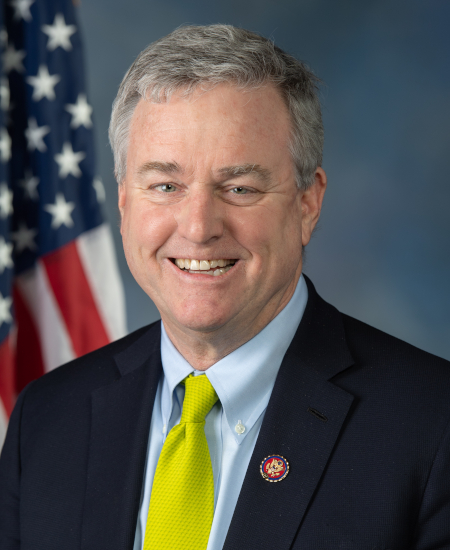
Photo of David J. Trone
D United States House · District 6 · Former member · Maryland

Rep. David J. Trone

Compare
Total votes
2,168
all sessions
Attendance
92%
175 missed
Lower than 96% of chamber peers
With party
97%
of cast votes
Higher than 78% of chamber peers
Bipartisan score
2%
crosses aisle rarely
Lower than 76% of chamber peers
Sponsored
1,817
bills & resolutions
Higher than 97% of chamber peers
Committees
0
assignments
1,817 bills and resolutions

Sponsored bills

Total
1,817
Primary
75
Co-sponsor
1,742
This page
1,817
matching current filters
Co-sponsor HR 5353
In committee · United States House · Co-sponsor
End Shutdowns Act

Maddy summaryThis bill would prevent government shutdowns by automatically continuing federal funding at the previous year's level if Congress fails to pass annual budget bills by October 1. It requires Congress to prioritize budget legislation over other matters during funding gaps, with only limited exceptions for true emergencies like national security threats. All federal programs and agencies would operate using prior-year funding rates until a new budget is enacted, applying broadly across the government unless specific exemptions exist under current law. The bill does not create new spending but changes the process to avoid shutdowns by default.

In committee Sep 8, 2023 1 co-sponsor
Co-sponsor HR 5322
In committee · United States House · Co-sponsor
Time Off to Vote Act

Maddy summaryHR 5322, the Time Off to Vote Act, requires most private employers (with 25+ employees) to provide two consecutive hours of paid leave for employees to vote in federal elections. Employers must grant this leave upon request, can schedule it during early voting periods if permitted by state law, and cannot include lunch breaks in the leave period. The bill prohibits retaliation against employees who take this leave and ensures it does not affect accrued employment benefits. Violations could result in civil penalties up to $10,000 per offense, enforced by the Department of Labor.

In committee Sep 1, 2023 1 co-sponsor
Co-sponsor HR 5312
In committee · United States House · Co-sponsor
Supporting Healthy Mothers and Infants Act of 2023

Maddy summaryHR 5312, the Supporting Healthy Mothers and Infants Act of 2023, updates the WIC program by replacing the term "drug abuse" with "substance use disorder" throughout its rules to reduce stigma and improve care. It requires the development of evidence-based nutrition education materials for pregnant and postpartum individuals with substance use disorder, as well as for infants affected by prenatal exposure or neonatal abstinence syndrome. The bill mandates outreach to potentially eligible individuals and creates an online clearinghouse for nutrition resources, with $1 million authorized for fiscal year 2024. This directly affects WIC participants - mothers and infants impacted by substance use disorder - by providing more accurate, supportive resources under the program.

In committee Aug 29, 2023 1 co-sponsor
Co-sponsor HR 5290
In committee · United States House · Co-sponsor
Voters on the Move Registration Act of 2023

Voters on the Move Registration Act of 2023 This bill requires the Consumer Financial Protection Bureau to develop, and specified agencies to distribute, a statement providing individuals with information on how to register to vote and their voting rights. This information must be provided to individuals upon their participation in certain rental assistance programs or application for certain residential mortgages.

In committee Aug 25, 2023 1 co-sponsor
Co-sponsor HR 5291
In committee · United States House · Co-sponsor
People Over Long Lines Act

Maddy summaryThe People Over Long Lines Act (POLL Act) requires states to develop public plans ensuring voting wait times don't exceed 30 minutes at polling places for federal elections, particularly addressing documented disparities where voters in communities of color wait significantly longer than others. It establishes standards for minimum voting systems, poll workers, and resources based on factors like population demographics, voter turnout, and needs of disabled or limited English proficiency voters. The bill provides $500 million annually in federal funding to help states implement these changes, creates a private right of action allowing voters to sue states for violations with penalties including $50 per hour of wait time, and mandates remedial plans for states with excessive wait times. The law applies to federal elections starting in 2025, with states required to comply by January 1, 2025.

In committee Aug 25, 2023 1 co-sponsor
Co-sponsor HR 5293
In committee · United States House · Co-sponsor
Youth Voting Rights Act

Maddy summaryHR 5293, the Youth Voting Rights Act, would improve voting access for young people aged 18-29 through several concrete changes. The bill requires public colleges and universities to serve as voter registration agencies, establishes pre-registration for 16-year-olds, mandates on-campus polling locations for all institutions of higher education, and prohibits age-based restrictions on voting by mail. It also requires states to accept student ID cards as valid voter identification and provides grants to states for youth voter engagement programs. The bill would collect data on voting trends by age to help identify barriers to youth participation. These changes aim to address systemic barriers that have led to lower youth voter turnout and higher ballot rejection rates among young voters.

In committee Aug 25, 2023 1 co-sponsor
Co-sponsor HR 5292
In committee · United States House · Co-sponsor
Sustaining Our Democracy Act

Maddy summaryThe Sustaining Our Democracy Act creates a federal program to provide states with annual funding to improve election administration and increase voting access. It allocates $2 billion each year from 2024-2033 through the State Election Assistance and Innovation Trust Fund to support activities like upgrading voting equipment, training election workers, and expanding voting access for underserved communities, people with disabilities, and voters on Indian lands. States must submit detailed plans for using funds, which cannot be used for activities that restrict voting access or target election officials. The Act establishes an Office of Democracy Advancement and Innovation to administer the program, monitor fund usage, and oversee compliance with its requirements.

In committee Aug 25, 2023 1 co-sponsor
Co-sponsor HR 5266
In committee · United States House · Co-sponsor
Interdiction of Fentanyl in Postal Mail at Federal Prisons Act

Maddy summaryThis bill requires the Bureau of Prisons to develop and implement a strategy for scanning all incoming mail at federal prisons to stop fentanyl and other synthetic drugs from entering facilities. It directs the Bureau to evaluate existing scanning technology within 180 days and submit a detailed plan to Congress within 90 days, including how to provide digital copies of mail to inmates within 24 hours and physical copies within 30 days (if safe). The strategy must achieve 100% mail scanning capacity at all federal prisons, prioritize high-security facilities, and include a budget proposal for fiscal years 2024-2026. This directly affects federal prisons, inmates, and Bureau employees by changing mail processing procedures to enhance safety and reduce staffing burdens from manual mail checks.

In committee Aug 25, 2023 1 co-sponsor
Co-sponsor HR 5294
In committee · United States House · Co-sponsor
Unhoused Voter Opportunity Through Elections Act

Maddy summaryThe Unhoused Voter Opportunity Through Elections Act (HR 5294) protects voting rights for people experiencing homelessness by prohibiting states from denying voting access based on living in a "nontraditional abode" like shelters, public spaces, or locations where someone is considered homeless under federal law. Key provisions require election officials to make ballot drop boxes accessible to unhoused individuals, accept written attestations of residence instead of traditional proof, allow homeless shelters to be used as voting addresses, and mandate outreach to shelters about registration deadlines and election dates. The bill also creates a grant program to fund mobile voting centers and direct outreach services specifically for unhoused individuals. These changes would directly affect homeless individuals and election officials across all states, implementing concrete policy changes to improve voting access for a population often excluded from the electoral process.

In committee Aug 25, 2023 1 co-sponsor
Co-sponsor HR 5295
In committee · United States House · Co-sponsor
Expanding the VOTE Act

Maddy summaryHR 5295, the Expanding the VOTE Act, modifies Section 203 of the Voting Rights Act to expand language access for voters. It requires states and localities to provide voting materials (including ballots and instructions) in the language of covered language minority groups, with new provisions for American Indian and Alaska Native languages requiring tribal government consultation for unwritten languages. The bill creates $15 million in grants to help jurisdictions provide voting materials in languages that don’t currently trigger Section 203 coverage, while mandating continued provision for those groups in future elections. It also directs a study to evaluate lowering population thresholds for language protections and expanding the definition of covered languages.

In committee Aug 25, 2023 1 co-sponsor
Showing 481 to 490 of 1,817 bills
Previous 1 … 48 49 50 … 182 Next