

Maddy summaryThe No Tax Breaks for Union Busting Act would deny tax deductions for employers who attempt to influence employees' decisions about union activities, including unfair labor practices like firing workers for organizing or using captive audience meetings. It targets expenses related to union-busting tactics, such as consulting fees and other costs used to sway workers' opinions about collective bargaining. Employers would need to report these expenses on tax returns and would no longer be able to deduct them from taxable income. The bill aims to prevent employers from using tax-deductible expenses to influence union elections, aligning with existing rules that deny tax deductions for political spending. It would apply to expenses incurred in taxable years beginning 240 days after enactment.
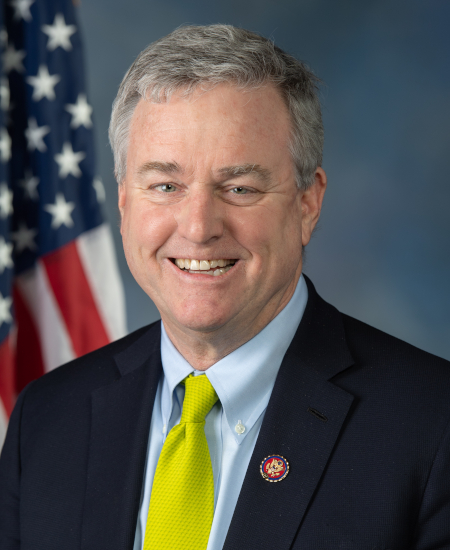
Rep. David J. Trone
Sponsored bills
Maddy summaryHR 5477, the Keep STEM Talent Act of 2023, modifies U.S. immigration rules to support foreign students pursuing advanced degrees in STEM fields. It requires these students to apply for admission before starting their program and adds enhanced background checks and credential verification for visa processing. The bill creates a new pathway to permanent residency for STEM graduates who earn a master’s or higher degree at a U.S. university, secure a qualifying job paying above median wages, and obtain approved labor certification. It also allows F-1 students in STEM fields to pursue permanent residency while on student visas ("dual intent"), without changing existing visa rules for non-STEM students. This directly affects foreign graduate students in STEM disciplines and their families seeking long-term U.S. work authorization.
Maddy summaryThe Arts Education for All Act requires states to integrate arts education into their plans for improving student achievement across all subjects. It mandates schools to report on arts course offerings, teacher qualifications, and student participation rates, with special attention to high-poverty schools and students with disabilities. The bill creates new pathways for arts teacher certification, requires professional development for teachers to integrate arts into core subjects, and establishes national assessment of arts education. This legislation directly affects all public K-12 schools, teachers, and students nationwide, with a focus on expanding arts access for underserved populations.
Maddy summaryThe Green Ribbon Act of 2023 establishes a voluntary program to recognize schools and institutions meeting three environmental goals: graduating environmentally literate students, reducing emissions from buildings/operations, and achieving a net positive environmental impact on students and staff. It creates a federal award program where schools can earn recognition through State nominations, with $10 million authorized for fiscal years 2024-2029 to fund grants, honorariums ($10,000 per award), and technical assistance. The program directly affects K-12 schools, tribal schools, and institutions of higher education, requiring States to allocate at least 40% of grant funds to underresourced schools. Key provisions include updated criteria aligning with EPA and CDC health standards, annual reporting requirements, and a new Office of School Infrastructure within the Department of Education.
Tax Simplification for Americans Abroad Act This bill directs the Internal Revenue Service to make available a new tax form for certain U.S. citizens living abroad. The form shall allow such individuals to demonstrate nonresidence, and declare foreign income, foreign taxes paid, and U.S. source income from retirement, pension and social security benefits. The bill also expands the types of income allowed as foreign earned income for purposes of the foreign earned income tax exclusion and sets forth requirements for reporting foreign financial assets.
Maddy summaryHR 5433, the Child Care Stabilization Act, provides $16 billion annually from 2024 to 2028 to stabilize the child care sector through grants administered by the Health and Human Services Secretary. It directly affects licensed child care providers by offering stable funding to cover operating costs, while supporting higher wages for early educators without raising family fees. Key provisions include expanding access to high-quality, affordable care - especially for infants/toddlers, rural communities, and children with disabilities - and addressing shortages in underserved areas. The funding builds on existing American Rescue Plan resources, aiming to strengthen the child care workforce and increase available options for working families.
Maddy summaryHR 5428, the No Tax Breaks for Union Busting (NTBUB) Act, prevents employers from deducting certain expenses related to influencing workers' decisions about union representation. It targets spending on tactics like anti-union meetings, workplace surveillance, or consultants during organizing campaigns, making these costs non-deductible for tax purposes. Employers must report such expenses on their tax returns, including details about the activities and amounts spent. The bill aims to remove tax incentives for employer interference in union elections, aligning with federal labor law protections for workers' collective bargaining rights.
Maddy summaryHR 3152, the "Fight CRIME Act," aims to maintain international restrictions on Iran's missile-related activities by requiring diplomatic efforts to extend these restrictions before they expire in October 2023. The bill mandates annual reports detailing U.S. diplomatic strategies, potential impacts of expiration, and measures to deter missile technology transfers to Iran. It establishes sanctions against foreign individuals or entities that knowingly support Iran's missile or drone programs, including asset freezes and visa restrictions. These sanctions apply regardless of whether UN restrictions remain in effect after their expiration, directly affecting foreign entities involved in these activities.
Maddy summaryThe Wage Theft Prevention and Wage Recovery Act requires employers to provide detailed paystubs showing wage calculations, initial disclosures about wage rates and classification, and timely final payments upon termination. It increases civil penalties for wage theft violations to up to $110,150 per employee affected for repeated violations and raises liquidated damages to up to 3 times the amount of unpaid wages. The bill extends the statute of limitations for wage theft claims from 2-3 years to 4-5 years and creates a $50 million grant program to support community partnerships that prevent wage theft and help workers recover unpaid wages. These provisions directly affect low-wage workers who experience wage theft, employers who engage in wage theft, and the Department of Labor's enforcement efforts under the Fair Labor Standards Act.
Maddy summaryThis bill requires federal agencies to acquire and maintain opioid overdose reversal kits (like naloxone) and train employees annually on their use, effective within 270 days of enactment. It mandates these actions for all federal agencies - including the Veterans Health Administration - while providing non-mandatory guidance to private employers on similar practices. The law directly affects federal workplaces by making kits and training a requirement, and indirectly encourages private employers to adopt similar safety measures. Key provisions include a 270-day deadline for the Labor Department to issue regulations for federal agencies and non-binding guidance for other employers. The bill focuses on practical workplace safety measures without altering existing federal health or safety laws.