

Maddy summaryHR 3063, the Retirement Fairness for Charities and Educational Institutions Act of 2023, modifies securities laws to clarify exemptions for certain retirement plans. It expands the definition of exempt retirement plans under the Investment Company Act, Securities Act of 1933, and Securities Exchange Act of 1934 to include 403(b) plans used by charities and educational institutions. These plans must meet specific conditions, such as being subject to ERISA or having employers act as fiduciaries for investment choices. The bill directly affects eligible organizations by reducing regulatory barriers for offering retirement benefits to their employees. This change simplifies compliance without altering the core structure of retirement plans.
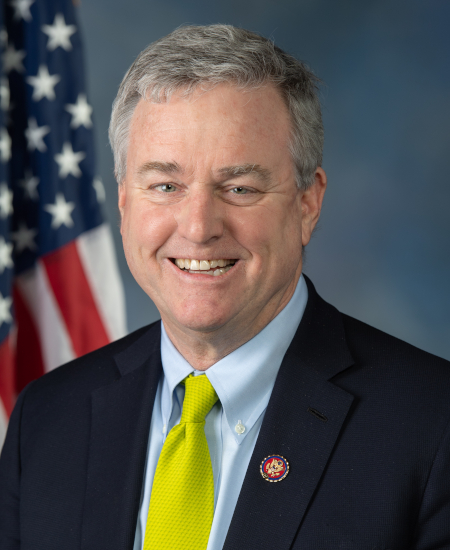
Rep. David J. Trone
Sponsored bills
Maddy summaryThe Eviction Prevention Act of 2023 provides $125 million annually to states and local governments to fund legal counsel for eligible individuals (those with income below 125% of the federal poverty level) facing eviction. It establishes a national database requiring courts to collect detailed data on eviction cases, including tenant demographics, reasons for eviction, representation status, and case outcomes. The database will track court-ordered evictions, administrative evictions, and illegal evictions, with specific requirements for reporting by courts and law enforcement. This legislation authorizes $100 million annually for the database's operation through fiscal year 2028, aiming to improve understanding of eviction patterns and outcomes. The bill creates concrete mechanisms for increasing legal representation access and gathering comprehensive eviction data to inform policy decisions.
Maddy summaryThis bill creates a National Center for Advanced Development in Education within the Institute of Education Sciences to identify and promote advances in teaching and learning across all education levels. The Center will collect and analyze education data, fund research through grants, and disseminate evidence-based practices to educators and parents, with specific focus on addressing educational disparities and supporting student development through the "science of learning and development." It authorizes $500 million annually for fiscal years 2024-2028 to support these activities, including improving statewide data systems that track student progress from early childhood through workforce. The Center will work with schools, educators, and communities to develop solutions for improving education outcomes, particularly for underserved students. This legislation directly affects educators, school administrators, and students by creating a new federal entity focused on evidence-based education research and implementation.
Maddy summaryHRES 904 is a House resolution supporting World AIDS Day goals. It encourages efforts to achieve zero new HIV transmissions, zero discrimination, and zero AIDS-related deaths by 2030, while commending existing programs like PEPFAR and the Ryan White CARE Act. The resolution also supports continued funding for HIV prevention, treatment, and research, with specific focus on communities disproportionately affected by HIV in the U.S. and globally. As a symbolic statement, it does not create new laws or allocate funds.
Maddy summaryThis bill amends existing law to expand substance abuse treatment services for children, adolescents, and young adults to explicitly include suicide prevention. It broadens eligibility for funding to include pediatric specialists, children’s hospitals, emergency departments, and Indian Health Service programs. The bill requires grantees to provide parents or guardians with counseling on preventing overdose/suicide and supplies to reduce access to lethal means (like medications or firearms). It mandates a minimum of $2 million annually in federal grants for these suicide and overdose prevention programs, effective 2024-2028.
Maddy summaryHR 6654, the Farewell to Foam Act of 2023, bans the sale and distribution of expanded polystyrene foam food containers, packaging peanuts ("loose fill"), and coolers starting January 1, 2026. It directly affects food service providers (like restaurants and schools), manufacturers, distributors, and retailers who sell these foam products. The bill prohibits selling these items, with enforcement starting with a written warning for first violations, followed by escalating civil penalties ($250 for a second violation, up to $1,000 for fourth+ violations), while exempting small businesses with low annual revenue from repeated penalties within a 7-day period.
Maddy summary# Summary of the Gun Violence Prevention and Community Safety Act of 2023 This comprehensive legislation introduces sweeping reforms to U.S. gun control laws, with several key provisions: ## Major Restrictions - **Semiautomatic assault weapons**: Requires registration of "grandfathered" weapons, mandates background checks for transfers, and imposes strict storage requirements - **Ghost guns**: Prohibits manufacturing, selling, or possessing untraceable firearms (those without serial numbers) with limited exceptions - **Undetectable firearms**: Bans weapons made of materials that can't be detected by airport security scanners - **Firearm accessories**: Bans trigger cranks, bump-fire devices, and other accessories that accelerate firing rate - **Silencers/mufflers**: Prohibits possession and sale of silencers/mufflers except for law enforcement and military use ## Dealer Reforms - Requires secure storage (locked cabinets, safes, security systems) at all gun dealers - Mandates annual inspections of high-risk dealers and triennial inspections for others - Requires background checks for all dealer employees before they can handle firearms - Requires dealers to maintain detailed records of all firearm sales and transfers - Establishes civil penalties for security violations (up to $20,000 per violation) ## New Funding Mechanisms - Increases excise taxes on firearms (30% on pistols, revolvers, and other firearms; 50% on ammunition) - Dedicates 39% of ammunition tax revenue to a Community Violence Intervention Fund - Allocates $60 million annually to DOJ and HHS for gun violence prevention research ## Community Programs - Creates a $120 million annual grant program for community violence intervention programs - Funds hospital-based violence intervention programs and street outreach initiatives - Requires evidence-based approaches to reducing homicides and group-related violence ## Implementation Timeline - Most provisions take effect 90 days after enactment - Some provisions (like ghost gun restrictions) have 1-2 year transition periods - Requires dealers to submit security plans within 1 year of enactment The legislation aims to reduce gun violence through both regulatory restrictions and investment in community-based prevention programs, with significant emphasis on closing loopholes that allow untraceable firearms to enter circulation.
Maddy summaryThis bill authorizes the posthumous presentation of a Congressional Gold Medal to honor Marshall "Major" Taylor, a pioneering Black cyclist who broke racial barriers in the late 19th and early 20th centuries. It recognizes his athletic achievements, including world records and international championship wins, as well as his advocacy for equality in sports. The medal, designed by the Treasury Secretary, will be presented to Taylor's great-granddaughter, Karen Donovan, following the congressional authorization. As a commemorative act with no policy changes, it serves solely to honor Taylor's legacy as a trailblazer and role model.
Maddy summaryThe ARMAS Act of 2023 transfers regulatory control of certain firearm exports from the Department of Commerce to the Department of State. It designates Mexico, Guatemala, Honduras, El Salvador, Haiti, Jamaica, and other Caribbean nations as "covered countries" requiring special oversight for firearm exports. The bill requires the State Department to develop strategies to disrupt illegal firearm trafficking to these countries, implement tracking systems for firearms, and submit annual reports on exports. It establishes certification requirements for exports to covered countries, including detailed reporting to Congress about proposed exports. The law aims to improve tracking of firearms used in violence and reduce illegal trafficking that fuels crime and violence in the region.
Maddy summaryThe BOP Direct-Hire Authority Act (HR 6628) allows the Bureau of Prisons to hire qualified candidates for positions that would normally require competitive hiring without following standard federal hiring procedures, such as public announcements or competitive exams. This directly affects the Bureau of Prisons' ability to fill vacancies at its facilities more quickly. The authority expires once 96% of competitive service positions across all Bureau of Prisons facilities are filled. The bill changes the hiring process for existing positions but does not alter the total number of positions available.