

Maddy summaryThe Baby Food Safety Act of 2023 requires the FDA to establish legal limits for four toxic elements - lead, cadmium, mercury, and inorganic arsenic - in foods for infants and children under two years old, including infant formula. It mandates that the FDA set these limits through administrative orders with specific deadlines (e.g., proposed limits for lead/arsenic/cadmium by December 2025), after public comment periods and scientific review. The law also adds that baby food exceeding these limits becomes "adulterated" and triggers mandatory recalls for non-formula products. This directly affects baby food manufacturers, requiring them to comply with new safety standards by 2027-2030.
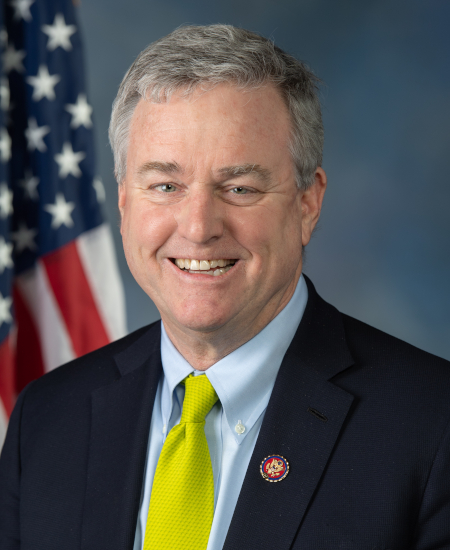
Rep. David J. Trone
Sponsored bills
Maddy summaryThe Menopause Research and Equity Act of 2023 requires the National Institutes of Health (NIH) to evaluate existing and ongoing research on menopause, perimenopause, and mid-life women’s health, identifying gaps in knowledge and funding over the past five years. The NIH must then develop a strategic plan with health professionals (including specialists like gynecologists and endocrinologists) to address these gaps and guide future research on treatments for menopause symptoms. The bill also mandates new NIH research on causes, symptoms, and treatments for menopause-related health issues, including a study on hormonal treatments. All activities must be funded using existing NIH resources, with no new appropriations authorized. This aims to improve scientific understanding of women’s mid-life health needs.
Maddy summaryThe WARM Act of 2023 creates a national menopause public awareness program through the CDC, allocating $70 million for 2025-2028 to increase understanding of menopause symptoms, related health conditions, and treatment options through culturally competent educational materials. It provides $31.7 million for grants to train health care providers (including physicians, nurses, and pharmacists) in managing menopausal symptoms, with priority given to institutions serving rural, Tribal, and other underserved communities. The bill also establishes regional centers of excellence to develop evidence-based curricula for health professions schools to improve menopause education. The program requires reports to Congress by 2025 and 2026 on implementation and effectiveness.
Maddy summaryHR 6754, the School Violence Prevention Act, establishes a federal grant program to fund evidence-based violence prevention programs in schools located in communities with high rates of youth gun violence. The bill authorizes $25 million annually for 5-year grants to partnerships between state/local education agencies (meeting specific homicide or violent crime thresholds) and community nonprofits serving youth. Grantees must implement trauma-informed, culturally competent programs for K-12 students, focusing on skills like conflict resolution, mental health support, and community engagement, while collecting data on outcomes like graduation rates. The program requires annual reporting to the Secretary of Education and CDC, with evaluations to assess impacts on reducing youth violence risks.
Maddy summaryHRES 938 is a symbolic resolution expressing the House's support for a comprehensive political reform plan. It endorses five specific proposals: banning PAC contributions to congressional candidates, prohibiting stock trading by lawmakers, imposing 12-year term limits on Congress, requiring a Supreme Court ethics code, and implementing 18-year term limits for justices. The resolution does not create new laws but formally recognizes these reform efforts. It reflects public support for these measures, citing polls showing majority agreement on each point. This is a non-binding expression of support, not a legislative action.
Maddy summaryHR 6838, the CTE Awareness Act, requires the U.S. Department of Education to publish detailed information about career and technical education (CTE) programs on its website within 60 days of enactment. This includes program costs, average completion times, and post-graduation employment rates, as well as state-specific opportunities and funding under the Perkins Act. The bill also mandates adding a one-page summary of this CTE information to the FAFSA application, alongside an acknowledgment box for applicants. These changes directly affect students applying for federal financial aid by ensuring they receive clear, upfront information about CTE pathways as a viable alternative to traditional four-year degrees. The law aims to improve transparency about CTE options without altering existing program structures or funding mechanisms.
Maddy summaryHR 6416, the "Russian War Crimes in Ukraine Tax Act," imposes a 100% tax on interest and dividends earned from frozen Russian and Belarusian sovereign assets held abroad. This tax revenue is directed into a new Ukraine Reconstruction Trust Fund, which must be used for Ukraine's reconstruction, humanitarian aid, economic development, and transparent governance. The bill requires U.S. financial institutions to withhold this tax from qualifying income and overrides international treaty obligations to ensure implementation. It also mandates annual reports on fund usage to Congress, specifying that all revenues from the tax must support Ukraine's recovery efforts as defined in the legislation.
Maddy summaryThis bill reauthorizes and extends funding for programs addressing substance use disorders and opioid addiction, including residential treatment for pregnant and postpartum women, first responder training, and community recovery initiatives. It increases funding levels for these programs, adds xylazine to Schedule III of controlled substances, and requires a study on remote monitoring for patients prescribed opioids. The bill also expands Medicaid coverage requirements for medication-assisted treatment and mandates reporting on mental health condition data alongside substance use disorder data, directly affecting individuals with substance use disorders, healthcare providers, and state and tribal governments.
Maddy summaryHR 6720 creates a grant program administered by the U.S. Department of Agriculture to provide stabilization payments to farmworkers, meat processing workers, and grocery workers affected by natural or other disasters designated by the Secretary. Eligible entities - such as labor unions or membership organizations representing these worker groups - can apply for funding to support affected workers. The program is authorized to spend up to $50 million, with the Secretary required to report on its outcomes within four years. This bill directly affects workers in specific food industry sectors during disaster events, offering financial stabilization through grants administered by the Agricultural Marketing Service.
Maddy summaryThe Rent Relief Act of 2023 creates a new refundable tax credit for renters whose rent exceeds 30% of their adjusted gross income. It directly affects low-to-moderate income renters in their principal residence, with credit percentages ranging from 100% (for incomes under $25,000) down to 0% (for incomes over $100,000). The credit is limited to rent within HUD's fair market rent guidelines, and the IRS will make monthly advance payments starting July 2024 for eligible taxpayers who elect this option. The bill requires no additional tax filing for the credit but includes $50 million for outreach to help eligible households enroll.