

Maddy summaryThis bill creates a new USDA program to directly connect fresh produce producers with community food programs serving low-income individuals. It requires the Secretary of Agriculture to contract with eligible entities (like farms, distributors, and nonprofits) to buy U.S.-grown fresh produce - ensuring at least seven varieties per delivery, locally sourced when possible, and aligned with dietary guidelines - and distribute it to qualifying organizations (such as food banks, schools, and tribal programs) facing food insecurity. The program prioritizes contracts with beginning farmers, socially disadvantaged farmers, veteran farmers, and small/mid-sized family farms, while mandating 30% upfront payment and requiring annual reports on distribution metrics and program effectiveness to Congress. It aims to strengthen local food supply chains, reduce farm waste, and improve access to fresh produce for vulnerable communities.
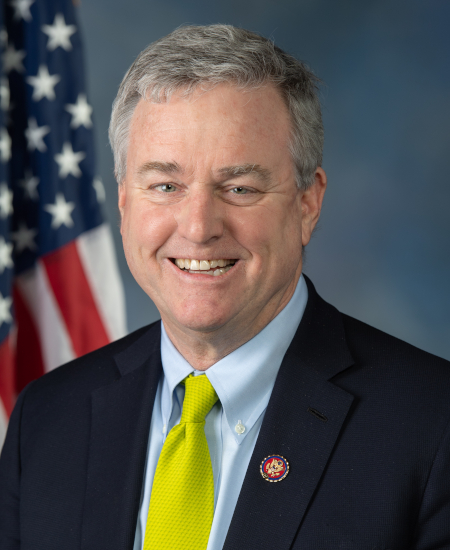
Rep. David J. Trone
Sponsored bills
Maddy summaryHRES 955 is a resolution commending Taiwan for its democratic election history and supporting Taiwan's democratic institutions. It recognizes Taiwan's transition to democracy since the late 1980s, including 7 presidential and 9 legislative elections held since then, all deemed free and fair. The resolution specifically expresses support for Taiwan's upcoming January 13, 2024, elections and condemns interference by the Chinese Communist Party. It affirms U.S. commitment to a strong partnership with Taiwan across multiple domains and supports Taiwan's self-defense and liberty. As a procedural resolution, it does not create new law but formally expresses congressional support for Taiwan's democratic development.
Maddy summaryThe Affordable Connectivity Program Extension Act of 2024 allocates $7 billion in funding for the Affordable Connectivity Program (ACP) during fiscal year 2024. The ACP provides subsidies to low-income households to help cover the cost of internet service and connected devices like laptops or tablets. This funding ensures the program can continue supporting eligible households throughout the year, with the money remaining available until fully spent. The bill extends existing program funding without changing eligibility criteria or service requirements.
Maddy summaryHR 6950, the Working Dog Health and Welfare Act of 2024, requires federal agencies and their contractors managing working dog programs to implement specific health and welfare recommendations from a 2022 Government Accountability Office report within 180 days of the law's enactment. It directly affects all federal agencies (including Congress and courts as defined), their contractors, and the Department of State when providing working dogs to foreign partners. Key mechanisms include mandatory implementation of the GAO's recommendations, a 60-day reporting requirement to Congress on steps taken, and ensuring new programs established after enactment follow these standards. The bill focuses on concrete policy changes to standardize care for working dogs used in federal operations, without altering existing program structures or outcomes.
Maddy summaryThe TAG Act requires federal agencies to be transparent when using automated systems (like AI) for critical decisions affecting individuals, such as housing, healthcare, benefits, or employment. It mandates agencies to provide clear, plain-language notices to people when an AI system influences decisions about them, explain how the decision was made, and offer appeal options. Agencies must also track system accuracy and reliability, with oversight reports to Congress. The law takes effect after OMB issues guidance within 270 days and expires after 10 years.
Maddy summaryHR 6888, the Clean Energy Workforce Act, provides $100 million in federal grants to develop clean energy job training programs. It directly affects local schools, career technical education centers, colleges, and industry partners by funding: (1) new or expanded training programs in clean energy fields (like renewable energy and climate adaptation), designed to be shared with other schools and accessible to diverse students; and (2) upgrades to school facilities to use renewable energy and improve energy efficiency. Grants require partnerships between educational institutions, industry representatives, and community groups to create replicable training that prepares students for jobs in growing clean energy sectors. The bill focuses on concrete workforce development, not environmental outcomes.
Maddy summaryThe Bipartisan Workforce Pell Act creates a new grant program providing financial aid to students enrolled in short-term, career-focused educational programs (150-600 clock hours, 8-15 weeks) that prepare students for high-demand jobs. To qualify, programs must meet specific standards including alignment with industry needs, minimum job placement rates of 70%, and median earnings that exceed local wage benchmarks. The bill requires institutions to collect and publicly report data on program outcomes including completion rates, job placement, and student earnings through the College Scorecard website. It also establishes new accreditation standards for agencies evaluating these workforce programs, with $40 million authorized for fiscal year 2025 and $30 million for each of the next four years.
Maddy summaryThe TRANQ Research Act of 2023 requires the National Institute of Standards and Technology (NIST) to coordinate research on illicit drugs containing xylazine, novel synthetic opioids, and other concerning substances. The bill mandates NIST to develop faster detection methods, create data tools for identifying these substances, and consult with agencies like the DEA, CDC, and National Institute on Drug Abuse to establish safe handling practices. NIST must also form partnerships with universities, federal labs, and the private sector to improve detection capabilities. Within one year, NIST must report to Congress on its implementation, and the Comptroller General must conduct a study on federal capabilities to respond to new psychoactive substances, reporting within two years.
Maddy summaryHR 1147, the Whole Milk for Healthy Kids Act of 2023, allows schools participating in the National School Lunch Program to offer whole milk as an option during lunch. It amends the school lunch law to explicitly permit schools to serve flavored and unflavored whole milk alongside reduced-fat, low-fat, and fat-free milk choices for students. The bill also requires the Secretary of Agriculture to adjust meal regulations to account for saturated fat from whole milk, ensuring it doesn't count against meal fat limits. This change directly affects participating schools and the students who receive school lunches, expanding their milk beverage options.
Maddy summaryThe Artificial Intelligence Literacy Act of 2023 creates grant programs to improve AI literacy in public schools, community colleges, and higher education. It amends the Digital Equity Act to fund specific activities like teacher training, hands-on AI labs, virtual learning platforms, and partnerships with private sector organizations. These grants directly support schools and community institutions serving students and workers, with a focus on underserved communities and addressing workforce gaps. The bill requires annual reports to Congress on grant outcomes and recommendations for expanding effective programs.