

Maddy summaryHR 7378, the Frederick Douglass Congressional Gold Medal Act, authorizes Congress to posthumously award a gold medal to honor Frederick Douglass's legacy as a pivotal abolitionist, writer, and advocate for civil rights. The medal, designed by the Treasury Secretary, will be presented to the National Museum of African American History and Culture for display, with bronze duplicates available for sale to cover costs. This ceremonial bill does not create new laws or affect current policies - it solely commemorates Douglass's historical contributions to ending slavery and advancing equality.
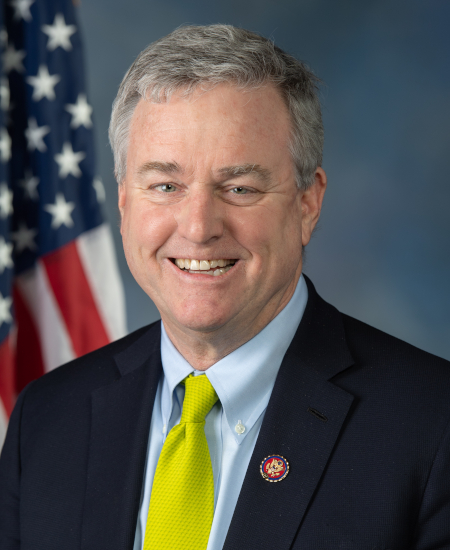
Rep. David J. Trone
Sponsored bills
Maddy summaryHRES 1013 is a symbolic resolution designating February 2024 as "National Teen Dating Violence Awareness and Prevention Month." It expresses congressional support for this designation to promote community awareness and prevention efforts around teen dating violence, which affects youth across the U.S. The resolution does not create new laws or funding but encourages schools, families, and communities to observe the month with educational activities. It references statistics on teen dating violence (like 28.1% of teens experiencing digital dating abuse) to highlight the issue's significance.
Maddy summaryHRES 966 is a symbolic resolution condemning alleged sexual violence committed by Hamas during its October 7, 2023, attack on Israel. It specifically references eyewitness accounts, forensic evidence, and Hamas fighters' admissions of ordering gang rape, sexual mutilation, and assault against Israeli civilians. The resolution calls for international condemnation of such acts as weapons of war, urges nations to criminalize sexual violence, and supports investigations into Hamas' actions. As a non-binding resolution, it does not create new laws or directly affect any individuals but formally expresses the House's position on the issue.
Maddy summaryThis bill requires the Small Business Administration (SBA) to conduct a study and report on challenges faced by for-profit child care providers operating across multiple states. The report must assess provider needs, describe current SBA support, identify gaps in that support, and recommend legislative changes. The SBA must also designate a full-time employee as a dedicated point of contact for these providers to improve resource delivery. The bill uses existing SBA funding and does not authorize new appropriations, focusing solely on gathering data and improving existing services for for-profit child care businesses.
Maddy summaryHR 2426, the Find and Protect Foster Youth Act, requires the federal government to evaluate state and tribal child welfare systems' protocols for identifying and responding to children missing from foster care. It mandates the Secretary to identify obstacles in these systems, share best practices, and provide technical assistance to states and tribes on tracking missing youth and improving services. The bill also specifically requires improved screening for sex trafficking risk when children return to foster care after running away, including new tools for caseworkers to assess trafficking risk and document appropriate services. These changes directly affect foster youth, particularly those missing or at risk of exploitation, and the states and tribes managing foster care systems. The law authorizes funding through fiscal year 2027 to support these efforts.
Maddy summaryThis bill amends existing law to shift administrative responsibility for funding river basin commissions from the Secretary of the Army to the Administrator of the Environmental Protection Agency (EPA). It specifically updates provisions related to the Susquehanna, Delaware, and Potomac River Basin Commissions, changing references from "Secretary" to "Administrator" in funding-related sections. The bill does not create new funding but clarifies that the EPA Administrator (or their designee) will oversee existing funding mechanisms for these commissions. It directly affects the operations of the three river basin commissions by changing their primary federal point of contact for funding administration.
Maddy summaryThis bill updates the BEACH Act to improve monitoring of water quality at public beaches and coastal recreation areas. It expands the definition of monitored waters to include nearby shallow upstream areas and locations "present on" beaches, and allows states using federal grants to identify specific pollution sources. The bill also extends annual funding for these programs from $30 million per year through 2029 (replacing the previous 2001-2005 authorization) and requires the EPA to incorporate new water testing technologies into its guidance for states. These changes directly affect states and local governments receiving EPA grants for beach water quality monitoring.
Maddy summaryThis bill requires states to ensure autonomous vehicle (AV) licensing doesn't discriminate against people with disabilities, aligning with existing civil rights law. It mandates a National Academies study to identify physical infrastructure changes - like curb designs, dedicated pickup zones, and non-visual access tools - that would help individuals with disabilities safely access driverless ride-hail vehicles during pickup and dropoff. The study, funded by $5 million, focuses on practical solutions for navigating sidewalks, curbs, and vehicle entry/exit. The bill directly affects people with disabilities using AV services, states issuing vehicle licenses, and ride-hail companies operating driverless vehicles.
Maddy summaryThe PATH Act establishes a federal grant program to fund pre-apprenticeship programs in the building and construction trades. It provides 75% federal funding (up to $20 million annually) for nonprofit partnerships that develop training programs preparing underrepresented groups - including racial minorities, women, veterans, tribal members, and low-income individuals - from entering registered apprenticeships. Key requirements include curriculum aligned with industry standards, documented partnerships with apprenticeship sponsors, and activities like career exploration and skill assessments. Programs must track outcomes, such as participants entering registered apprenticeships, using performance metrics aligned with existing workforce laws.
Maddy summaryThis bill extends funding for family-to-family health information centers through 2029. It amends the Social Security Act to change the expiration date of this program from 2024 to 2029, ensuring continued support. These centers provide families with resources and guidance on navigating healthcare systems, particularly for those managing chronic conditions or disabilities. The change directly affects the centers themselves and the families they serve, without altering program requirements or creating new services.