

Maddy summaryHRES 1048 is a non-binding House resolution calling on the Department of Homeland Security (DHS) to establish a humanitarian parole program for Cameroonians fleeing violence in their home country. It specifically targets Cameroonians who arrived in the U.S. after October 5, 2023 - after the expiration of temporary protected status (TPS) that covered earlier arrivals - and who face risks of deportation to Cameroon amid ongoing conflicts, human rights abuses, and discriminatory treatment in U.S. immigration enforcement. The resolution cites over 6,000 deaths from violence in Cameroon since 2016, 1.7 million needing humanitarian aid, and DHS’s existing authority under Section 212(d)(5)(A) of the Immigration and Nationality Act to create such a program. It emphasizes that no African nation has ever received a humanitarian parole program under this mechanism, highlighting systemic gaps in U.S. immigration policy.
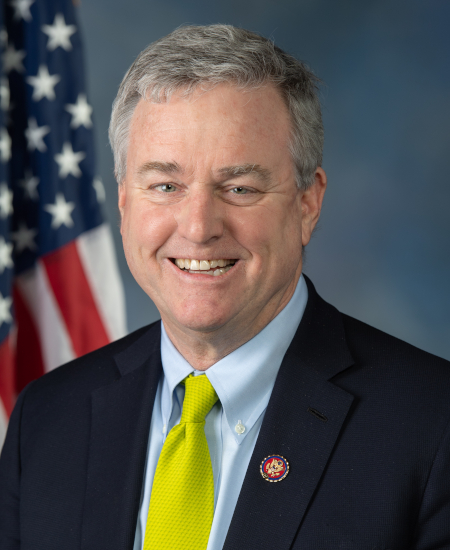
Rep. David J. Trone
Sponsored bills
Maddy summaryHRES 1040 is a ceremonial House resolution recognizing February as Black History Month. It formally acknowledges the achievements of Black Americans throughout U.S. history and encourages continued celebration of this observance. The resolution highlights the cultural and artistic contributions of Black Americans, including historical figures and movements like the Harlem Renaissance and hip-hop. As a non-binding resolution, it does not create new programs or affect any specific group, but serves to affirm the importance of commemorating Black history.
Maddy summaryThe Increasing Access to Mental Health in Schools Act creates a federal grant program to increase mental health staff in low-income schools. It provides funding for partnerships between low-income schools (where at least 20% of students are from families below the poverty line) and graduate programs in school counseling, psychology, and social work. Grant funds can cover training costs, salary support for new mental health providers, recruitment of underrepresented students, and student loan repayment for mental health staff working in qualifying schools. The bill sets target ratios for staff-to-student ratios (like 1 counselor per 250 students) and requires annual reporting on program outcomes. The program is authorized for $200 million annually to address mental health staffing shortages in schools serving high-poverty communities.
Maddy summaryHR 7474, the Robert E. Lee Monument Removal Act, directs the Secretary of the Interior to remove and destroy the statue of Confederate General Robert E. Lee at Antietam National Battlefield. The bill requires the monument to be removed from National Park Service property for destruction by a private contractor, with scrap materials sold to offset costs. The Secretary must submit a removal plan to Congress within one year of the bill's enactment, including a timeline. Site restoration must align with preserving the battlefield's historical interpretation. The law clarifies that the statue's materials are not considered surplus property under federal law.
Maddy summaryThe Peace Corps and AmeriCorps Student Loan Forgiveness Act amends federal student loan rules to count months of deferment or forbearance during service as Peace Corps volunteers or AmeriCorps members toward Public Service Loan Forgiveness. It applies to borrowers with eligible federal student loans who were in deferment or forbearance after October 1, 2007, while serving in approved Peace Corps or AmeriCorps roles. This change treats each qualifying service month as a "qualifying payment," reducing the time needed to reach the 120 required payments for loan forgiveness. The bill directly benefits current and former Peace Corps volunteers and AmeriCorps members with federal student loans.
Maddy summaryThe Assad Regime Anti-Normalization Act of 2023 amends the Caesar Syria Civilian Protection Act to expand sanctions against individuals and entities supporting the Assad regime in Syria. It targets those who provide financial or material support to the regime, divert humanitarian aid, seize property, or engage with Syria Arab Airlines or Cham Wings. The bill prohibits U.S. officials from recognizing or normalizing relations with the Assad regime and requires the administration to develop a strategy to counter other countries' engagement with Syria. It also mandates annual reports on diplomatic meetings with Syria, transactions involving Syria, and how the Assad regime manipulates UN operations in Syria.
Maddy summaryHR 7424, the Renewable Roadsides Act, requires the U.S. Departments of Transportation and Energy to study the feasibility of developing solar energy projects (including generation, storage, and transmission) on federal land adjacent to the National Highway System. The study, due by December 2025, will assess land suitability, identify barriers like safety concerns or competing land uses, and evaluate federal requirements. By December 2026, the agencies must submit a report to Congress with findings, recommendations for enabling such projects, and a process for entities to apply for leases or agreements to build and operate these facilities. The bill does not fund or mandate solar projects but sets the stage for potential future development by analyzing logistical and regulatory pathways. It directly affects federal agencies and could influence future policy on utilizing highway-adjacent federal land for renewable energy.
Climate and Health Protection Act This bill provides statutory authority for the Climate and Health Program within the Centers for Disease Control and Prevention.
Maddy summaryHR 7314, the Diversify Tech Act, establishes a federal Task Force within the Department of Commerce to address diversity, equity, inclusion, and accessibility (DEIA) in the tech industry. The Task Force, composed of federal officials and industry experts, must conduct an initial audit within 60 days of enactment to assess minority employment rates, hiring practices, and layoff trends in tech companies (defined as entities with over 10 million users/subscribers). It is required to submit annual reports to Congress evaluating DEIA progress, assessing how layoffs affected diversity efforts, and examining AI's role in discrimination, while also advising on outreach for minority-owned startups. The bill directly affects large U.S. tech companies and minority-owned tech startups by mandating transparency and accountability in DEIA practices.
Maddy summaryThis bill allows law enforcement officers, firefighters, and emergency medical personnel (covered employees) to sue their public safety employers if they face termination or other punishment for expressing personal opinions about work-related issues. It specifically protects speech on topics like public safety service delivery, pay/benefits, working conditions (including equipment), workplace policies, and even political/religious views. However, the protection does not cover on-duty speech, speech advocating violence or discrimination, disclosure of confidential information, or threats to withhold essential services. The law creates a new legal remedy but explicitly states it does not override existing federal or state civil rights laws.