

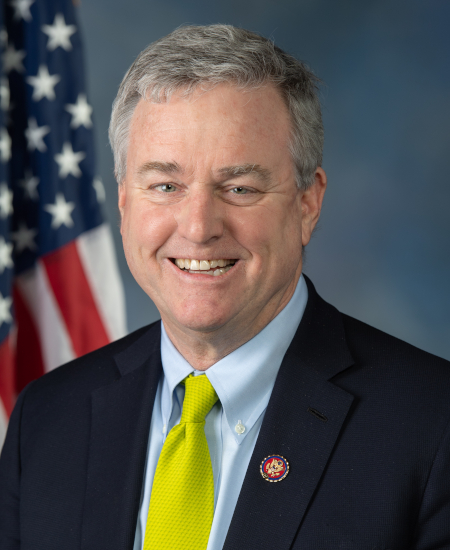
Photo of David J. Trone
D United States House · District 6 · Maryland

Rep. David J. Trone

Compare
Total votes
2,168
all sessions
Attendance
92%
175 missed
Lower than 96% of chamber peers
With party
97%
of cast votes
Higher than 78% of chamber peers
Bipartisan score
2%
crosses aisle rarely
Lower than 76% of chamber peers
Sponsored
1,817
bills & resolutions
Higher than 97% of chamber peers
Committees
0
assignments
1,817 bills and resolutions

Sponsored bills

Total
1,817
Primary
75
Co-sponsor
1,742
This page
1,817
matching current filters
Co-sponsor HR 7258
In committee · United States House · Co-sponsor
Community TEAMS Act of 2024

Maddy summaryThe Community TEAMS Act of 2024 creates a new federal grant program to support medical student training in rural and medically underserved communities. It provides funding for 1-5 years to partnerships between medical schools and community health providers (such as rural clinics, Federally Qualified Health Centers, or facilities in underserved areas) to expand outpatient clinical rotations. The goal is to help train physicians who will practice long-term in high-need communities by increasing access to community-based training. Grant applicants must include detailed project plans, sustainability strategies, and evaluation methods in their proposals.

In committee Feb 9, 2024 1 co-sponsor
Co-sponsor HRES 1002
In committee · United States House · Co-sponsor
Recognizing the cultural and historical significance of Lunar New Year in 2024.

Maddy summaryHRES 1002 is a symbolic House resolution recognizing the cultural and historical significance of Lunar New Year (celebrated as the Year of the Dragon in 2024). It acknowledges the holiday's 4,000-year history in China, its celebration across Asia (including Seollal and Tết), and its significance to Asian Americans and others in the U.S. The resolution expresses respect for those observing the holiday and wishes them a happy new year, but it does not create new laws, policies, or funding. As a ceremonial resolution, it has no direct effect on legislation or constituents.

In committee Feb 7, 2024 1 co-sponsor
Co-sponsor HR 7288
In committee · United States House · Co-sponsor
Armenian Protection Act of 2024

Maddy summaryHR 7288, the Armenian Protection Act of 2024, repeals the waiver authority that allows the President to bypass restrictions on U.S. aid to Armenia. Specifically, it prevents the waiver of Section 907 of the Freedom Support Act for fiscal years 2024 and 2025, which currently blocks U.S. assistance to Armenia due to historical disputes. This bill directly affects Armenia's eligibility for certain U.S. foreign aid programs by removing the possibility of executive branch waivers for those years. The key mechanism is the permanent removal of the waiver option under the specified appropriations law, changing the policy landscape for U.S.-Armenia aid relations.

In committee Feb 7, 2024 1 co-sponsor
Co-sponsor HR 7261
In committee · United States House · Co-sponsor
Reimagining Inclusive Arts Education Act

Maddy summaryHR 7261, the Reimagining Inclusive Arts Education Act, creates a federal grant program to improve arts education access for children with disabilities in K-12 schools. The bill authorizes $15 million over five years (2025-2029) to fund competitive grants for eligible entities like school districts, state agencies, or partnerships with colleges/nonprofits. Grant recipients must use funds to adapt arts curricula, provide professional development for arts educators, and incorporate creative arts therapies (like music or dance) to increase inclusion and accessibility for students with disabilities. Priority is given to schools receiving Title I funding, and grants last up to three years with possible renewal based on program success.

In committee Feb 6, 2024 1 co-sponsor
Co-sponsor HR 7250
In committee · United States House · Co-sponsor
Strengthening Educator Workforce Data Act

Maddy summaryHR 7250, the Strengthening Educator Workforce Data Act, requires the U.S. Department of Education to collect and publish detailed data about public school teachers and principals. It mandates school districts to report specific metrics, including years of teaching/principal experience (broken into categories like "less than 1 year" or "15+ years"), certification status, subject-area expertise (e.g., math, special education), and demographic breakdowns by race, ethnicity, and gender. The data must be published in an accessible report with visualizations like graphs and made publicly available online. This law applies to all public elementary and secondary schools and aims to provide transparency on educator workforce composition without changing existing certification requirements.

In committee Feb 6, 2024 1 co-sponsor
Co-sponsor HJRES 112
In committee · United States House · Co-sponsor
Expressing support for designation of the week of February 5, 2024, through February 9, 2024, as "National School Counseling Week".

Maddy summaryThis symbolic resolution designates February 5-9, 2024, as "National School Counseling Week" to recognize school counselors' roles in supporting students' academic, social-emotional, and career development. It highlights counselors' contributions to student success - such as addressing mental health, bullying, and college/career readiness - while noting current challenges like the national average student-to-counselor ratio of 408:1 (exceeding recommended standards). The resolution encourages public awareness activities but does not create new laws, funding, or obligations.

In committee Feb 5, 2024 1 co-sponsor
Co-sponsor HR 7123
In committee · United States House · Co-sponsor
QUIET Act

Maddy summaryThe QUIET Act requires businesses and organizations to disclose at the start of any robocall or text message that uses artificial intelligence to mimic a human voice or writing. This applies to automated communications generated by AI, excluding calls or texts requiring substantial human involvement. The bill also doubles the maximum civil and criminal penalties for violations where AI impersonation is used to defraud, cause harm, or obtain property. It directly affects entities that send AI-powered automated calls or texts to consumers.

In committee Feb 2, 2024 1 co-sponsor
Co-sponsor HRES 993
In committee · United States House · Co-sponsor
Supporting the goals and ideals of "Career and Technical Education Month".

Maddy summaryHRES 993 is a non-binding congressional resolution designating February as "Career and Technical Education (CTE) Month" to celebrate CTE programs nationwide. It supports CTE as a pathway preparing students for high-demand, skilled careers in fields like infrastructure and technology, recognizing that over 12 million students currently participate in CTE programs across high schools and colleges. The resolution encourages educators, counselors, and parents to promote CTE as a respected educational option, highlighting its role in reducing high school dropout rates and aligning student skills with workforce needs. It does not create new laws or allocate funding, but symbolically affirms bipartisan support for CTE, referencing the 1917 Smith-Hughes Act as foundational to current efforts.

In committee Feb 1, 2024 1 co-sponsor
Co-sponsor HRES 990
In committee · United States House · Co-sponsor
Expressing the sense of the House of Representatives that paraprofessionals and education support staff should have fair compensation, benefits, and working conditions.

Maddy summaryHRES 990 is a non-binding resolution expressing the House of Representatives' support for fair treatment of paraprofessionals (like instructional assistants) and education support staff (such as clerical, custodial, and food service workers) in schools. It states these over 3 million frontline workers deserve livable wages, affordable health care, job security, paid leave, professional development, and safe working conditions. The resolution lists specific recommendations, including eligibility for family medical leave and protections against retaliation for reporting workplace issues. It does not create new laws but formally recognizes these staff as essential to school success and calls for policies addressing their current challenges.

In committee Jan 31, 2024 1 co-sponsor
Co-sponsor HR 7165
In committee · United States House · Co-sponsor
Credit for Caring Act of 2024

Maddy summaryThe Credit for Caring Act of 2024 creates a new federal tax credit for family caregivers. It allows eligible caregivers to claim a credit equal to 30% of qualified caregiving expenses (like home modifications, medical supplies, or respite care) exceeding $2,000 per year, capped at $5,000 annually. To qualify, caregivers must earn over $7,500 in income and provide care for a relative (like a spouse or parent) certified by a healthcare provider as needing long-term care for at least 180 days. The credit phases out for higher earners, with a $75,000 income threshold for single filers and $150,000 for joint returns.

In committee Jan 31, 2024 1 co-sponsor
Showing 291 to 300 of 1,817 bills
Previous 1 … 29 30 31 … 182 Next