

Safer American Family Enterprise Retail Act of 2024 or the SAFE Retail Act of 2024 This bill allows small business retailers a tax credit through 2029 for certain retail theft prevention expenditures. The amount of the credit is 50% of such expenditures as exceeds $250 but does not exceed $5,000. Such expenditures include the cost of conducting employee security training and background checks, limiting and preventing access to the personal property to be sold at retail by the business operator, installing security lighting, cameras, recording equipment, and intrusion detection sensors, and implementing a site security plan.
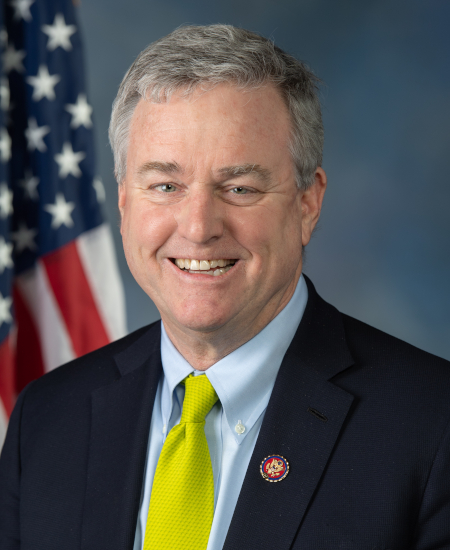
Rep. David J. Trone
Sponsored bills
Maddy summaryHR 7766, the Protecting Consumers from Deceptive AI Act, requires AI developers and major online platforms to clearly label AI-generated content. It mandates that audio or visual content created by generative AI include machine-readable disclosures about its origin (e.g., "AI-generated"), with measures to prevent tampering, and platforms must display these labels without removal. The law applies to companies with significant revenue ($50M+ annually) or user scale (25M+ monthly active users), such as social media platforms and content services. The Federal Trade Commission will enforce these labeling requirements as deceptive practices, treating violations under existing FTC authority.
Maddy summaryThe AADAPT Act reauthorizes and expands the Project ECHO grant program to specifically address Alzheimer's disease and dementia care. It provides $1 million annually (2026-2031) for grants to eligible health care entities - such as rural clinics, tribal organizations, or community health centers - to develop online training programs for primary care providers working in underserved areas (including rural, frontier, or medically underserved communities). These programs aim to improve provider retention, increase early diagnosis of dementia, and enhance quality care. The bill requires grantees to report on outcomes and ensures funding supplements, rather than replaces, existing resources.
Maddy summaryHR 7770, the Rosie the Riveter Commemorative Coin Act, authorizes the U.S. Mint to produce and sell three commemorative coins honoring women who worked on the U.S. home front during World War II. It specifies $5 gold coins (max 50,000), $1 silver coins (max 400,000), and half-dollar coins (max 750,000), all to be issued between January 1, 2025, and December 31, 2025. Each coin sale includes a surcharge ($35 for gold, $10 for silver, $5 for half-dollar), with all surcharge funds directed to the Rosie the Riveter Trust for maintaining the Rosie the Riveter WWII Home Front National Historical Park and educational programs. The coins will feature designs reflecting the legacy of diverse women workers and must meet specific weight, diameter, and composition standards.
Maddy summaryHR 7787, the Federal Labor-Management Partnership Act of 2024, establishes a Federal Labor-Management Partnership Council to improve collaboration between federal agencies and employee representatives. The Council, composed of agency leaders, labor union representatives, and federal management officials, advises the President and supports local labor-management committees across executive branch agencies. The bill requires agencies to create these committees, provide training in dispute resolution techniques, and allow employee representatives pre-decisional input on workplace matters - without requiring bargaining over non-negotiable issues. This applies to all executive branch agencies and covered legislative branch entities like the Capitol Police and GAO, focusing on concrete procedural changes to enhance workplace partnerships.
Maddy summaryHR 5247, the Expedited Hiring for VA Trained Psychiatrists Act of 2023, allows the Veterans Health Administration (VA) to hire psychiatrists who complete VA-residency programs without following standard civil service hiring rules. The bill permits immediate appointment after residency completion (or before, if the process begins early) for positions that have remained unfilled for at least 35 days. This directly affects VA psychiatrists completing specific residency programs and streamlines their hiring into VA clinical roles.
Maddy summaryThe Stateless Protection Act of 2024 would create "stateless protected status" for noncitizens in the United States who are stateless (not recognized as citizens by any country). The bill would allow these individuals to apply for protection from deportation, employment authorization, travel documents, and adjustment to lawful permanent resident status (a green card). It establishes a process for determining statelessness, requiring the Department of Homeland Security to consider evidence from various sources including international organizations and foreign governments. The legislation directly affects approximately 218,000 stateless people living in the U.S., who currently face barriers to work, education, healthcare, and travel due to their legal status. The bill also includes provisions for preventing statelessness internationally and updating U.S. laws to prevent future cases of statelessness.
Maddy summaryThis bill would create a new wealth tax on individuals with significant assets, targeting those with net assets exceeding $50 million. It would tax assets between $50 million and $1 billion at 2%, and assets above $1 billion at 3% (potentially increasing to 6% if certain health care legislation is enacted). The tax would apply to individuals, married couples treated as a single taxpayer, and certain trusts, with specific valuation and reporting requirements for assets. The bill also includes $70 billion in funding over 10 years for the IRS to enforce this new tax and related reporting requirements.
Maddy summaryThis bill amends budget scoring rules to require the Congressional Budget Office to account for long-term savings from preventive health programs when evaluating legislation. It directs the CBO to assess if a bill reduces future government costs through evidence-based preventive health services (like screenings or vaccinations) and include those savings in budget projections. The change affects how Congress scores the fiscal impact of health-related bills, requiring them to consider savings over 20 years (not just the current budget cycle). It does not create new programs but changes the budget analysis process for preventive health measures.
Maddy summaryThe Housing ACCESS Act requires the federal government to issue guidance within one year to help states connect Medicaid beneficiaries with housing services. It directs states to align eligibility processes, streamline service coordination between health and housing agencies, and track outcomes like housing stability - disaggregated by race. The bill also mandates a national study to set fair reimbursement rates for housing services, aiming to ensure living wages for providers and a 1:15 case manager-to-client ratio. States must report on progress within two years, with the guidance intended to simplify how health and housing providers access each other's systems.