

Maddy summaryThe Bond Improvement and Reclamation Assurance Act updates bond requirements for surface coal mining under the 1977 Surface Mining Control and Reclamation Act. It requires mining operators to post bonds covering the full cost of land reclamation, with amounts adjusted annually for inflation and based on factors like mine closure timing, topography, and reclamation difficulty. The bill mandates bond recalculations when permits are transferred, conditions change (e.g., mine closure or water pollution), or permit renewals occur, and holds both original operators and controlling owners jointly liable for reclamation costs. This ensures sufficient funds are available to reclaim mined land if operators fail to meet their obligations, protecting public lands and water resources.
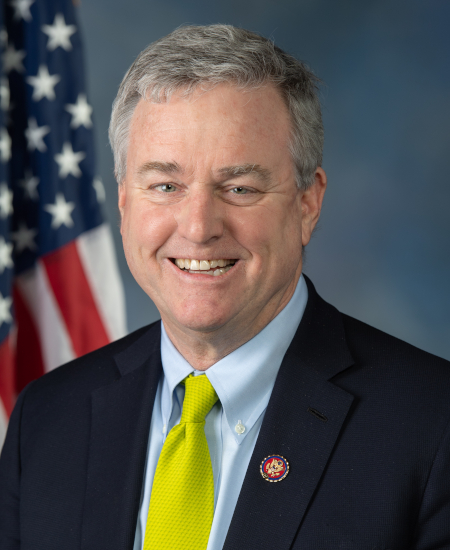
Rep. David J. Trone
Sponsored bills
Baltimore Bridge Response Invests and Delivers Global Economic Relief Act or the Baltimore BRIDGE Relief Act This bill allows for full federal funding (i.e., 100% federal cost-share) for emergency relief funds to respond to damage caused by the cargo ship Dali to the Francis Scott Key Bridge, including reconstruction of that bridge and its approaches. The Francis Scott Key Bridge is located in Baltimore City, Baltimore County, and Anne Arundel County, Maryland. This bill takes effect as if enacted on March 26, 2024.
Maddy summaryHR 7892, the Student Loan Contract Act of 2024, requires that master promissory notes for federal student loans under Part D of the Higher Education Act be officially called "student loan contracts" starting after the bill's enactment. It clarifies that these contracts apply only to loans within the same award year as the initial loans covered by the contract. The bill makes this terminology change and updates related references in the Higher Education Act, but does not alter loan terms, repayment conditions, or borrower obligations. This is a procedural adjustment to standardize document naming and administrative references.
Maddy summaryHR 7862 directs federal agencies to annually report on converting unused government-owned buildings into affordable housing. It establishes two grant programs: a $1.75 million annual grant for exploring office-to-residential conversions, and a $250 million annual program for states and local governments to convert underutilized public buildings into rental housing. The state/local program requires converted housing to maintain affordability for 30 years, with at least 20% of units reserved for households earning ≤50% of local median income, or 40% for households ≤60% of median income. This bill directly affects federal agencies (through reporting) and state/local governments (through grant funding), focusing on repurposing vacant public property to expand affordable housing options.
Maddy summaryHR 7866, the United States-Israel Anti-Tunnel Cooperation Enhancement Act, increases funding for U.S.-Israel collaboration on anti-tunnel technology from $50 million to $80 million. The bill directly affects U.S. defense and homeland security agencies working with Israel to detect, map, and disrupt underground terror tunnels used by groups like Hamas. Key provisions include authorizing the higher funding level under existing law to enhance joint efforts against subterranean threats, such as tunnels used for attacks, weapon storage, and hostage holding beneath civilian areas in Gaza. This focuses on concrete policy changes to scale up bilateral cooperation on a specific security technology.
Maddy summaryThis bill reauthorizes and enhances NOAA's Chesapeake Bay Office to strengthen science-based management of the Bay ecosystem. It establishes new programs for integrated coastal monitoring (collecting data on water quality and habitats), expands school-based education initiatives for students and teachers, and funds habitat restoration projects targeting species like oysters, blue crabs, and submerged vegetation. The bill authorizes $17 million in fiscal year 2024, increasing to $22.6 million by 2027, and requires biennial reports to Congress on progress. These provisions directly support NOAA's work with the Chesapeake Executive Council, state agencies, and educational institutions to advance the Chesapeake Bay Program's goals.
Maddy summaryHCONRES 102 is a non-binding symbolic resolution supporting International Transgender Day of Visibility, introduced by multiple House members. It formally encourages the U.S. to observe the day with ceremonies and programs, celebrates transgender community achievements, and recognizes their ongoing fight for equality amid documented discrimination in employment, healthcare, housing, and public spaces. The resolution highlights transgender representation in politics (including 21 state legislators) and historical context, while acknowledging rising anti-transgender legislation. It directly affirms the transgender community's visibility and rights without creating new policies or funding.
Maddy summaryThis bill amends the Foreign Intelligence Surveillance Act (FISA) to explicitly include counternarcotics activities in the definition of "foreign intelligence." Specifically, it adds international drug trafficking - covering synthetic drugs, opioids, cocaine, and related precursors - to the scope of intelligence gathering authorized under FISA. This change directly affects U.S. intelligence agencies (like the NSA and FBI), allowing them to use existing FISA authorities to collect foreign intelligence on drug trafficking networks. The policy shift expands the legal basis for surveillance targeting foreign drug operations without creating new programs or funding.
Maddy summaryThis bill, the BIKE Act of 2024, directs federal funding toward school-based bicycle safety education for elementary and secondary students. It amends existing law to require grant funds for on-bicycle education programs and mandates the Secretary of Transportation to revise safety guidelines within one year. The revised guidelines must specifically encourage skills training, roadway navigation, traffic rule awareness, safety precautions, and helmet use for students. These updated materials will be shared with state education agencies, and the Secretary must report to Congress within three years on implementation efforts and outcomes. The bill directly affects public school systems by integrating structured bike safety education into curricula.
Maddy summaryThis bill authorizes federal grants to expand maternal health services in underserved communities. It directly affects public and nonprofit health care providers serving minority, low-income, or medically underserved areas, requiring them to improve prenatal, postnatal, and postpartum care while reducing racial and economic disparities. Key provisions include prioritizing community-led providers, limiting administrative costs to 10% of grant funds, and mandating culturally appropriate care. The grants, funded for fiscal years 2025-2029, aim to enhance health outcomes for mothers and infants in these communities through coordinated service delivery.