

Maddy summaryThis resolution (HRES 1199) commemorates the 50th anniversary of Turkey's 1974 military invasion and ongoing occupation of northern Cyprus. It formally condemns Turkey's continued occupation, calls for the immediate withdrawal of its 35,000 troops, and demands the removal of over 200,000 Turkish settlers from the occupied territory. The resolution also urges Turkey to assist in repatriating displaced Cypriot refugees and to cooperate on resolving the fate of missing persons, including U.S. citizens. As a symbolic congressional statement, it does not create binding law but expresses the House's position on the Cyprus issue.
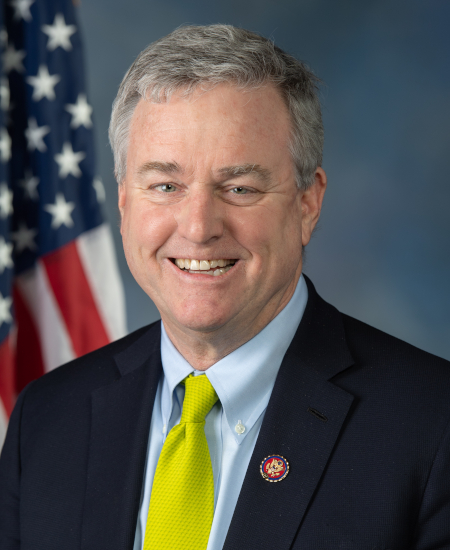
Rep. David J. Trone
Sponsored bills
Maddy summaryHR 3325, the Recruit and Retain Act of 2024, expands how federal COPS grants can be used to help law enforcement agencies hire officers. It allows grants to cover application fees (like background checks) for agencies facing declining recruitment, permits up to 2% of grant funds for administrative costs, and creates a new "Pipeline Partnership Program" requiring law enforcement agencies to partner with schools or colleges to engage students through career events, mentoring, and internships. The bill also adds guidance for agencies operating below budgeted staffing levels and mandates a Comptroller General study on recruitment/attrition trends across all levels of law enforcement. These changes directly affect local, state, and tribal police departments struggling to recruit or retain officers, as well as educational institutions partnering with them.
Maddy summaryHR 8200, the Pediatric Access to Critical Healthcare Act, creates federal grants to strengthen pediatric healthcare infrastructure. It provides $600 million annually (2025-2034) for eligible entities like children’s hospitals, facilities serving Medicaid/CHIP patients, or nonprofits treating individuals under 21. Grantees may use funds for building expansions, workforce training, digital upgrades, and emergency preparedness, but must match 50% of grant costs with non-federal funds. The bill prioritizes facilities serving over 60% Medicaid/CHIP patients or diverse, underserved populations, and requires annual reports on project impacts and outcomes.
Maddy summaryThis bill directs the Department of Education to use the International Holocaust Remembrance Alliance (IHRA) definition of antisemitism when enforcing Title VI of the Civil Rights Act in federal education programs. It clarifies that discrimination against Jewish individuals based on actual or perceived shared ancestry or ethnic characteristics may violate Title VI protections, requiring agencies to consider antisemitism intent during investigations. The law affects schools and universities receiving federal funds by guiding how they handle discrimination complaints related to antisemitism. It does not create new legal standards or expand the Department of Education's authority, as explicitly stated in the bill.
Maddy summaryThis resolution designates April 29-May 3, 2024, as "National Specialized Instructional Support Personnel Appreciation Week" to recognize over 1 million school-based professionals, including counselors, psychologists, nurses, therapists, and social workers. It symbolically acknowledges their role in supporting student learning, mental health, safety, and academic success through evidence-based practices. The resolution does not create new programs or change funding - it is a non-binding expression of support urging policymakers to raise awareness of these personnel’s contributions. It directly affects the recognized support staff and indirectly encourages broader recognition of their work in schools.
Maddy summaryHR 8196, the SCAM Debt Act, amends the Fair Debt Collection Practices Act to prevent deceptive debt collection practices, primarily affecting consumers facing debt collection lawsuits. The bill requires debt collectors to provide consumers with a 30-day written notice before legal action, including detailed debt information like the original debt amount, default dates, and payment history. It also mandates that debt collectors include specific evidence in court filings, such as the original debt agreement, chain of title documentation showing ownership transfer, and proof the statute of limitations hasn't expired. These changes aim to increase transparency and prevent misleading claims during debt collection proceedings.
Maddy summaryHR 8170, the ARC Development Act of 2024, modifies a federal highway mileage rule to provide flexibility for Appalachian development projects. It allows the Appalachian Regional Commission to approve waivers exempting projects from mileage limits if their approved route exceeds the standard limit, as determined by environmental review processes. Any approved excess mileage counts toward the total eligible mileage under the program. This directly affects participating Appalachian states and their highway development projects seeking federal assistance under the Appalachian Regional Commission's program.
Maddy summaryThis bill amends veterans' education benefit rules to expand when institutions must repay funds. It adds two new scenarios triggering repayment: (1) course/program suspension due to risk-based surveys under Section 3673A, and (2) Secretary of Education findings that an institution harmed borrowers through actionable misconduct. Educational institutions receiving VA benefits must repay all assistance funds if they close or terminate a program due to these fraud determinations. The policy directly affects veterans whose benefits could be restored if institutions repay funds, and institutions that must now repay if found liable for fraud harming students.
Maddy summaryHRES 1184 is a resolution recognizing the 50th anniversary of the Ms. Foundation for Women, a national organization founded in 1973 that focuses on advancing gender and racial justice through support for women of color-led movements. The resolution commends the foundation's president, Teresa Younger, and acknowledges the organization's work in promoting equality and justice for all people. As a commemorative resolution, it does not create new laws or policies but formally honors the foundation's history and mission.
Maddy summaryThis bill increases federal funding for states that have laws allowing civil lawsuits against people who remove sexual protection barriers (like condoms or dental dams) without consent during sexual activity. States with such laws can receive up to a 20% increase in their annual Violence Against Women Act (VAWA) Sexual Assault Services Program funding for a 4-year period, with a maximum of four such increases. The bill authorizes $5 million annually from 2025-2029 to cover these funding increases. It directly affects states that implement the required legal provisions, tying federal grant support to their enforcement of consent protections during sexual contact. The policy change focuses on incentivizing state-level legal frameworks addressing nonconsensual barrier removal through federal funding mechanisms.