

Vanessa Guillén Military Justice Improvement and Increasing Prevention Act This bill modifies the process and policy related to the disposition of charges and convening of courts-martial for certain sexual assault cases and other specified offenses under the Uniform Code of Military Justice (UCMJ). Among other elements, the bill provides that the determinations on the preferral, disposition, and referral of charges for specified offenses under the UCMJ must be made by a commissioned officer of the Armed Forces who is designated as a court-martial convening authority (in grade O-6 or higher) and who is available for detail as trial counsel, has significant trial experience, and is outside the chain of command of the member subject to the charges.
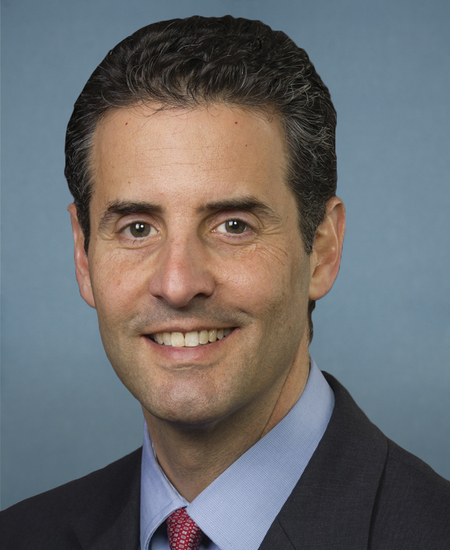
Rep. John P. Sarbanes
Sponsored bills
Blue Carbon for Our Planet Act This bill addresses the protection and restoration of coastal blue carbon ecosystems, which are vegetated coastal habitats and include mangroves, tidal marshes, and other tidal or salt water wetland that have the ability to sequester and store carbon. Specifically, the bill establishes the Interagency Working Group on Coastal Blue Carbon to (1) develop and maintain a map of these ecosystems, (2) assess the impediments to the protection and restoration of these ecosystems, and (3) establish national protection and restoration priorities regarding these ecosystems. The National Oceanic and Atmospheric Administration (NOAA) must chair the group and establish a national goal for conserving ocean and coastal blue carbon ecosystems within the territory of the United States and set targets to restore degraded coastal blue carbon ecosystems as appropriate. NOAA must also (1) establish integrated pilot programs to restore degraded coastal blue carbon ecosystems, and (2) enter into an agreement with the National Academy of Sciences to assess the long-term effects of geologic stores of carbon dioxide in a deep seafloor environment. Finally, the bill establishes requirements concerning the stewardship and standardization of blue carbon data in the Coastal Carbon Data Clearinghouse.
Puppy Protection Act of 2021 This bill requires the Department of Agriculture to expand standards that govern the humane handling, care, treatment, and transportation of animals to include new requirements for commercial dog dealers. Specifically, the standards must require dog dealers to provide to dogs adequate housing, exercise, and veterinary care; appropriate and nutritious food; continuous access to potable water; and meaningful socialization with humans and compatible dogs for at least 30 minutes each day. The standards must also include requirements for breeders to use safe breeding practices and make all reasonable efforts to find humane placement for retired breeding dogs.
This bill repeals the Authorization for Use of Military Force Against Iraq Resolution of 2002.
This resolution recognizes the historical significance to the nation of Juneteenth Independence Day (commemorating the end of slavery in the United States).
Support UNFPA Funding Act This bill authorizes annual contributions to support the core functions and programs of the United Nations Population Fund for the five fiscal years following the bill's enactment.
Pell Grant Preservation and Expansion Act of 2021 This bill makes various changes to the Federal Pell Grant program, including by expanding student eligibility for Pell Grants. The bill also revises student eligibility for federal student-aid programs. Specifically, the bill provides funding to increase the maximum Pell Grant award for each eligible student. Further, the bill requires the award amount to be adjusted for inflation. Next, the bill allows students who receive means-tested federal benefits (e.g., Medicaid) to automatically qualify for the maximum Pell Grant award plus an additional award amount. In addition, the bill moves the Iraq and Afghanistan Service Grant program into the Pell Grant program. Next, the bill raises from 12 to 18 the total number of semesters during which a student may receive a Pell Grant. The bill makes Dreamer students (i.e., students who have been granted Deferred Action for Childhood Arrivals status) who entered the United States before the age of 18 and who meet certain educational criteria eligible for federal financial aid. The bill also revises satisfactory academic progress requirements for federal student-aid programs, including by allowing a student who has not been enrolled in an institution of higher education for two years to regain eligibility for federal student aid.
Shark Fin Sales Elimination Act of 20 21 This bill addresses the sale of shark fins and the inclusion of rays and skates in the Seafood Traceability Program. The Seafood Traceability Program has data reporting and recordkeeping requirements at the time of entry for imported fish or fish products entered into U.S. commerce. The bill makes it illegal to possess, buy, or sell shark fins or any product containing shark fins, except for certain dogfish fins. A person may possess a shark fin that was lawfully taken consistent with a license or permit under certain circumstances. Penalties are imposed for violations under the Magnuson-Stevens Fishery Conservation and Management Act. The Department of Commerce must revise its regulations to include rays and skates as species that are subject to the Seafood Traceability Program.
Federal Building Clean Jobs Act of 2021 This bill establishes additional energy-efficiency requirements and programs for federal buildings, with a particular focus on reducing energy and water consumption and greenhouse gas emissions by FY2030 through partnerships with the private sector. Specifically, the bill requires federal agencies to reduce the following for their facilities by FY2030: average building energy intensity (by at least 25%, relative to FY2018); average potable water consumption intensity (by 54%, relative to FY2007); industrial, landscaping, and agricultural water consumption (by 20%, relative to FY2018); and specified categories of greenhouse gas emissions (by at least 40%, relative to FY2018). Federal agencies must also implement retrofit projects that reduce the energy consumption of their facilities by at least 35%. Additionally, the General Services Administration, the Department of Defense, the Department of Homeland Security, and the Department of Veterans Affairs must develop plans that ensure that at least 50% of certain facilities offer zero-emission vehicle charging or fueling by December 31, 2030. The bill directs agencies to work with the private sector through partnerships and financing opportunities in order to implement the bill's requirements. The bill also makes several other changes relating to federal building standards and related authorities, including (1) requiring lessors (i.e., property owners) to disclose data on the utility consumption of leased spaces; (2) requiring federal agencies to assess and mitigate area flood risks, based on climate science; and (3) authorizing long-term contracts for federal purchases of renewable energy.
National Children's Museum Act This bill requires the General Services Administration (GSA) to cover the rent of the National Children's Museum for the duration of the museum's current building lease, including renewals. The GSA must use specified funds for such expenses.