

Every Vote Counts Act This bill requires states to take certain actions to facilitate absentee voting for federal elections. First, the bill requires each state to establish an absentee ballot tracking program to track and confirm receipt of absentee ballots for federal elections. The Election Assistance Commission must make payments to states for establishing these programs. Next, the bill requires each state to provide in each county secured drop boxes at which individuals may drop off their completed absentee ballots for federal elections. These drop boxes must be (1) available beginning 45 days before the election; (2) accessible to individuals with disabilities and individuals with limited proficiency in the English language; (3) accessible by public transit; (4) available during all hours of the day; and (5) located in all communities within the county, including rural communities and on tribal lands. States must also post the requirements for absentee ballots to be counted and tabulated in the election. Further, the bill outlines additional requirements that a state must meet in determining the number and location of drop boxes. The bill also requires the National Institute of Standards and Technology to develop alternatives to signature matching for verifying the identity of an individual who is voting by absentee ballot.
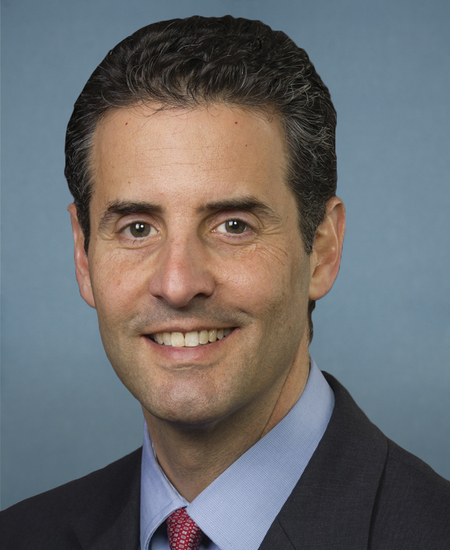
Rep. John P. Sarbanes
Sponsored bills
American Dream and Promise Act of 2021 This bill provides certain aliens with a path to receive permanent resident status and contains other immigration-related provisions. The Department of Homeland Security (DHS) or the Department of Justice (DOJ) shall provide conditional permanent resident status for 10 years to a qualifying alien who entered the United States as a minor and (1) is deportable or inadmissible, (2) has deferred enforced departure (DED) status or temporary protected status (TPS), or (3) is the child of certain classes of nonimmigrants. The bill imposes various qualifying requirements, such as the alien being continuously physically present in the United States since January 1, 2021, passing a background check, and being enrolled in or having completed certain educational programs. DHS shall remove the conditions placed on permanent resident status granted under this bill if the alien applies and meets certain requirements, such as completing certain programs at an educational institution, serving in the military, or being employed. Furthermore, DHS and DOJ shall cancel the removal of certain aliens who had TPS, were eligible for TPS, or were eligible for DED status on certain dates. Such an alien shall receive permanent resident status upon meeting certain requirements and applying for such status within three years of this bill's enactment. For an alien seeking permanent resident status under this bill, DHS may (1) waive certain grounds of inadmissibility, or (2) provisionally deny the application if the alien poses a danger to public safety or has knowingly participated in certain offenses involving a criminal street gang. An alien shall have the right to administrative and judicial review of a denial or revocation of permanent resident status granted under this bill. An alien seeking judicial review of a provisional denial shall be appointed counsel upon request. An alien who appears to be prima facie eligible for relief under this bill shall receive a reasonable chance to apply for such relief and may not be removed until there is a final decision on that application for relief. DHS may not use information from applications filed under this bill or for Deferred Action for Childhood Arrivals status for immigration enforcement purposes. DHS shall establish a grant program for nonprofit organizations that assist individuals with certain immigration-related issues. This bill also repeals a restriction that bars a state from providing higher education benefits to undocumented aliens unless those benefits are available to all U.S. nationals without regard to residency in the state.
National Heritage Area Act of 2021 This bill establishes a National Heritage Areas System to recognize certain areas of the United States that tell nationally significant stories and to conserve, enhance, and interpret the areas' natural, historic, scenic, and cultural resources that illustrate significant aspects of U.S. heritage, and authorizes appropriations through FY2034 for each National Heritage Area. Through such system, the Department of the Interior may provide technical and financial assistance to local coordinating entities to support the establishment, development, and continuity of such areas. The bill extends the authority for the Erie Canalway National Heritage Corridor Commission and the Gullah/Geechee Cultural Heritage Corridor Commission until September 30, 2034. The local coordinating entity of a National Heritage Area, not later than three years after the area is included in the National Heritage Area System, shall submit to Interior a management plan for approval. Interior, not later than one year before the authorization for federal funding expires for a National Heritage Area, shall (1) conduct an evaluation of the accomplishments of that area, and (2) submit a report detailing the evaluation to specified congressional committees. Based upon the evaluation, Interior shall prepare a report with recommendations for the National Park Service's continued role, if any, with respect to the area. Interior may carry out or certify a study to assess the suitability and feasibility of designating a specific geographic area as a National Heritage Area to be included in the National Heritage Area System.
This bill places restrictions on recurring political contributions or donations. Specifically, the bill prohibits any person from soliciting a recurring contribution or donation for a political committee, an independent expenditure, or an electioneering communication by any method that does not require the affirmative consent of the contributor or donor. In addition, the bill prohibits a political committee, a person funding an independent expenditure, or a person funding an electioneering communication from accepting a recurring contribution or donation unless the contributor or donor gave affirmative consent. This affirmative consent cannot be a passive action by the contributor or donor, such as failing to uncheck a prechecked box. Further, any person who accepts a recurring contribution or donation must (1) provide a receipt for the initial contribution or donation and for each recurrence that clearly and conspicuously discloses all material terms, (2) provide all information needed to cancel the recurring contribution or donation in each communication with the contributor or donor, and (3) immediately cancel recurring contributions or donations upon request of the contributor or donor.
Paycheck Fairness Act This bill addresses wage discrimination on the basis of sex, which is defined to include pregnancy, sexual orientation, gender identity, and sex characteristics. Specifically, it limits an employer's defense that a pay differential is based on a factor other than sex to only bona fide job-related factors in wage discrimination claims, enhances nonretaliation prohibitions, and makes it unlawful to require an employee to sign a contract or waiver prohibiting the employee from disclosing information about the employee's wages. The bill also increases civil penalties for violations of equal pay provisions. Additionally, the Equal Employment Opportunity Commission (EEOC) and the Office of Federal Contract Compliance Programs must train EEOC employees and other affected parties on wage discrimination. The bill directs the Department of Labor to (1) establish and carry out a grant program to provide training in negotiation skills related to compensation and equitable working conditions, (2) conduct studies to eliminate pay disparities between men and women, and (3) make available information on wage discrimination to assist the public in understanding and addressing such discrimination. The bill establishes the National Award for Pay Equity in the Workplace for an employer who has made a substantial effort to eliminate pay disparities between men and women. It also establishes the National Equal Pay Enforcement Task Force to address compliance, public education, and enforcement of equal pay laws. Finally, the bill requires the EEOC to issue regulations for collecting from employers compensation and other employment data according to the sex, race, and national origin of employees for use in enforcing laws prohibiting pay discrimination.
Medicare Access to Radiology Care Act of 2021 This bill provides for Medicare coverage of services that are furnished by a certified radiologist assistant under the supervision of a radiologist. Payment must be made to the supervising radiologist.
Reproductive Rights are Human Rights Act of 2021 This bill directs the Department of State to include in its annual reports on human rights in countries receiving U.S. development and security assistance a discussion of the status of reproductive rights in each country. This must include whether a country has adopted and enforced policies to (1) promote access to contraception and accurate, nondiscriminatory family planning and sexual health information; (2) provide services to ensure safe and healthy pregnancy and childbirth; (3) expand or restrict access to safe abortion services; and (4) prevent and treat sexually transmitted diseases. For each country, the reports shall also contain (1) data concerning pregnancy-related injuries and deaths; and (2) a description of the nature and extent of discrimination and violence against women, girls, and LGBTQI+ individuals in health care settings and the relevant government's response to such actions.
Turkey and Ecumenical Patriarchate Religious Freedom Act of 2021 This bill requires reports on religious freedom in Turkey. The Department of State must report to Congress on the State Department's policy for promoting religious freedom in Turkey. If the U.S. Commission on International Religious Freedom recommends putting Turkey on the State Department's special watch list of countries that engage in or tolerate severe violations of religious freedom but the State Department does not do so, the President must report to Congress a justification for the decision. The President shall not have to make this report if Turkey is added to the special watch list or designated a country of particular concern for religious freedom.
Trees for Residential Energy and Economic Savings Act of 2021 or the TREES Act of 2021 This bill directs the Department of Energy (DOE) to establish a grant program for states, local governments, Indian tribes, and other entities to facilitate tree planting projects that reduce residential energy consumption. Under the program, DOE may award grants to facilitate the planting of at least 300,000 trees annually in residential neighborhoods.
John Lewis Every Child Deserves a Family Act This bill prohibits discrimination on the basis of sexual orientation, gender identity, marital status, or religion in the provision of child welfare programs and services by entities receiving federal funding. The Department of Health and Human Services (HHS) must provide technical assistance to help states follow this requirement, including (1) guidance for bringing state laws into compliance, (2) developing training to increase cultural competency related to social identity, and (3) training for judges and attorneys involved in child welfare cases, among other supports. Additionally, HHS must establish the National Resource Center on Safety, Well-Being, Placement Stability, and Permanency for LGBTQ Children and Youth Involved with Child Welfare Services to provide training, technical assistance, and guidance to applicable state and local agencies and service providers. Further, the Religious Freedom Restoration Act may not be the basis for challenging the application or enforcement of this bill. The Government Accountability Office must study and report on states' compliance with the requirements of the bill no later than three years after enactment.